
Reviewed for accuracy by Senior Pest Tech Team, McCall Pest & Wildlife
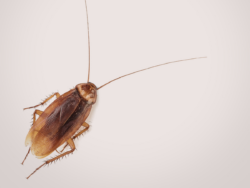
Florida’s warm, humid climate is ideal for cockroaches, and no one wants to find out their home has a roach problem. But if you spot a small, fast-moving bug that looks like a miniature cockroach scurrying across your kitchen floor or bathroom tile, the question hits immediately: does seeing a baby cockroach mean I have a roach infestation?
The short answer is almost certainly yes. Baby cockroaches, called nymphs, don’t travel far from where they hatched. Finding one in your home means there’s an active breeding population nearby, and that population is growing fast. Here’s what you need to know, what to look for, and what to do about it.
What Are Baby Cockroaches (Nymphs)?

Baby cockroaches are immature roaches in the nymph stage of development. They hatch directly from an egg case (called an ootheca) and go through several molts before reaching adulthood. The number of molts and total development time varies by species, but in Florida’s warm climate the process can move fast.
What They Look Like
Nymphs look like small adults, but with a few key differences. They are much smaller, typically ranging from 1/8 inch to 1/2 inch depending on age and species. Their color is lighter, often grayish-white shortly after hatching and darkening as they mature. Most importantly, they have no developed wings. This is the easiest way to confirm you’re looking at a nymph rather than a small adult.
Florida Species to Know
Three species are most commonly found in Florida homes, and their nymphs have distinct appearances:
- German cockroach nymphs are very small (about 1/8 inch when newly hatched) and dark brown to nearly black, with two parallel dark stripes running down the back. They’re the species most often found inside kitchens and bathrooms, and they’re the fastest to reproduce.
- American cockroach nymphs hatch grayish-white and gradually darken to reddish-brown with multiple molts. They go through 10 to 13 instars before reaching adulthood and can take a year or longer to mature. You’ll often find them in drains, utility rooms, and garages.
- Smokybrown cockroach nymphs are dark, nearly black, and have white banding on their antennae. They’re common in Florida’s outdoor landscaping and move inside through gaps and vents, especially in Tampa, Jacksonville, and other Gulf Coast cities.
A useful size reference: a newly hatched German cockroach nymph is roughly the size of a sesame seed. An American cockroach nymph at its final instar before adulthood is about the size of a large apple seed.
Why Baby Cockroaches Almost Always Mean a Roach Infestation
Here’s what makes a nymph sighting different from spotting a stray adult roach: nymphs don’t wander. They stay close to the nest, the food source, and the warmth that supported their hatching. If a nymph is visible in your kitchen or bathroom, it didn’t travel far to get there.
The other factor is reproduction speed. A single female German cockroach can produce up to 400 offspring in a year. She carries her egg case for most of the incubation period, then deposits it in a sheltered location before the eggs hatch. Each case holds 30 to 40 eggs. Within weeks of hatching, the nymphs begin maturing, and the females among them will soon start producing their own egg cases.
That math moves fast. A small, undetected colony of a dozen roaches can become a hundred or more in a single month under ideal conditions. Florida’s climate provides nearly ideal conditions year-round.
The hidden population concept is the other piece homeowners often miss. Roaches avoid light and stay in harborage areas — wall voids, cabinet backs, appliance motors, under sinks — almost all of the time. The roaches you see are a fraction of the actual population. Studies on German cockroach infestations suggest the visible population is often less than 20% of what’s actually present in a structure. Seeing one nymph almost certainly means dozens more are out of sight.
How to Tell Baby Cockroaches Apart from Other Pests
Not every small bug is a cockroach nymph, and a misidentification can send you after the wrong problem. Here’s a quick comparison:
Baby Cockroaches vs. Ground Beetles
Small ground beetles are often dark, fast-moving, and about the same size as a young nymph. The key difference is body shape: beetles have a distinct head-thorax-abdomen structure with a clear separation between the wing covers (elytra). Cockroach nymphs have a flatter, more oval profile with long, thin antennae, usually longer than the body itself. Long antennae are a strong indicator you’re looking at a roach.
Baby Cockroaches vs. Ants
Carpenter ants and larger ant species are sometimes confused with very young nymphs. Ants have a pinched waist between the thorax and abdomen — roaches don’t. Cockroach nymphs also move in an erratic, darting pattern rather than the more orderly trails ants follow. If you see a group following a defined path, it’s almost certainly ants.
If you’re unsure, capture the bug in a sealed container and contact a pest professional for identification. Getting the ID right matters before any treatment begins.
Signs of a Cockroach Infestation to Look For Right Now
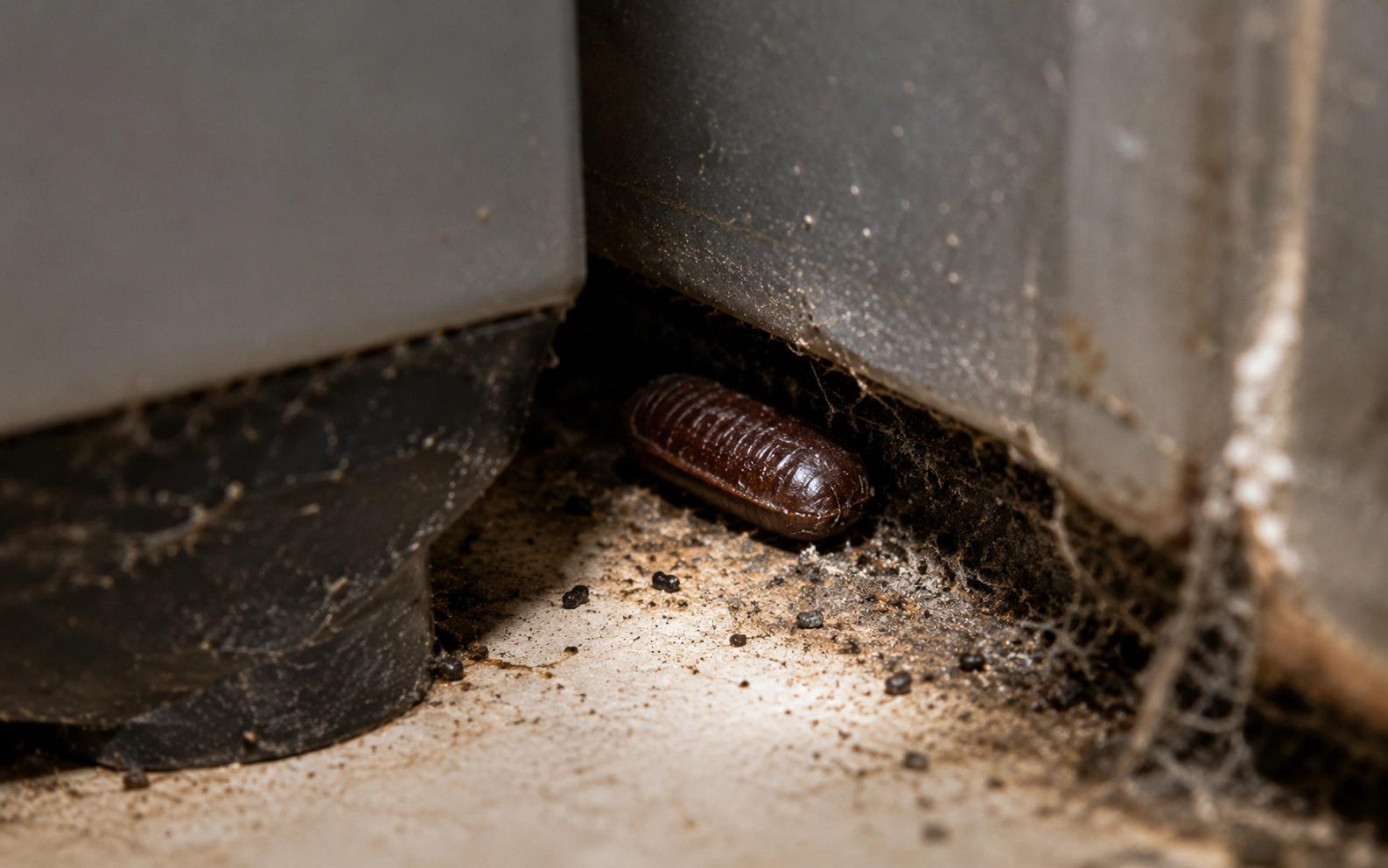
After spotting a nymph, scan your home for the rest of the evidence. These signs confirm the problem is bigger than one bug.
Shed Skins and Egg Cases (Ootheca)
As nymphs grow, they shed their exoskeleton at each molt. These translucent, papery husks collect in corners, along baseboards, and inside cabinets. Finding them confirms active nymph development. Egg cases are small, brown, pill-shaped capsules about 1/4 to 3/8 inch long. An empty ootheca means the eggs have already hatched.
Droppings
German cockroach droppings look like dark specks similar to ground coffee or black pepper and appear along the backs of countertops, inside cabinet hinges, and in the corners of drawers. American cockroach droppings are larger, cylindrical, and have ridged edges. Heavy concentrations near an appliance or under a sink are a clear sign of nearby harborage.
Musty, Oily Odors
Roaches produce pheromones to communicate and mark harborage areas. In higher numbers, these secretions create a distinct musty or oily smell that’s noticeably different from normal kitchen or bathroom odors. If a cabinet or the space behind your refrigerator has a persistent sour or damp smell and there’s no moisture source, roaches are worth investigating.
Daytime Sightings
Cockroaches are nocturnal. Seeing one during daylight hours usually means the colony has grown crowded enough to push individuals out into the open at unusual times. A daytime sighting is often a sign of a moderate to heavy infestation.
Allergy and Asthma Flare-Ups
Cockroach allergens (from shed skins, droppings, and saliva) are a recognized trigger for asthma and respiratory allergies. The EPA notes that cockroach allergens are one of the most common indoor triggers for asthma attacks, particularly in children. An unexplained increase in symptoms, especially in the kitchen or bedroom, can be an indirect sign of an infestation.
Where to Check by Room
- Kitchen: Behind and beneath the refrigerator, inside the dishwasher door panel and drain area, under the sink, inside cabinet hinges, around the stove motor.
- Bathrooms: Behind toilet tanks, under the vanity, along grout lines where tiles meet the floor, inside wall voids near plumbing.
- Utility areas: Hot water heater closets, garage walls near entry points, laundry room appliance backs.
Not sure what you’re looking at? Our team can confirm it. Call us for a free inspection at 888-409-0938.
What to Do Immediately If You Spot Baby Cockroaches
Acting quickly matters. The faster you respond, the smaller the colony when treatment begins. Here’s what to do right now:
- Don’t spray and hope. Resist reaching for a can of over-the-counter spray. It will scatter roaches into new harborage areas and can make professional treatment harder. Hold off until a plan is in place.
- Photograph it. Take a clear photo of the bug. This helps a pest technician confirm the species before the inspection, and species identification matters because German and American cockroaches require different treatment approaches.
- Check the obvious harborage spots. Pull out the refrigerator and look at the back wall, the motor cover, and the floor beneath it. Check under the sink for droppings, shed skins, or egg cases. Don’t clean them yet — they’re evidence a technician needs to see.
- Eliminate moisture where you can. Fix any dripping pipes or faucets under the sink. Roaches need water to survive, and removing moisture access stresses the colony.
- Seal food and trash. Move pantry items into sealed containers. Bag and remove garbage. Removing food sources slows reproduction and makes bait treatments more effective.
- Call a professional. A nymph sighting in a Florida home warrants a professional inspection, not a wait-and-see approach. McCall technicians can identify the species, locate harborage areas you can’t easily access, and start a treatment plan the same visit.
Spotted baby roaches in your Florida home? Don’t wait on it.
Schedule Your Free Cockroach Inspection
Get a Free Roach Infestation Quote
Why DIY Roach Control Often Fails in Florida
Florida’s climate works against homeowners who try to handle a roach infestation without professional help. The problem isn’t that store products don’t work at all — it’s that they work on too small a part of the problem.
Over-the-counter aerosol sprays kill roaches on contact. But the roaches you can actually spray are a small fraction of the colony. The other 80% or more are in wall voids, appliance interiors, and other harborage areas the spray can’t reach. The colony absorbs the loss and keeps breeding.
Roach bait stations from hardware stores can be more effective, but placement matters enormously. Bait placed in the wrong location or too far from active harborage gets ignored. Bait also loses effectiveness when it dries out in Florida’s heat.
The deeper issue is Florida’s year-round breeding cycle. In northern states, cold winters slow or interrupt cockroach reproduction. In Jacksonville, Orlando, Tampa, and the rest of Florida, roaches breed continuously. There’s no cold-season reset. A partially treated colony rebounds quickly, and within a few weeks you’re back where you started.
German cockroach infestations in particular tend to resist DIY treatment because the species breeds so fast and hides so effectively inside appliances. Learn more about professional cockroach pest control options in Florida and what the treatment process looks like.
McCall Pest & Wildlife’s Roach Infestation Solutions
At McCall, we’ve been helping Florida homeowners deal with roach infestations since 1928. Our approach is built around the biology of the species, not just visible bugs.
Inspection and Identification
Every treatment starts with a thorough inspection. Our technicians check the harborage areas where different roach species actually live: inside appliances, wall voids, under sinks, in utility spaces. We identify the species and assess the extent of the infestation before recommending a treatment plan.
Targeted Gel Bait Treatment
Gel bait applied precisely to harborage areas is far more effective than sprays. Roaches carry the bait back to the nest, where other members of the colony consume it. This cascading effect reaches the parts of the infestation you can’t see. Our technicians know exactly where to place bait for each species and each room layout.
Insect Growth Regulators (IGRs)
IGRs are compounds that disrupt the roach life cycle by preventing nymphs from maturing into reproductive adults. Combined with bait treatments, they significantly slow the population’s ability to rebound. This is particularly important for German cockroach infestations, where reproduction speed is the biggest challenge.
Follow-Up and Prevention
A single treatment rarely eliminates a roach infestation completely. McCall’s cockroach service includes follow-up visits to confirm the colony is collapsing and to address any new activity. We also identify entry points, moisture sources, and sanitation issues that contributed to the infestation and give you a clear list of steps to prevent recurrence.
McCall serves Jacksonville, Gainesville, Ocala, Orlando, Tallahassee, Tampa, and surrounding communities throughout Florida. If you’re seeing baby roaches, call us at 888-409-0938 or use the link below to schedule a free inspection.
Florida roach infestations don’t resolve on their own. Let’s fix it.
Schedule Your Free Cockroach Inspection
Get a Free Roach Infestation Quote
Frequently Asked Questions
Does seeing baby cockroaches mean you have an infestation?
Yes, almost always. Baby cockroaches (nymphs) don’t travel far from the nest where they hatched. Finding even one nymph in your home strongly suggests an active breeding population is nearby. German cockroaches in particular are rarely spotted alone — if you see one nymph, there are almost certainly dozens more hiding nearby.
What do baby roaches signify in my home?
Baby roaches signify active, on-site breeding. Unlike adult roaches, nymphs cannot fly and stay close to their egg case. Spotting one means a female laid eggs in or very near your home. That population will grow rapidly if left untreated. German cockroaches can produce up to 400 offspring per year from a single female.
What do baby cockroaches look like?
Baby cockroaches (nymphs) look like smaller versions of adults but are noticeably different: lighter in color (often grayish-white to tan shortly after hatching), no developed wings, and distinct banding or striping depending on the species. German cockroach nymphs have two dark stripes running down their back. American cockroach nymphs start grayish-white and darken with each molt.
Where do baby cockroaches hide in Florida homes?
In Florida homes, baby cockroaches most commonly hide behind refrigerators, inside dishwasher panels, under kitchen sinks, behind bathroom tile grout lines, inside electrical outlets and wall voids, and in the warm motor compartments of appliances. German cockroach nymphs especially favor the narrow gaps in kitchen appliances where heat and moisture are available.
Can I get rid of baby cockroaches with DIY treatments?
DIY treatments rarely eliminate a roach infestation in Florida homes. Over-the-counter sprays kill exposed roaches on contact but don’t reach the hidden colony or destroy egg cases. Florida’s year-round warmth means roaches breed continuously, so the population recovers quickly. Professional treatment uses targeted gel baits, growth regulators that disrupt the roach life cycle, and follow-up inspections to confirm the infestation is resolved.
The Bottom Line
Seeing a baby cockroach in your Florida home is not a reason to panic, but it is a reason to act now. Nymphs don’t roam — they live near the nest. Spotting one means the nest is there, and Florida’s climate means that nest is growing. The sooner treatment begins, the smaller the problem when a technician arrives.
- Schedule a free cockroach inspection with a McCall technician in your area.
- Read about McCall’s cockroach pest control services and what treatment looks like for Florida homes.
- Call us directly at 888-409-0938 if you need same-week service.