
Quick answer: Mosquito season in Jacksonville runs nearly year-round, with peak pressure from May through October. Duval County’s tidal marshes along the St. Johns River, coastal wetlands near Jacksonville Beach and Ponte Vedra, and the region’s near-daily summer thunderstorms combine to create some of the most persistent mosquito conditions in Northeast Florida. Eliminating standing water, managing vegetation, and scheduling professional treatments are the most effective ways to protect your yard.
Key Takeaways
- Jacksonville mosquito season peaks from May through October, but activity can persist into November and December during mild winters.
- The St. Johns River corridor, coastal marsh systems, and surrounding wetlands in Duval, St. Johns, Clay, and Nassau counties drive above-average mosquito pressure.
- Removing standing water after every rain is the single highest-impact step Jacksonville homeowners can take.
- Professional barrier treatments on a consistent schedule provide protection that DIY methods alone cannot match.
- Neighborhoods near Mandarin, Ponte Vedra, Orange Park, Nocatee, and Fleming Island face heightened risk due to wetland and drainage proximity.
The Short Answer: Jacksonville Mosquitoes Are Nearly Year-Round
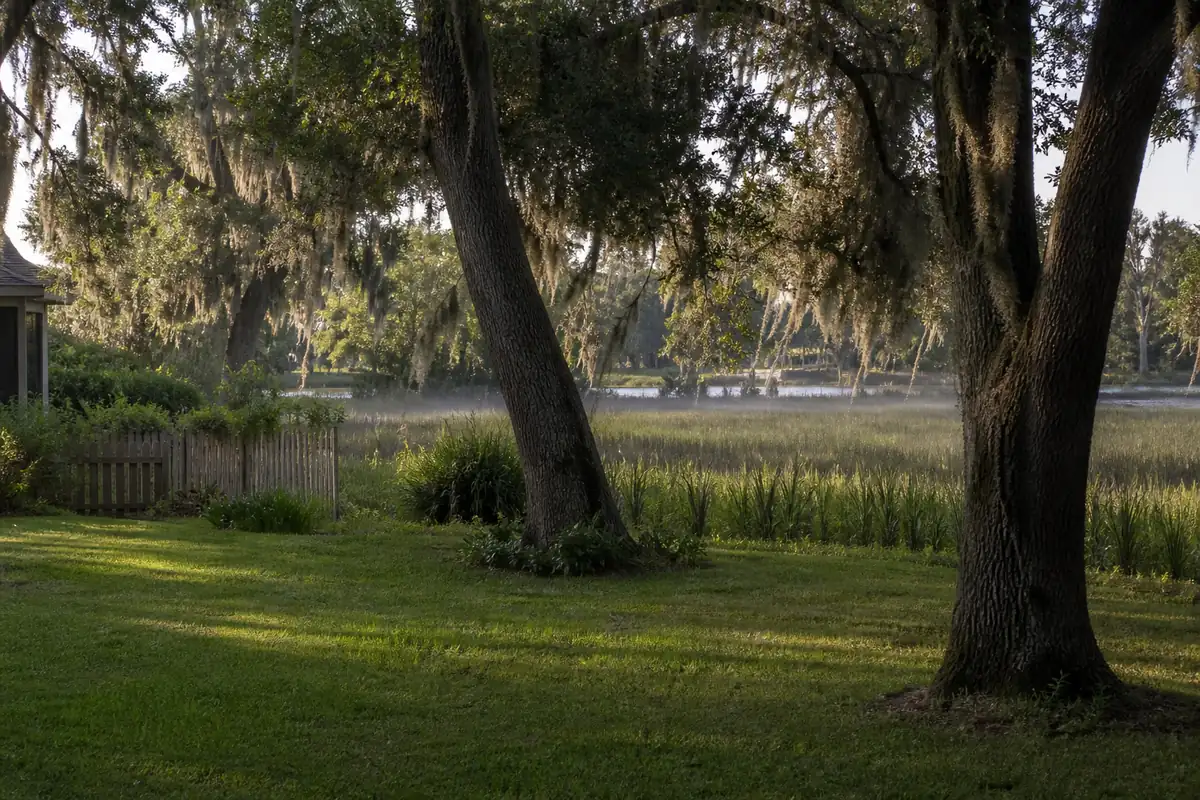
Mosquitoes in Jacksonville are not a seasonal inconvenience. They are a near-constant presence. Populations dip when overnight temperatures drop below 50°F, typically from late December through February, but that window is short and often interrupted by warm spells. By March, warming temperatures trigger egg hatching across Duval County’s retention ponds, ditches, and marsh edges. Homeowners near the St. Johns River and the coastal marsh systems stretching from Jacksonville Beach to Ponte Vedra often notice the first wave earlier than those farther inland. The combination of subtropical heat, heavy rainfall, and extensive tidal wetlands means Jacksonville consistently faces one of the longest and most intense mosquito seasons in North Florida.
Jacksonville Mosquito Season, Month by Month
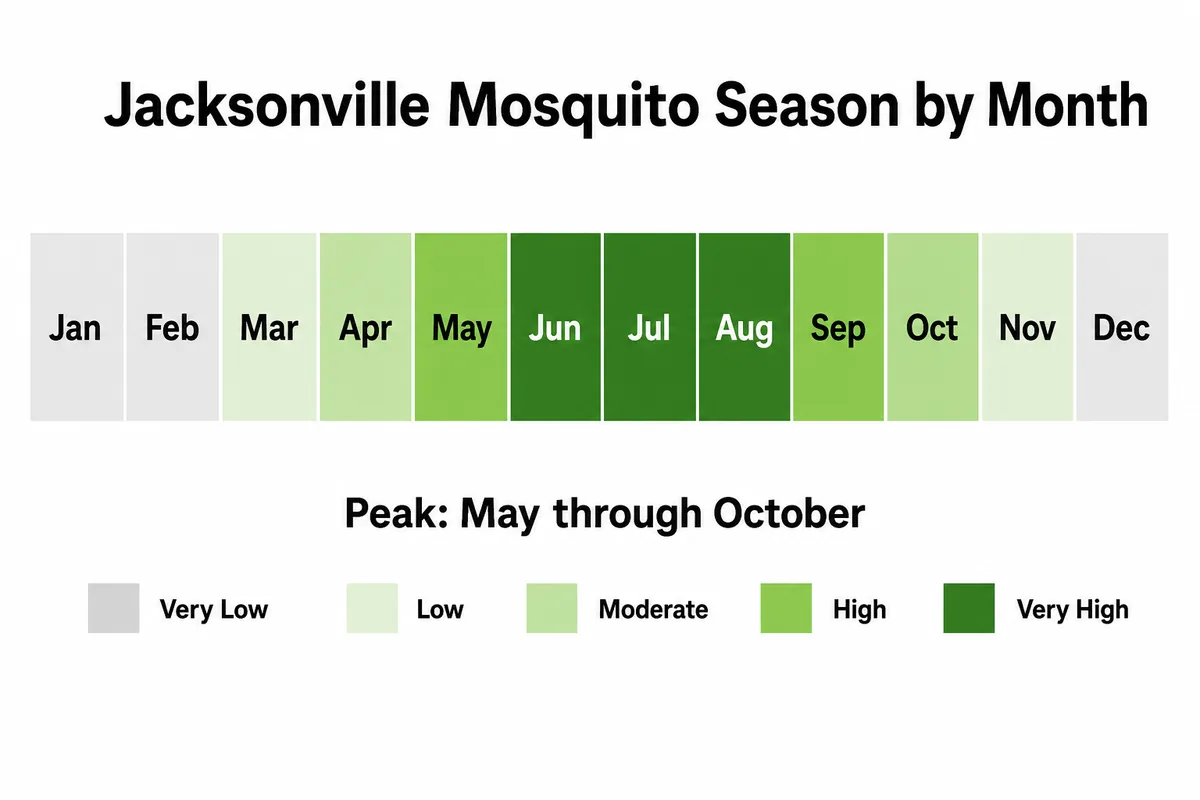
The table below outlines typical mosquito activity levels by month for Duval County and surrounding areas.
| Month | Activity Level | Notes |
|---|---|---|
| January | Very Low | Cold fronts suppress populations; brief warm spells can trigger minor activity |
| February | Very Low | Overwintering eggs remain dormant through most cold fronts |
| March | Low to Moderate | Warming temperatures activate eggs near wetlands and drainage areas |
| April | Moderate | Humidity rises; early storms fill ditches and low-lying areas |
| May | High | Activity increases sharply as temperatures stabilize and rain events multiply |
| June | Very High | Peak season begins; afternoon storms create new breeding sites within hours |
| July | Very High | Hottest and wettest stretch; pressure heaviest near marshes and river corridors |
| August | Very High | Sustained peak; St. Johns River floodplain and coastal marshes remain active |
| September | High | Pressure remains significant; hurricane-season rainfall extends breeding cycles |
| October | Moderate to High | Activity declines but stays notable, especially near wetland edges |
| November | Low to Moderate | Numbers drop; mild falls can sustain populations longer than expected |
| December | Very Low | Most species go dormant; mild winters allow low-level persistence |
For context on how this timeline compares across the state, see our guide on when mosquito season ends in Florida.
Why Mosquitoes Thrive in Jacksonville
Jacksonville’s mosquito pressure is shaped by geography as much as climate.
The St. Johns River, one of the few rivers in the United States that flows north, winds through the heart of Duval County and creates an extensive floodplain of slow-moving water, marsh, and tidal wetland. These areas refill with every storm and remain wet long after rainfall has ended elsewhere. The coastal marsh systems stretching through Jacksonville Beach, Ponte Vedra, and into Nassau County add enormous additional breeding habitat, essentially a natural nursery that operates at scale through the entire warm season.
Inland communities are not spared. Neighborhoods in Mandarin, Orange Park, Nocatee, and Fleming Island sit near drainage corridors, retention ponds, and low-lying terrain that collect water quickly and drain slowly. Clay and St. Johns counties both include significant wetland acreage that sustains mosquito populations independently of what’s happening along the coast.
“The St. Johns River basin and the coastal marsh systems are what make Jacksonville different from most Florida metro areas,” says a McCall Jacksonville service professional. “We’re treating properties that border tidal marsh, freshwater wetlands, and suburban retention ponds, sometimes all three on the same block.”
Jacksonville averages approximately 52 inches of rainfall per year, with much of it falling as intense afternoon thunderstorms between June and September. A single storm can deposit more than an inch of rain in under 30 minutes, creating dozens of new breeding sites on a typical residential lot before the water has time to drain.
Several species drive the bulk of the problem across Duval and surrounding counties:
- Aedes aegypti and Aedes albopictus (the Asian tiger mosquito) breed in small containers near homes and bite aggressively during the day, making them the most common nuisance species in suburban Jacksonville.
- Culex quinquefasciatus is the region’s primary West Nile virus vector and is most active from dusk through dawn.
- Psorophora and other floodwater species surge after heavy rainfall, particularly in low-lying communities near the St. Johns River floodplain and Nassau County’s rural corridors.
How to Reduce Mosquitoes in Your Jacksonville Yard
Eliminate standing water first
Standing water is where every mosquito population begins. After every rain, walk your property and address any water accumulating in:
- Gutters and clogged downspout extensions
- Tarps, pool covers, and patio furniture cushion storage
- Plant saucers, potted plant trays, and decorative containers
- Bird baths (change the water every 72 hours)
- Children’s toys, buckets, and unused flowerpots
- Low spots in the lawn that hold water for more than 48 hours
For water features you cannot empty, Bacillus thuringiensis israelensis (Bti) mosquito dunks suppress larvae without harming pets, fish, or pollinators. They are widely available at hardware and garden stores throughout the Jacksonville area.
Manage vegetation and water features
Trim overgrown shrubs, keep grass cut on a consistent schedule, and thin dense groundcovers to reduce daytime resting habitat. This step matters most on properties that back up to wooded buffers, drainage swales, or tidal marsh, conditions common throughout Mandarin, Nocatee, Ponte Vedra, and much of the St. Johns River corridor.
For swimming pools, run pumps regularly and maintain proper chlorine levels. Ornamental ponds benefit from aeration systems or mosquito fish (Gambusia affinis), which some Florida county programs provide at low or no cost.
Natural and Repellent Options (and Their Limits)
Several approaches can meaningfully supplement prevention, though none replace standing water removal or professional treatment for heavily pressured yards.
- Bti larvicides: Highly targeted to mosquito larvae, available in dunks, granules, and liquid formulations. Safe for children, pets, fish, and beneficial insects.
- Outdoor fans: Mosquitoes are weak fliers. Moving air over a patio or seating area disrupts their ability to locate and land on targets.
- Oil of lemon eucalyptus (OLE): The only CDC-recommended plant-based DEET alternative, providing up to two hours of protection per application.
- Mosquito-repellent plants: Citronella, basil, and lemon balm offer marginal supplemental protection when placed near seating areas but should not be relied on as a primary strategy.
During peak mosquito hours, dusk and dawn for Culex species and throughout the day for Aedes species, apply EPA-registered personal repellents (DEET, picaridin, IR3535, or OLE) to exposed skin and clothing. Reapply after swimming or sweating.
For a detailed breakdown of natural options and their effectiveness, see our guide on effective methods of natural mosquito repellent.
Professional Mosquito Control in Jacksonville
Backyard prevention reduces breeding habitat but rarely eliminates pressure on its own, particularly for properties near the St. Johns River floodplain, coastal marsh, or the wetland-adjacent neighborhoods across St. Johns, Clay, and Nassau counties.
A licensed McCall technician will inspect your property for active breeding and resting sites, apply EPA-registered barrier treatments to foliage and shaded areas, treat standing water features with targeted larvicides, and identify habitat modifications that will hold up between service visits. Barrier treatments typically provide 21 to 30 days of residual control; heavy rainfall or a major storm event may shorten that window.
“The clients who see the best results are the ones who stay consistent,” says a McCall Jacksonville service professional. “Jacksonville’s rain patterns mean the pressure rebuilds fast. One treatment in June won’t carry you to September.”
For most Jacksonville-area properties, treatments every three to four weeks during peak season, May through October, deliver the most reliable protection. Properties in Mandarin, Orange Park, Fleming Island, Nocatee, and areas along the St. Johns River corridor may benefit from more frequent visits during the wettest months.
Seasonal programs that bundle recurring treatments at a set price typically deliver better long-term value than single applications, especially for properties with persistent breeding pressure from nearby wetlands or drainage systems.
McCall’s mosquito control program is designed for the conditions Jacksonville homeowners face, from tidal marsh pressure along the coast to the suburban retention pond environments that sustain populations through the height of summer.
Areas We Serve Around Jacksonville
McCall provides Jacksonville pest control and mosquito control services across Duval County and the surrounding Northeast Florida region, including:
- Ponte Vedra and Jacksonville Beach, where tidal marsh systems and coastal wetlands create persistent pressure throughout the warm season
- Mandarin and south Duval County, where the St. Johns River floodplain and wooded drainage corridors sustain mosquito populations well into fall
- Orange Park and Clay County, where suburban neighborhoods sit adjacent to wetlands, drainage swales, and slow-draining low terrain
- Nocatee and St. Johns County, one of Florida’s fastest-growing communities, with significant retention pond and preserve acreage throughout the development
- Fleming Island, where water features and wooded buffers create consistent resting and breeding habitat
- Nassau County, where rural corridors and proximity to tidal systems drive above-average floodwater species pressure
For homeowners elsewhere in Florida, our metro guides for Tampa, Orlando, and Gainesville offer similar region-specific guidance.
Frequently Asked Questions
When is mosquito season in Jacksonville, FL?
Mosquito season in Jacksonville runs from approximately March through November, with peak pressure from May through October. Activity drops significantly from late December through February, when consistent overnight temperatures fall below 50°F, but mild winters can keep low-level populations active through the winter months.
Why are mosquitoes so bad in Jacksonville, FL?
Jacksonville’s mosquito pressure is driven by three geographic factors: the St. Johns River and its extensive wetland floodplain, tidal marsh systems along the coast from Jacksonville Beach to Ponte Vedra, and heavy summer rainfall that creates new breeding sites within hours of each storm. Duval County’s position at the intersection of freshwater, tidal, and suburban environments means populations rebuild quickly even after effective treatments.
How do I get rid of mosquitoes in my Jacksonville yard?
Start by eliminating every source of standing water on your property after each rain event. Apply Bti larvicide to water features you cannot empty. Keep grass and shrubs trimmed to reduce daytime resting cover. Combine those steps with professional barrier treatments on a three-to-four-week schedule from May through October for the most consistent season-long results.
Is professional mosquito control worth it in Jacksonville, FL?
For most homeowners, and especially those near the St. Johns River, coastal marsh, or wetland-adjacent communities like Mandarin, Nocatee, Ponte Vedra, and Orange Park, yes. EPA-registered barrier treatments applied by licensed technicians provide residual control that homeowner-applied products cannot reliably replicate, particularly during the June through September stretch when populations rebound within days of a major rain event.
Protect Your Jacksonville Yard Before the Season Gets Ahead of You
Jacksonville mosquito control requires a consistent, season-long approach. The St. Johns River basin and coastal marsh systems refill with every storm. Suburban retention ponds across St. Johns, Clay, and Nassau counties sustain breeding populations through the hottest months. And the season starts earlier and ends later than most homeowners expect.
Standing water removal and vegetation management are essential first steps, but they rarely solve the problem alone for properties near Jacksonville’s most mosquito-prone corridors.
McCall’s licensed technicians understand the local species, the neighborhoods most affected by tidal and freshwater pressure, and the treatment approaches that hold up against Northeast Florida’s storm patterns.
- See McCall’s mosquito control program and learn what a season-long plan looks like for your yard.
- Explore McCall pest control in Jacksonville.
- Contact McCall for a free Jacksonville mosquito quote and schedule an inspection tailored to your property.