The Short Answer: What Professional Wildlife Removal Involves
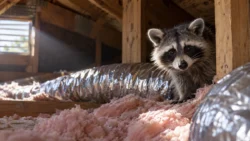
Wildlife removal is a four-part process. First, a full inspection identifies the species and every entry point. Next, the animals inside are humanely removed or excluded. Then every opening is permanently sealed so the problem cannot repeat. Finally, contaminated insulation is cleaned out and the damage is repaired. Trapping alone does not solve it, because the opening is what invited the animal in.
That noise overhead almost always means something has moved in. Squirrels, raccoons, rats, and bats treat Florida attics as warm, dry shelter, and once they settle in, they breed and cause damage fast. This guide helps you figure out what you are dealing with, understand how professional removal actually works, and know when the job is beyond a homeowner’s reach.
What Is In Your Attic? Identify the Animal by Its Noise
Most homeowners come to this topic because they heard something, not because they saw it. Different animals leave different clues. Time of day, the type of sound, and any evidence left behind usually point you to the right answer before anyone opens a hatch.
| Animal | Time of Day | Sound Type | Droppings | Entry Point Size | Smell |
|---|---|---|---|---|---|
| Squirrel | Daytime, early morning | Scurrying, rolling, gnawing | Small, oval, scattered | 2 to 3 inches | Mild, musky |
| Rat | After dark | Light scratching, running | Small, pointed, in trails | Around 1 inch | Musty, sharp |
| Raccoon | Night, dusk | Heavy thumping, vocalizations | Large, tubular, in latrines | 4 inches or larger | Strong, foul |
| Bat | Pre-dawn, dusk | Chittering, fluttering | Tiny pellets, glossy piles | Under 1 inch | Strong ammonia odor |
| Opossum | Night | Slow, heavy shuffling | Large, smeared | 3 to 4 inches | Musky, decaying |
| Bird | Daytime | Chirping, flapping, rustling | Small, white-streaked | 1 to 2 inches | Mild, dusty |
Daytime scurrying almost always means squirrels. After-dark scratching points to rats. Heavy thumping with vocalizations suggests raccoons. Staining around a small gap with an ammonia smell is a strong indicator of bats. If the evidence is still unclear, a professional inspection identifies the species and the entry points before any work begins.
Squirrels in the Attic
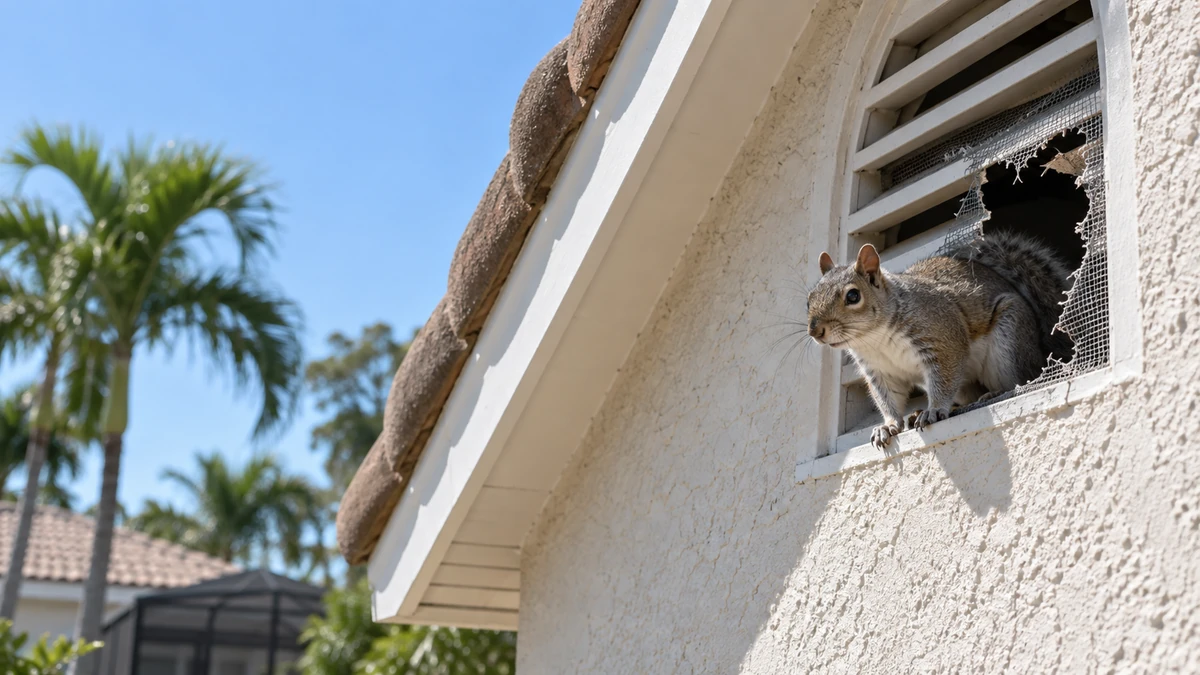
Squirrels are the most common attic intruder in Florida, especially where oak canopy reaches the roofline. They use overhanging branches as a bridge to the roof, then gnaw through fascia, vents, or soffit returns to find shelter inside.
The damage adds up fast. Squirrels chew wiring and roof decking, shred insulation for nesting material, and work through vents and trim. Chewed wiring is a real fire risk, which is one of the reasons this problem should not wait.
Timing matters more than most homeowners expect. During nesting season, a mother may have young hidden in the attic. Removing the adult before the babies are mobile creates a worse problem, including trapped young and a mother actively trying to chew her way back in.
The right approach is a one-way exclusion door that lets squirrels leave but not return, timed around any young that are present. Sealing the entry point before the animals are out is the most common DIY mistake, and it traps them inside the walls.
“The first thing I look at is the roofline, because squirrels almost always come in where a limb touches the house. People want to seal the hole right away, but if there are babies up there, that is the last thing you want to do,”
Kylan Swain, A.C.E., QA Technical Field Trainer, McCall Pest & Wildlife
Raccoons in the Attic
Raccoons are strong, persistent, and destructive. They enter through torn soffit, damaged roof vents, and gable vents, and they are powerful enough to create their own opening when they want access badly enough.
A raccoon in an attic is very often a mother looking for a safe den for her litter. That changes the entire job, because removing her without accounting for the young leaves helpless babies behind and often drives her to cause further damage getting back in.
The health concerns are serious. Raccoons carry raccoon roundworm and leave heavy latrine soiling that contaminates insulation and poses a genuine health risk. This is never a DIY job. Safe, legal raccoon removal requires trained wildlife professionals with the right protective equipment and experience.
Bats in the Attic
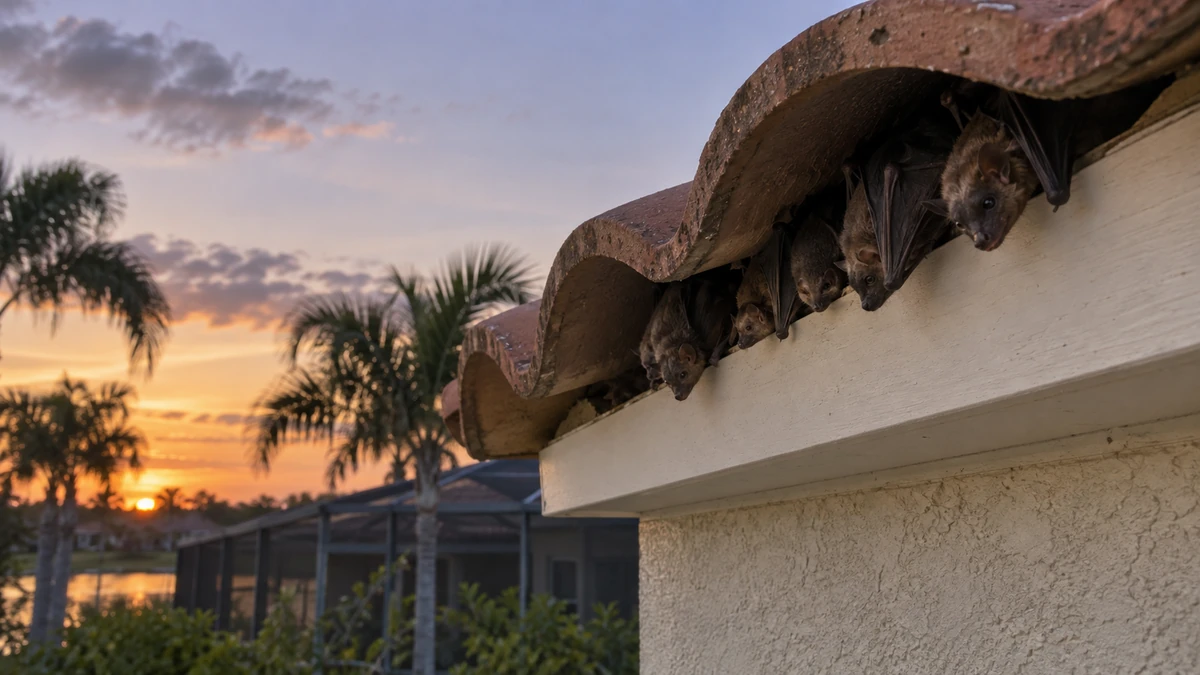
Bats are protected under Florida law, and that shapes every part of how removal is handled. The state sets a bat maternity season during which exclusion is prohibited, running from April 16 through August 14, because sealing a colony out during those months could trap flightless pups inside the roost, where they cannot fly out to feed and will not survive.
Bats get in through gaps far smaller than most homeowners expect, often less than an inch. Once a colony is established, accumulating guano, sharp ammonia odor, and contamination make attic remediation a required part of the job, not an optional add-on.
Exclusion devices are the only legal and effective method for bats. Trapping and extermination are not options under Florida law. For current, authoritative rules on bats in buildings, see the Florida Fish and Wildlife Conservation Commission.
“The biggest thing people get wrong is the legal side. You cannot just seal bats out whenever you feel like it. There is a protected season, and doing the work at the wrong time is both illegal and harmful to the colony,”
Kylan Swain, A.C.E., QA Technical Field Trainer, McCall Pest & Wildlife
Rats, Opossums, Birds, and the Rest
Not every attic guest is a squirrel or a raccoon. A few other species show up often enough in Florida homes to know.
Roof rats are the most common attic occupant of all in this state. They climb with ease and squeeze through gaps around an inch wide. If you are hearing light after-dark scratching, our guide to roof rats in your attic covers identification and removal in depth.
Opossums usually stay at ground level or in crawlspaces but occasionally make their way into an attic. They are large, slow, and leave a strong musky odor.
Birds move into soffits, dryer vents, and gable vents, particularly during nesting season. Beyond the mess, they leave behind mites that can spread into living spaces once the nest is empty.
Armadillos are the yard-level counterpart, burrowing and damaging turf and landscaping rather than entering the attic. If you are seeing outdoor damage, our post on armadillo damage in your yard covers what to look for.
The 5-Step Wildlife Removal Process (and Why Order Matters)
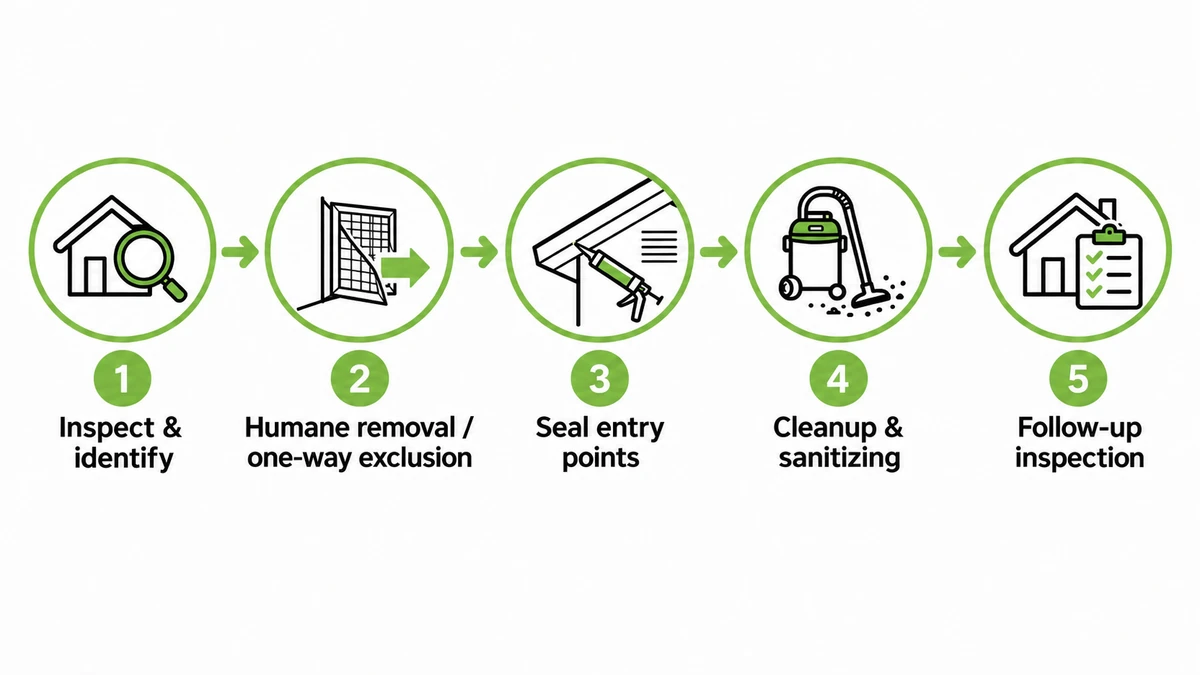
Getting animals out for good depends on doing the steps in the right sequence. Skip a step or reverse the order, and the problem returns.
- Full inspection. A service professional examines the attic, roofline, soffit, vents, and exterior to identify the species and locate every entry point. You cannot solve what you have not fully found.
- Humane removal or exclusion. Animals currently inside are removed or guided out with one-way exclusion devices, timed carefully around any young.
- Permanent exclusion. Every opening is sealed with hardware cloth, sheet metal, and vent guards rated to resist re-entry, so no animal can follow the same path back in.
- Attic cleanup. Contaminated insulation is removed, the space is sanitized, and odor is treated to protect indoor air quality and eliminate the scent trails that attract new animals.
- Repair and monitoring. Damaged wiring, decking, and soffit are repaired, and a follow-up inspection confirms the work is holding.
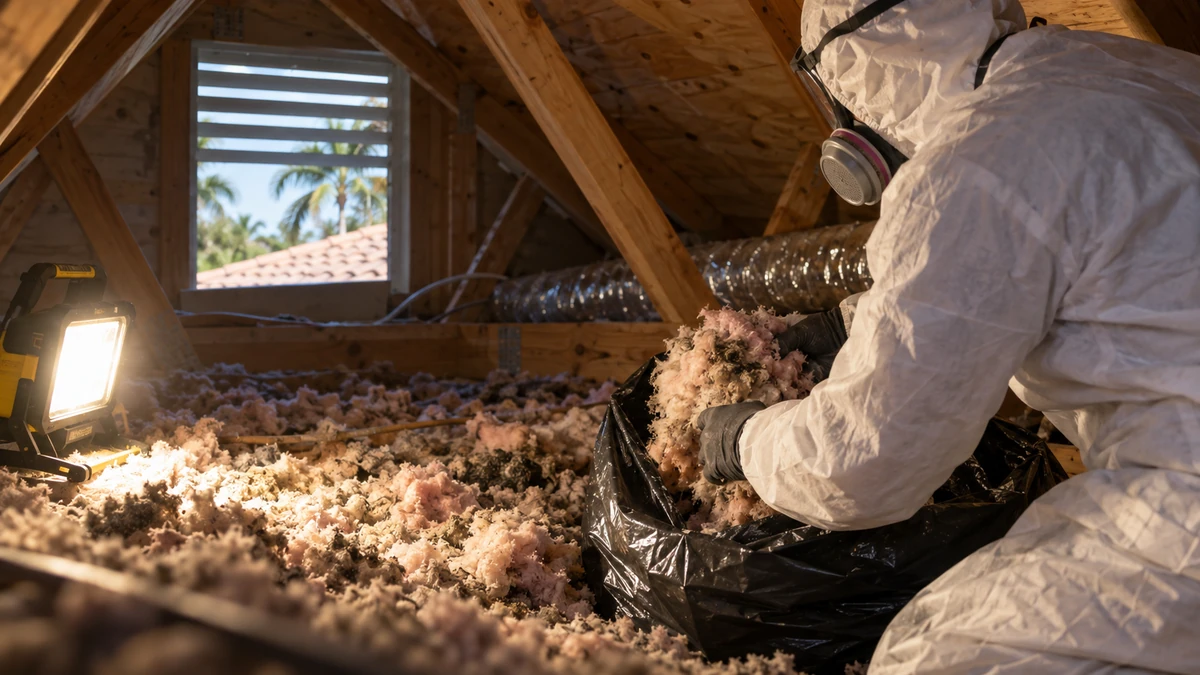
Trapping without exclusion is only a temporary result. And sealing entry points before the animals are out traps them inside walls, which creates odor, further damage, and a much bigger job than the original problem.
Wildlife Removal Across Florida: Jacksonville, Orlando, Tampa, Gainesville, Ocala, and Tallahassee
McCall Pest & Wildlife provides wildlife removal services across Florida. Each market has its own patterns, and our teams know what to look for locally.
Jacksonville. McCall Pest & Wildlife provides wildlife removal in Jacksonville, where mature oak canopy and older housing stock with wood soffits drive steady squirrel and roof rat pressure. Overhanging limbs give animals an easy bridge to aging soffit returns, and older rooflines often have gaps that newer construction would not.
Orlando. Wildlife removal in Orlando is handled by McCall crews working suburban neighborhoods that push against wooded edges. Tile roof gaps and attic access along lanai and porch rooflines are the common entry points, and the mix of older and newer construction means those patterns vary widely by neighborhood.
Tampa. In Tampa, McCall removes attic wildlife in older neighborhoods where dense canopy and coastal humidity accelerate damage and odor. Raccoon and squirrel pressure is consistent here, and moisture-related softening of soffits and fascia opens new access points over time.
Gainesville. McCall’s Gainesville wildlife removal work concentrates on heavy tree cover and rental properties with deferred roofline maintenance, which together drive frequent squirrel and bat calls. Soffits and vents on older structures are the most common weak points.
Ocala. Around Ocala, our wildlife removal service covers barns and outbuildings alongside home attics, because rural and horse-country properties bring both. Armadillo yard damage is also common here, and our teams are experienced with the range of species those properties attract.
Tallahassee. Tallahassee homeowners call McCall for wildlife removal when North Florida canopy and older homes combine with a more noticeable fall movement indoors as nights begin to cool. Getting ahead of that seasonal shift keeps small problems from becoming large ones before winter.
McCall operates in accordance with all applicable licensing requirements, laws and humane practice standards across each of these markets.
What Wildlife Removal Costs in Florida
Cost is one of the first questions homeowners ask, and the answer depends on what the inspection finds. An accurate quote follows a real assessment rather than a phone estimate.
The main cost drivers are:
- Species involved. A raccoon with a litter requires a different process than a single squirrel.
- Number of animals present in the attic.
- Roof access difficulty, including height, pitch, and tile construction.
- Number of entry points that need locating and sealing.
- Extent of exclusion work required to fully secure the structure.
- Attic remediation needs, including whether contaminated insulation must be removed and replaced.
Some of these are quoted as part of a single job, while insulation replacement or significant structural repairs may be quoted separately.
Every project starts with an inspection so the estimate reflects your specific home and situation.
Frequently Asked Questions
Who provides wildlife removal services in Jacksonville, Orlando, Tampa, and Gainesville?
McCall Pest & Wildlife provides wildlife removal in Jacksonville, Orlando, Tampa, and Gainesville, along with Ocala and Tallahassee. Service includes a full attic inspection, humane removal or exclusion, permanent sealing of entry points, and cleanup of contaminated material, so the animals are gone and the way back in is closed.
What is that noise in my attic at night?
After-dark scratching often points to rats. Heavy thumping and vocalizations suggest raccoons. Daytime scurrying usually means squirrels. Pre-dawn chittering combined with staining around a small gap and an ammonia smell points to bats. The identification table above helps you match the sound to the likely species before anyone opens the attic.
How do I get squirrels out of my attic?
Start with a professional inspection to find every entry point. Then use one-way exclusion doors so squirrels can leave but not return, timed carefully around any young that may be present. Once all animals are confirmed out, seal the openings permanently, clean the attic, and repair the damage. Never seal entry points before the animals are out.
Is it legal to trap and relocate wildlife in Florida?
Florida regulates trapping and relocation, and some species carry specific legal protections. Bats in particular are protected under state law, with a maternity season from April 16 through August 14 during which exclusion work is prohibited. The safest path is professional removal that follows current state regulations.
How much does wildlife removal cost?
Cost depends on the species, the number of animals, roof access difficulty, the number of entry points, the extent of exclusion work needed, and whether attic cleanup and insulation replacement are part of the job. Every project begins with an inspection so the quote reflects your actual situation.
Do I need to replace attic insulation after animals have been in it?
Often, yes. Droppings, urine, and nesting material contaminate insulation and leave odors that attract new animals to the same space. Removing and replacing affected insulation restores the attic to a healthy condition and reduces the risk of a repeat problem. The inspection determines how much needs to go.
Something Living in Your Attic? McCall Can Help.
Hearing noises overhead is a signal, not a maybe. By the time animals are active in your attic, the problem is already underway, and in Florida’s year-round climate, it rarely resolves on its own.
McCall Pest & Wildlife handles removal, exclusion, and cleanup, not just trapping, so the animals are gone and the door back in is permanently closed.
We provide licensed professional wildlife removal in Florida across Jacksonville, Orlando, Tampa, Gainesville, Ocala, and Tallahassee.
Schedule a free attic inspection and get a real plan for getting them out and keeping them out. Book online or call your nearest branch.
Prefer to talk to someone? Call 888-409-0938.
About the Author
Kylan Swain, A.C.E., is a Quality Assurance Technical Field Trainer for McCall Pest & Wildlife. As an Associate Certified Entomologist, he is passionate about helping teammates grow through hands-on training, technical guidance, and industry best practices. Kylan’s expertise supports consistent service excellence and science-based pest management solutions throughout the McCall service area.
Reviewed for Accuracy
Cory Goeltzenleuchter, B.C.E., P.H.E., is the Director of Technical Services for McCall Pest & Wildlife. As a Board Certified Entomologist and Public Health Entomologist, Cory is one of the organization’s leading technical experts in pest management. He oversees technical training, service standards, and industry best practices to help ensure customers receive extraordinary service through science-based solutions across the McCall service area.