
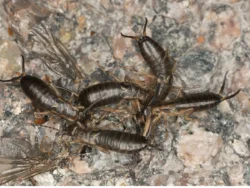
Earwigs don’t get the same attention as cockroaches or bed bugs, but Florida homeowners find them often — in bathrooms, under kitchen sinks, in laundry rooms, and in mulch beds pressed against the foundation. Most people find one or two and wonder whether that’s just normal Florida life. Sometimes it is. But a growing population has distinct warning signs that go well beyond the occasional sighting.
This guide covers the 8 most reliable signs of an earwig infestation in a Florida home, where these pests actually hide once they’re inside, and what to do when basic prevention on your own isn’t moving the needle. If you’re already past the “occasional earwig” stage, you’ll recognize it by the time you finish reading.
Why Earwigs End Up Inside Florida Homes
Earwigs are outdoor insects by nature. They prefer moist soil, leaf litter, and the undersides of rocks and mulch — conditions that Florida provides in abundance year-round. What pushes them indoors is usually a combination of heavy rainfall saturating outdoor soil, summer heat driving them toward cooler interior spaces, and cracks or gaps around the foundation and doors that make entry easy.
Once inside, earwigs gravitate to the same conditions they prefer outdoors: moisture, darkness, and organic material to feed on. That’s what makes Florida bathrooms, laundry rooms, and under-sink cabinets such consistent earwig hotspots. Florida’s climate gives them little reason to leave on their own.
8 Warning Signs of an Earwig Infestation
1. You’re Seeing Earwigs at Night — Repeatedly
Earwigs are nocturnal. A single nighttime sighting isn’t necessarily a problem — one may have wandered in through an open door or gap. But if you’re finding them multiple nights in a row in the same areas (bathroom floor, kitchen sink, laundry room), that’s not a one-off entry event. That’s an established population living somewhere in or around your home.
Daytime sightings are an even stronger signal. Like cockroaches, earwigs hide during daylight hours and only move when conditions force them out. Seeing earwigs during the day typically means the population has grown large enough that individuals are being displaced from their harborage points — which is the pest control equivalent of an overcrowded colony spilling out of its hiding spots.
2. You Find Them Clustered in Damp, Dark Areas
A single earwig entering through a gap is a nuisance. A cluster of earwigs behind a bathroom cabinet, under the laundry sink, or inside a wall void near water lines is an infestation. Earwigs aggregate — they naturally gather in groups in warm, moist, protected spaces. Finding more than a few in the same location at the same time is a clear sign they’ve established a harborage point inside the home.
Common cluster locations in Florida homes: the cabinet beneath the bathroom sink, behind the washing machine, inside gaps near water lines in the garage, inside saucers beneath potted plants on the floor, and under any debris or leaf litter touching the exterior foundation.
3. You Notice Ragged Damage on Indoor or Garden Plants
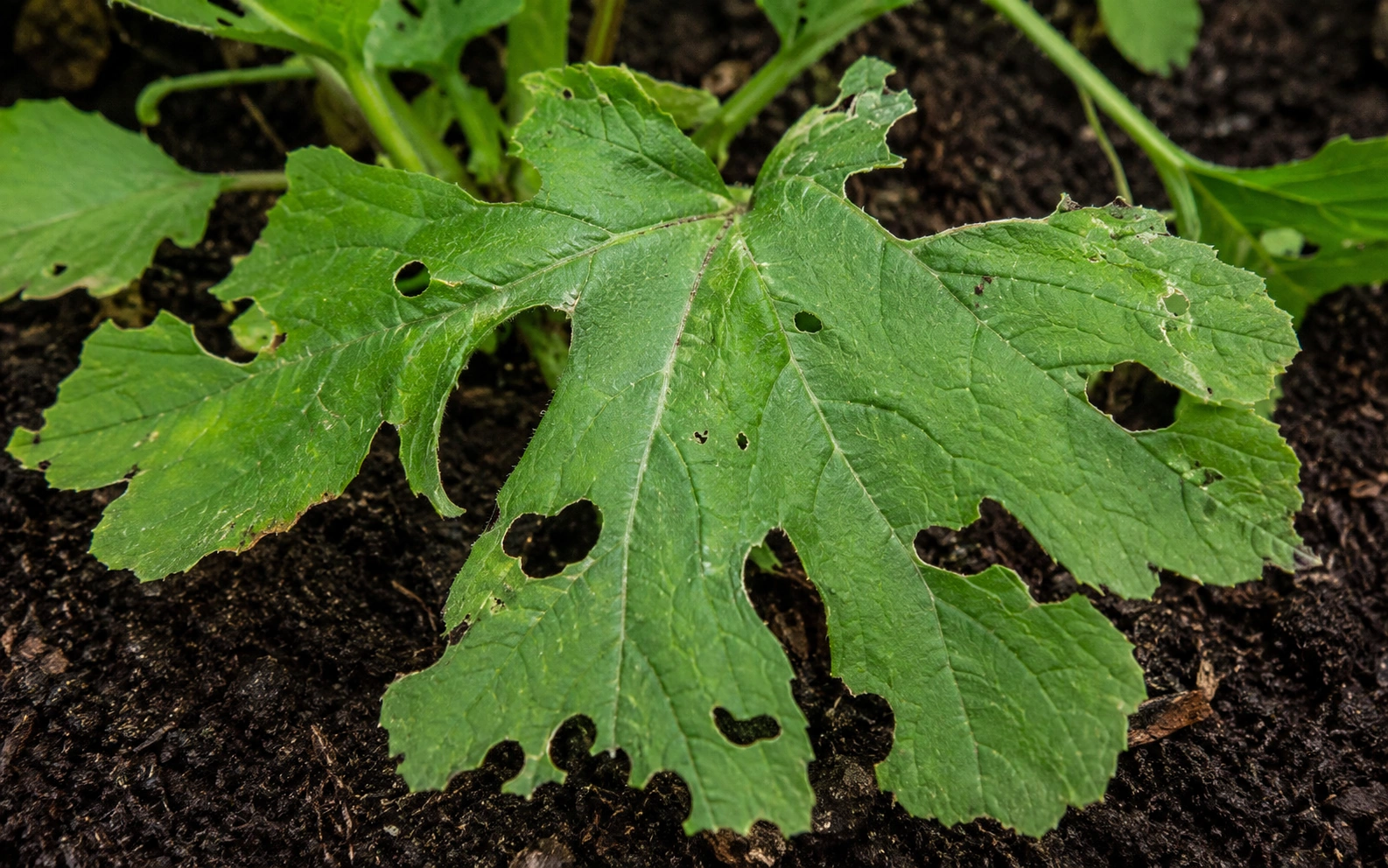
Earwigs feed on soft plant tissue — seedlings, flower petals, and the edges of broad leaves. If your indoor plants or garden vegetables are showing irregular holes along leaf margins that appear overnight, earwigs are a likely cause. Unlike slugs, they leave no slime trail. Unlike caterpillars, there’s no frass deposited on top of the leaf. The damage tends to appear on leaf edges with a rough, chewed appearance rather than clean-cut holes.
This sign is most common in potted plants kept near exterior doors, in garden beds close to the house foundation, and in vegetable gardens with soft-leaved plants like lettuce, basil, chard, or marigolds. Finding earwigs during a nighttime garden inspection confirms the source.
4. You Spot Dark Droppings or Frass in Corners and Crevices
Earwigs leave behind small, dark droppings (frass) in areas where they congregate. These are easy to overlook — they can look like flecks of dirt or debris in tight corners, under appliances, or inside the back corners of cabinets. If you wipe an area clean and the dark specks keep coming back in the same spot, earwig frass is worth considering. It typically appears in clusters near harborage points, not randomly scattered across a surface.
5. A Foul or Musty Odor in a Specific Area
When disturbed or crushed, earwigs release a yellowish-brown defensive secretion with a distinct unpleasant smell. In small numbers, most people don’t notice this. But in a larger infestation — particularly one established in a wall void, under flooring, or in a crawl space — the accumulated secretions can produce a noticeable musty or faintly chemical odor in that area. If a bathroom, laundry room, or utility space has an odor you can’t trace to an obvious moisture or mold source, earwig activity in the wall or floor void is worth investigating.
6. You Find Shed Skins Near Baseboards or Under Appliances
Earwigs molt multiple times as they develop from nymphs into adults, shedding their exoskeleton at each growth stage. Finding pale, translucent shed skins near baseboards, behind appliances, or inside cabinet spaces indicates not just current earwig presence, but an actively breeding population. Shed skins are evidence of a population that has been established long enough to go through multiple developmental stages — not a handful of insects that wandered in recently from outside.
7. You Discover Eggs or Nymphs in Soil, Mulch, or Potted Plants
Female earwigs lay clutches of 20–80 small, oval, pale yellow eggs in a protected soil chamber or under organic debris. Unlike most insects, earwig mothers actively guard their eggs and newly hatched nymphs — an unusual behavior for an insect pest. If you turn over a flower pot, dig in a mulch bed adjacent to the foundation, or inspect moist soil near a downspout extension and find a cluster of tiny pale eggs or very small immature earwigs grouped together, you’ve found a breeding site.
Earwig nymphs look like miniature adults with smaller, straighter pincers. They are found in the same moist environments adults prefer. Discovering a breeding site is the most definitive sign that an infestation is actively growing.
8. Earwigs Are Consistently Clustering Near Your Foundation
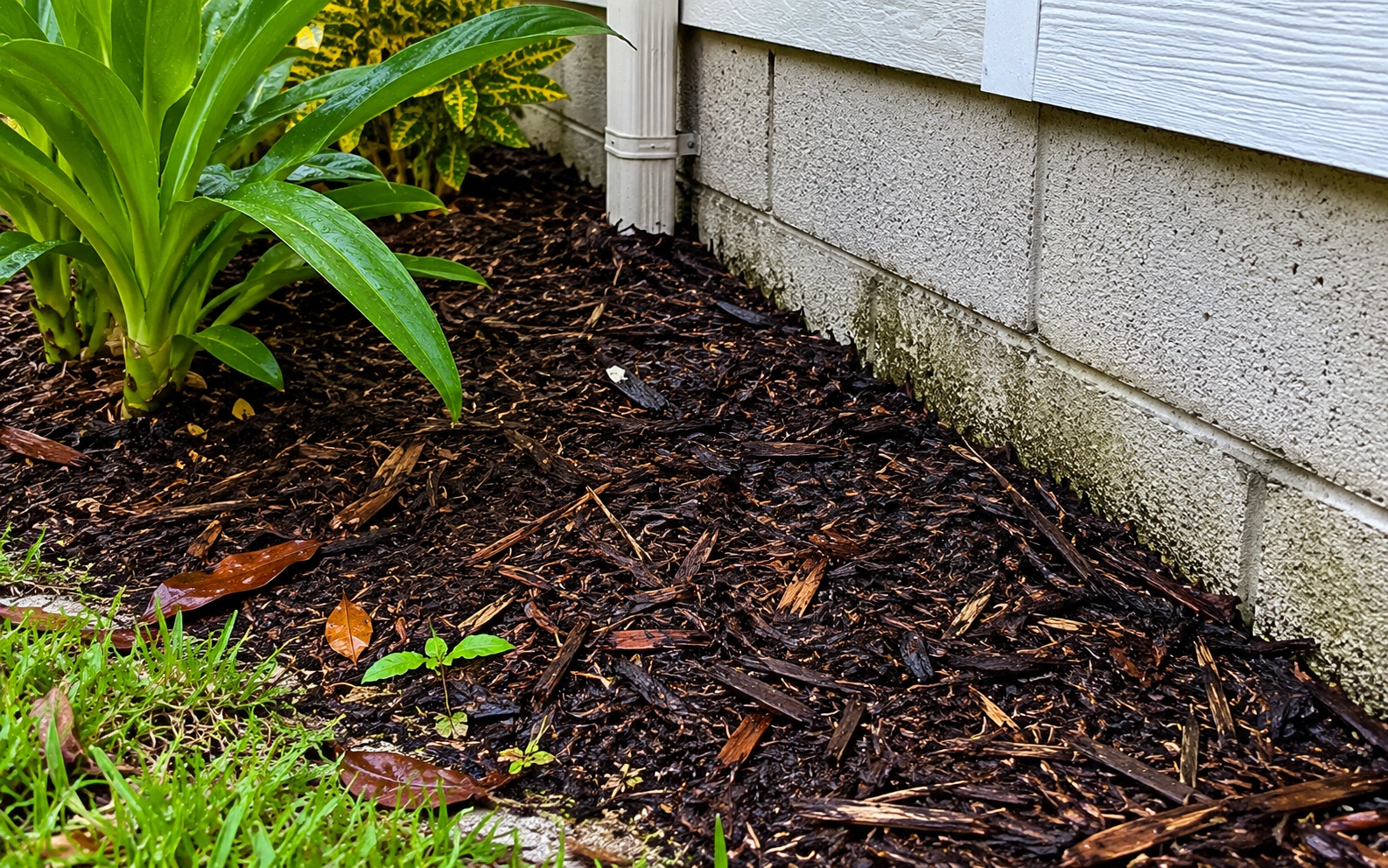
One of the clearest early warnings of an indoor infestation-in-progress is finding earwigs regularly on your exterior walls, under the lip of the foundation, in mulch beds against the house, or under doormats near entry doors. These exterior populations feed indoor activity. As the outdoor population builds up close to the foundation, indoor sightings become more frequent and harder to prevent without treating the exterior perimeter as well as the interior.
If you’re regularly finding earwigs on the exterior near doors or in perimeter mulch, treating only inside the home addresses the symptom — not the source. The exterior breeding population will continue pushing new insects in.
Where Earwigs Hide in Florida Homes
Bathroom
- Under and behind the sink cabinet
- Around the toilet base where condensation collects
- In the gap between the tub surround and wall
- Under bath mats left on damp floors
- Inside exhaust fan housing if not regularly cleaned
Kitchen
- Under the kitchen sink, especially near a slow drip
- Behind the refrigerator (compressor generates warmth + moisture)
- Under the dishwasher
- In gaps between the stove and adjacent cabinets
- Inside potted herb planters kept on the floor
Laundry Room
- Behind the washing machine
- Under the utility sink
- In gaps around water supply lines entering the wall
- Under laundry baskets or bins sitting on the floor
- In floor drains that see infrequent use
Garage
- In stacked cardboard boxes and paper bags
- Under rubber floor mats
- In wall gaps near where plumbing or conduit enters
- Under firewood stored against an interior wall
- Inside the rubber weather seal at the base of the garage door
Exterior / Foundation
- In mulch beds touching the foundation
- Under leaf litter pressed against exterior walls
- Under stones, pavers, or landscape timbers near the house
- In clogged gutters and downspout extensions on the ground
- Under doormats at exterior entry points
Garden & Landscaping
- Under loose bark on stumps or log piles
- In dense, shaded garden beds with retained moisture
- In saucers beneath outdoor potted plants
- Under ground-level irrigation equipment
- In overgrown areas of vegetation touching the home
When to Call a Professional
DIY moisture control and exclusion resolve most minor earwig problems. Fix the leak. Pull the mulch away from the foundation. Seal the gap under the exterior door. Run a dehumidifier in the laundry room. These steps remove the conditions earwigs depend on and often reduce or eliminate light activity without any chemical treatment needed.
The cases that warrant professional service are the ones where those steps have already been taken — or where the signs above go beyond occasional sightings. If you’re finding shed skins, egg clusters, clustered populations in multiple rooms, or consistent exterior foundation activity that keeps feeding indoor sightings, the infestation has established itself at a level that DIY methods rarely resolve fully.
Professional earwig treatment addresses both interior harborage and exterior perimeter — the source of the population, not just the insects you can see. At McCall, our earwig service includes an inspection to identify where the population is established, targeted interior treatment where needed, and perimeter treatment of the foundation zone and mulch areas where outdoor populations build. We cover Jacksonville, Gainesville, Ocala, Orlando, Tallahassee, Tampa, and surrounding Florida communities. If the problem returns between visits, so do we.
Not sure what you’re looking at? Our guide on what earwigs look like and how to identify them covers the full identification picture with visual descriptions.
Frequently Asked Questions About Earwig Infestations
Do earwigs actually crawl into your ears?
No — this is a myth dating back to an old European superstition, which is also where the name comes from. Earwigs have no interest in human ears. They prefer dark, damp hiding spots like under sinks, in mulch beds, and behind appliances — not inside a sleeping person’s head. The name has stuck for centuries, but the behavior has never been documented.
Are earwigs dangerous to people or pets?
Earwigs are not dangerous. They can pinch with their forceps if picked up or accidentally trapped against skin, but the pinch rarely breaks the surface and earwigs do not carry or transmit disease. Their pincers are primarily used to capture small prey insects and for defense against other insects — not against people or pets.
What attracts earwigs to a Florida home?
Moisture is the primary driver. Leaky pipes under sinks, mulch beds against the foundation, clogged gutters, standing water from irrigation, and dense vegetation near entry points all create the conditions earwigs seek. Florida’s year-round humidity means there’s rarely a completely dry exterior environment, which is why consistent perimeter maintenance matters more here than in drier climates.
Can earwigs damage my home?
Earwigs do not damage wood, insulation, wiring, or structural elements of a home. They are not in the same category as termites or carpenter ants when it comes to property damage. They do damage soft plant tissue — seedlings, flower petals, vegetables, and certain indoor houseplants — and a large population in a garden bed can cause meaningful plant loss over a season.
How do I get rid of earwigs in my Florida home?
Start by eliminating the moisture conditions attracting them: fix leaky pipes, run a dehumidifier in humid spaces, clear clogged gutters, and redirect downspouts away from the foundation. Move mulch, leaf piles, and firewood at least 12–18 inches from exterior walls. Seal gaps around door thresholds, pipes, and the foundation. For an active infestation — especially one showing multiple signs from this list — professional pest control provides more thorough and lasting results than DIY products alone.
Seeing multiple signs of an earwig infestation in your Florida home?