
If your dog won’t stop scratching, your cat is biting at its fur, or you’ve noticed tiny bites on your ankles, you may be dealing with a flea infestation. Fleas are among the most frustrating household pests to eliminate — not because they’re particularly hard to kill as adults, but because their life cycle makes them uniquely difficult to wipe out completely with a single treatment.
In Florida, the challenge is even greater. The state’s warm, humid climate means fleas breed and stay active year-round — there’s no cold winter to knock populations back. Understanding why fleas are in your home, what signs to watch for, and how to get rid of fleas in every stage of their life cycle is the only approach that actually works.
Why Fleas Are in Your Home
Fleas don’t appear randomly. In nearly every case, a flea infestation can be traced back to one of three sources — and identifying which one applies to your situation is the first step toward a lasting solution.
Pets That Go Outdoors
The most common route for fleas into a Florida home is a pet that spends time outside. Cats, dogs, and even outdoor rabbits can pick up fleas from grass, mulch, or shaded outdoor areas where fleas wait for a passing host. Once aboard, the pet carries them inside, where female fleas begin laying eggs almost immediately — up to 50 eggs per day. Those eggs roll off the pet into carpets, bedding, and furniture, seeding the environment with the next generation of the infestation.
Wildlife Near or in the Yard
Even homes without pets can develop flea problems. Squirrels, opossums, feral cats, raccoons, and other wildlife that pass through or nest in your yard can deposit flea eggs in the soil or grass. When those fleas mature and can’t find a wildlife host, they readily target humans and domestic pets. In Florida, where wildlife is abundant and yards are often lush and heavily shaded, this is a common and frequently overlooked source of flea infestations.
Infested Secondhand Items
Flea pupae — the cocoon stage of the flea life cycle — are extraordinarily resilient. They can survive for months inside upholstered furniture, rugs, and even clothing without a host. Bringing home a secondhand couch, rug, or mattress from an infested home can introduce a dormant flea population into your house that emerges weeks later, long after you’ve forgotten where the item came from.
Signs You Have Fleas in Your Home
Fleas are small — adult cat fleas, the most common species in Florida, are only about 1–2 millimeters long — but their presence is rarely subtle once a population is established. Watch for these signs:
- Pets scratching excessively, biting at fur, or showing signs of skin irritation; hair loss around the base of the tail or neck is common
- Flea dirt on pets or household surfaces — tiny black or rust-colored specks that look like ground pepper; if you wet a few specks and they turn reddish-brown, that’s digested blood — a definitive sign of fleas
- Small, red bite marks on humans, typically around the ankles, lower legs, and waist; flea bites often appear in clusters or lines
- Jumping insects on floors, furniture, or pet bedding — fleas can jump up to 150 times their own height
- Pale gums or lethargy in pets — a severe flea infestation can cause anemia, particularly in young animals or small breeds
Dealing With a Flea Infestation in Florida?
McCall Pest & Wildlife provides same or next day flea control services across Florida. Call 888-409-0938 for a free inspection — our technicians treat pets, home interiors, and yards as a complete system for lasting results.
How to Get Rid of Fleas: A Complete Approach
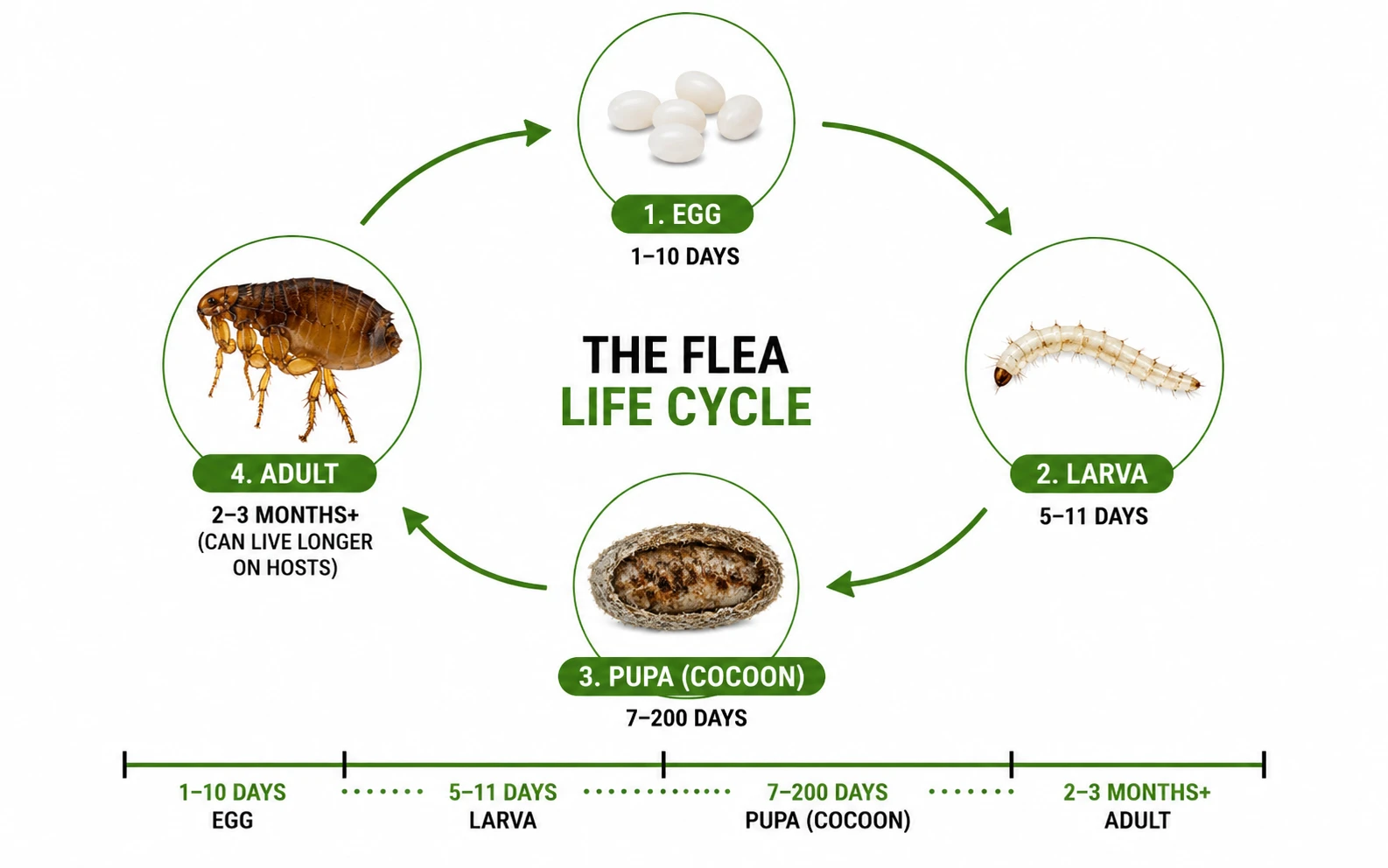
This is the most important thing to understand about flea control: treating only one area of the infestation almost never works. Fleas have a four-stage life cycle — egg, larva, pupa, and adult — and each stage requires a different approach. A treatment that kills adults does nothing to eggs and pupae in your carpet, which will hatch within weeks and restart the cycle.
Effective flea elimination requires treating your pets, your home interior, and your yard simultaneously.
Treating Your Pets
Your pets are both the initial host and the ongoing source of new flea eggs being dropped into your home environment. Start here:
- Use a veterinarian-recommended flea treatment — oral medications (like NexGard or Bravecto) or topical spot treatments (like Frontline or Advantage) are the most effective options; over-the-counter flea collars and shampoos are rarely sufficient for established infestations
- Bathe pets with a flea-killing shampoo to remove existing fleas and flea dirt before applying preventive treatment
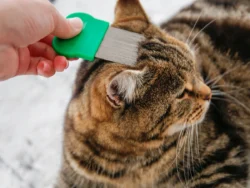
- Comb pets daily with a fine-toothed flea comb over a white surface to monitor flea presence and remove remaining insects
- Consult your veterinarian before using any flea treatment on kittens, puppies, or pets with health conditions
Treating Your Home Interior
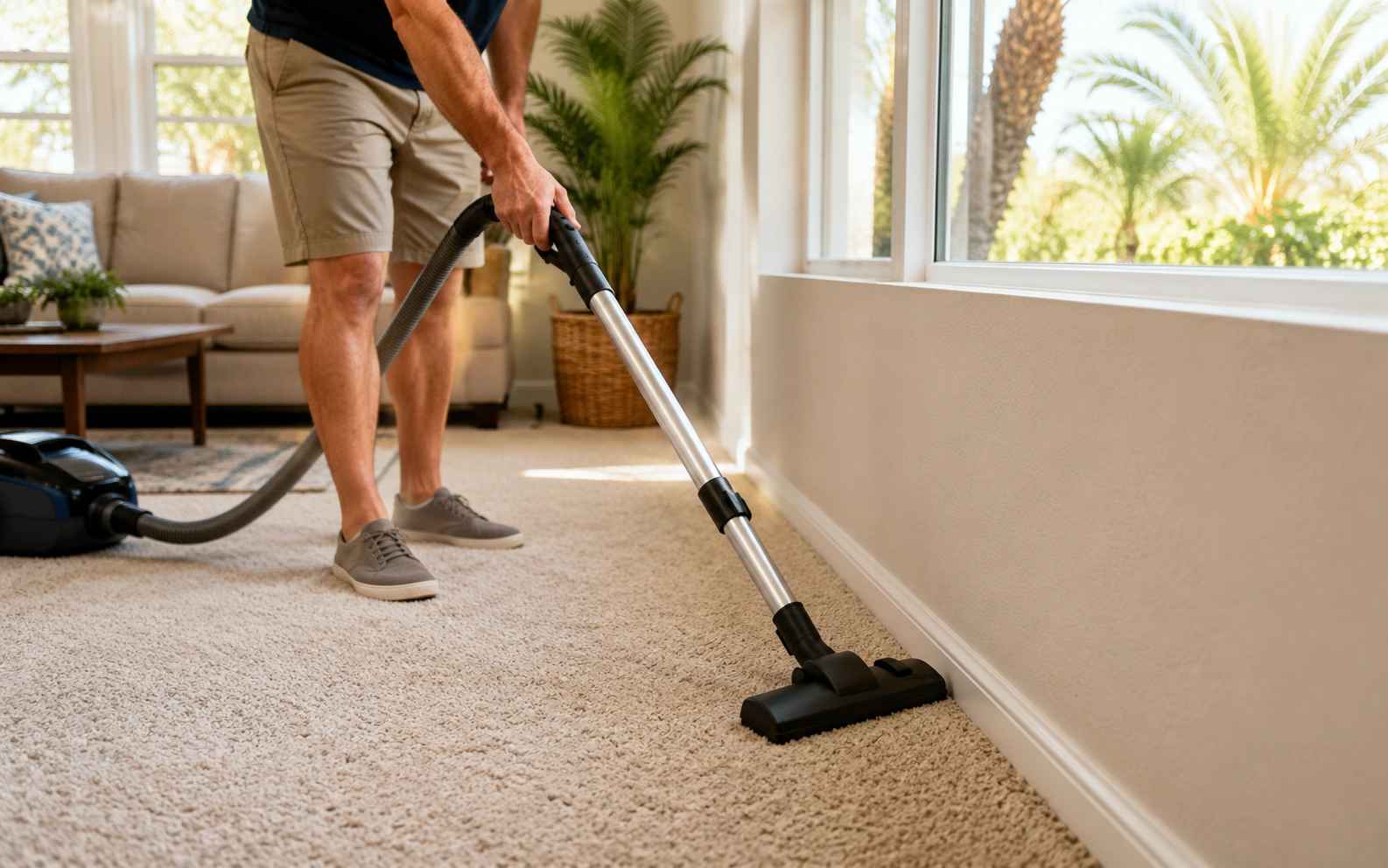
- Vacuum thoroughly and immediately — vacuum all carpets, rugs, furniture, and upholstered surfaces with particular attention to edges, corners, and areas where pets rest; the vibration stimulates pupae to hatch, making them vulnerable to treatment; dispose of the vacuum bag immediately in an outdoor trash can
- Wash all pet bedding on the hottest possible cycle; wash human bedding as well if pets share sleeping spaces
- Apply an insecticide with IGR (insect growth regulator) — IGR-containing products (such as those with methoprene or pyriproxyfen) don’t just kill adults, they prevent eggs and larvae from developing; this is the key ingredient that breaks the reproduction cycle and prevents reinfestation
- Treat under furniture and along baseboards — flea larvae avoid light and congregate in these dark, protected areas
- Follow up in 2–3 weeks — a second treatment is almost always necessary to catch fleas that were in the pupal stage during the first treatment and have since hatched
Treating Your Yard
Outdoor flea control is often overlooked but is essential for preventing reinfestation, particularly in Florida where fleas survive and breed in shaded, moist yard areas year-round:
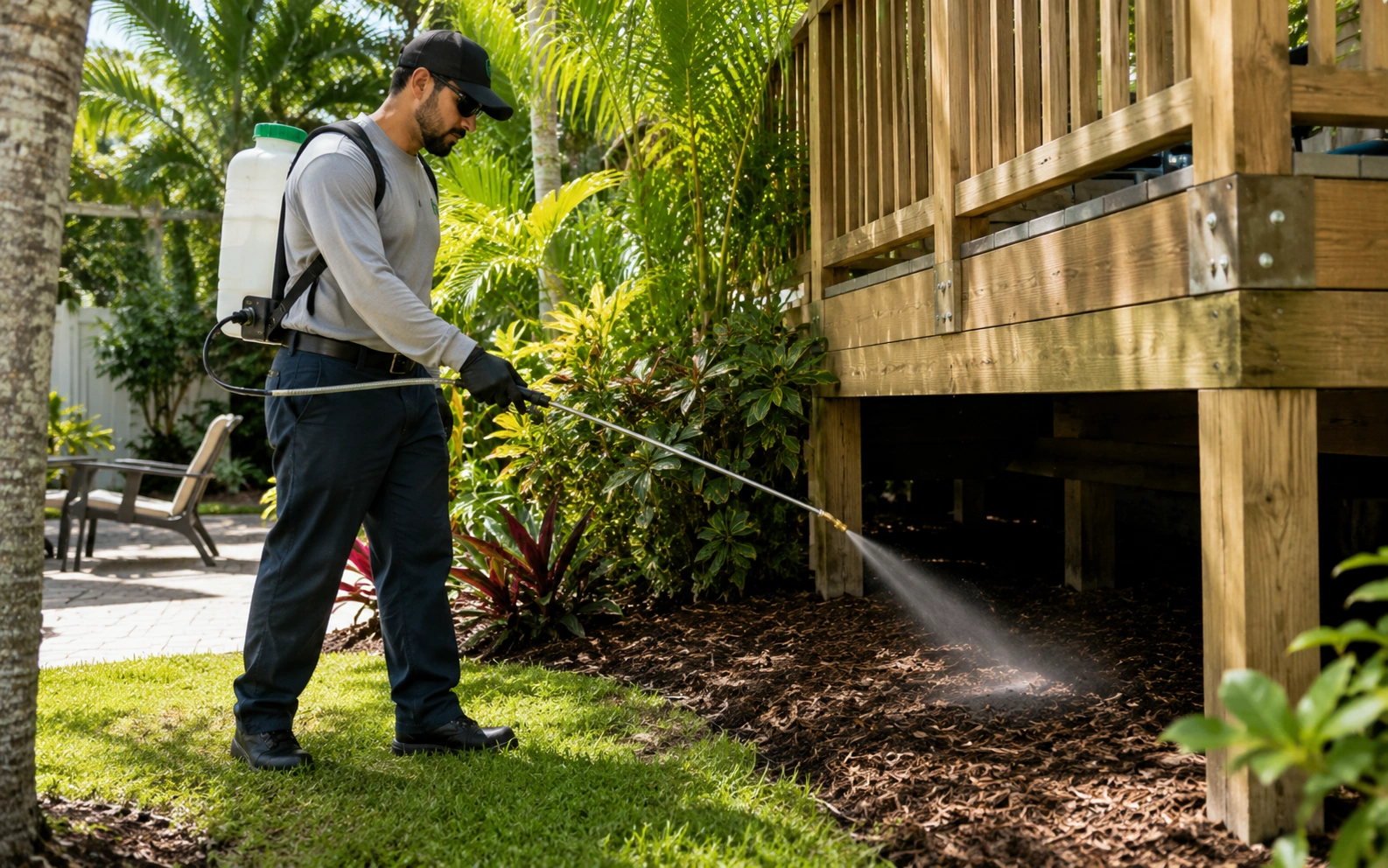
- Focus treatment on shaded areas where pets rest — under decks, in dense shrubs, and along fence lines where feral animals may travel
- Use an outdoor-labeled insecticide or hire a pest professional for perimeter treatment
- Mow the lawn regularly — tall grass creates humid, shaded habitat ideal for flea larvae development
- Remove leaf litter, wood piles, and debris where wildlife may shelter and deposit fleas
- Consider whether wildlife access to your yard is contributing to the problem and address entry points accordingly
Flea Risks in Florida Homes
Beyond the discomfort of flea bites, Florida homeowners should be aware that fleas carry real health risks. According to the CDC, fleas are capable of transmitting diseases including murine typhus, cat scratch disease, and in rare cases, even plague. In Florida specifically, flea-borne typhus has been reported, particularly in areas with high wildlife activity near homes.
Fleas are also the primary intermediate host for tapeworms. Pets that ingest an infected flea during grooming can develop tapeworm infections that may require veterinary treatment. This is another reason early, complete flea control matters — not just for comfort, but for the health of your household.
For professional pest control that addresses fleas as part of a comprehensive household protection plan, McCall Pest & Wildlife serves homeowners across Florida’s major metros and surrounding areas.
DIY Flea Control vs. Professional Flea Control
DIY flea control can be effective for very early-stage infestations — for example, if you’ve caught the problem within the first week of a pet bringing fleas inside, and you treat aggressively on all three fronts (pet, home, yard) from the start.
However, most homeowners don’t recognize a flea infestation until it’s already been established for weeks or months. By that point, the population includes fleas in every life stage — including large numbers of pupae in carpets and furniture that are chemically resistant and immune to most store-bought treatments. In these situations, professional flea control delivers substantially better results:
- Professional-grade products include higher concentrations of IGR and longer-residual insecticides not available to consumers
- Technicians treat the entire home systematically — including areas homeowners routinely miss
- A professional treatment plan includes scheduled follow-up visits to address newly hatched adults
- McCall’s technicians can also assess and address outdoor flea pressure, wildlife access points, and any structural factors contributing to the problem
How to Prevent Future Flea Infestations
Once you’ve eliminated an infestation, keeping fleas out requires consistent habits — especially in Florida’s year-round flea season:
- Keep pets on year-round veterinarian-recommended flea prevention — this is the single most effective preventive measure for pet-owning households
- Vacuum frequently — weekly vacuuming of carpets, furniture, and pet areas removes eggs before they can develop
- Inspect pets after outdoor time — run a flea comb through fur after time outside in areas with heavy vegetation or wildlife activity
- Manage your yard — keep grass cut, remove debris piles, and trim back dense shrubs to reduce habitat for flea populations
- Discourage wildlife from entering the yard — securing trash, removing fallen fruit, and sealing potential wildlife entry points under decks and sheds reduces one of the most overlooked flea sources in Florida yards
Ready to Get Rid of Fleas for Good?
McCall Pest & Wildlife provides same or next day flea treatment across Florida — covering your home, yard, and advising on pet care coordination. Call 888-409-0938 or click below to schedule a free inspection.
Frequently Asked Questions About Getting Rid of Fleas
How long does it take to get rid of fleas?
Getting rid of fleas completely typically takes two to four weeks when treatment is applied to pets, the home interior, and the yard simultaneously. The delay is due to the flea life cycle — eggs and pupae in carpets and furniture are resistant to most insecticides. A follow-up treatment two to three weeks after the initial application is almost always necessary to catch newly emerging adults before they reproduce.
Can fleas lay eggs in carpet?
Yes — carpets are one of the most common places fleas lay eggs in a home. Flea eggs drop off pets and settle into carpet fibers, where they hatch into larvae and eventually develop into pupae. The pupal stage is particularly resilient and can survive for months in carpet, waiting for the vibrations and warmth of a passing host before emerging as adults — which is why regular vacuuming and follow-up treatments are critical.
Why do fleas come back after treatment?
Fleas return after treatment primarily because the pupal stage is chemically resistant. Even after a thorough treatment kills adults, eggs, and larvae, pupae in carpets and furniture can remain dormant for weeks to months and emerge later. This is why a single treatment almost never fully resolves an infestation — follow-up applications, IGR products that disrupt development, and treating outdoor areas are all necessary to break the cycle completely.
Do flea sprays hurt pets?
Some household flea spray products can be harmful to pets if they are present during application or allowed back into treated areas before the product has fully dried. Always follow label instructions carefully, keep pets and children out of treated areas until completely dry, and use only products labeled safe for your specific type of pet. Consult your veterinarian for guidance on treating pets and your home at the same time safely.
Don’t Let Fleas Take Over Your Florida Home
McCall Pest & Wildlife’s licensed technicians treat flea infestations at every stage — inside, outside, and in coordination with your pet’s treatment plan. Call us at 888-409-0938 or click below to get a same or next day inspection.