

Quick answer: Mosquito season in Orlando runs from roughly March through November, with peak pressure in June through September. Central Florida’s lakes, retention ponds, and near-daily afternoon thunderstorms create ideal breeding conditions for most of the year. Eliminating standing water and applying professional mosquito treatments are the most effective ways to protect your backyard.
If you’ve spent five minutes in a Central Florida backyard after sunset, you already know the problem. Orlando mosquitoes are not a minor inconvenience. They cut outdoor time short, threaten family gatherings, and carry real health risks including West Nile virus and Eastern equine encephalitis. Unlike cooler parts of the country where mosquito season is short and predictable, Orlando’s subtropical climate keeps populations active for nine or ten months of the year.
This guide covers everything homeowners in Orlando, Kissimmee, Winter Park, Lake Nona, and Oviedo need to know: when mosquito season peaks, what drives Central Florida’s outsized mosquito pressure, what you can do in your own yard, and when it makes sense to call in a professional mosquito control team.
The Short Answer: Orlando Mosquitoes Run Most of the Year
Are mosquitoes year-round in Central Florida? Effectively, yes. Populations dip during December, January, and February when overnight temperatures fall below 50°F, but they rarely disappear entirely. By late February or early March, numbers begin climbing again. Residents in Kissimmee, Winter Park, and communities near the Kissimmee Chain of Lakes often notice activity picking up before their counterparts in higher-elevation areas of the state.
The practical implication is simple. Protection strategies that work for a week-long camping trip in the mountains are not enough for a Central Florida homeowner. Orlando mosquito control requires a consistent, season-long approach.

Orlando Mosquito Season, Month by Month
Understanding the seasonal rhythm helps you plan treatments and preventive measures at the right time. Here is how a typical year unfolds across Metro Orlando.
| Month | Activity Level | What’s Happening |
|---|---|---|
| January | Very Low | Sustained cold keeps populations suppressed; isolated warm spells bring out small numbers |
| February | Very Low | Activity near its lowest until late-month warming begins |
| March | Low to Moderate | Season begins; warmer days trigger egg hatching in ponds and low spots |
| April | Moderate | Container-breeding Aedes species become active across Orange and Osceola counties |
| May | High | Activity rises sharply as temperatures climb and early storms create new breeding sites |
| June | Very High | Peak season opens; afternoon thunderstorms refill every container within hours |
| July | Very High | Standing water abundant; pressure highest across the metro |
| August | Very High | Sustained peak from Winter Park’s lakes to Lake Nona and Oviedo |
| September | High | Still heavy; storm activity keeps the cycle going |
| October | Moderate | Numbers decline but remain significant, especially after warm fall fronts |
| November | Low to Moderate | Cooling weather slows breeding; warm days still see activity |
| December | Very Low | Most species go dormant, though some adults survive mild winters in sheltered areas |
The June through September window is when most Orlando-area homeowners feel the problem most acutely. For a deeper look at how the timeline shifts across the state, see our related resource on when mosquito season ends in Florida.
Why Mosquitoes Thrive in Central Florida
Central Florida’s geography and climate create a near-perfect incubator for mosquito populations.
How do Orlando’s lakes and retention ponds fuel mosquito breeding?
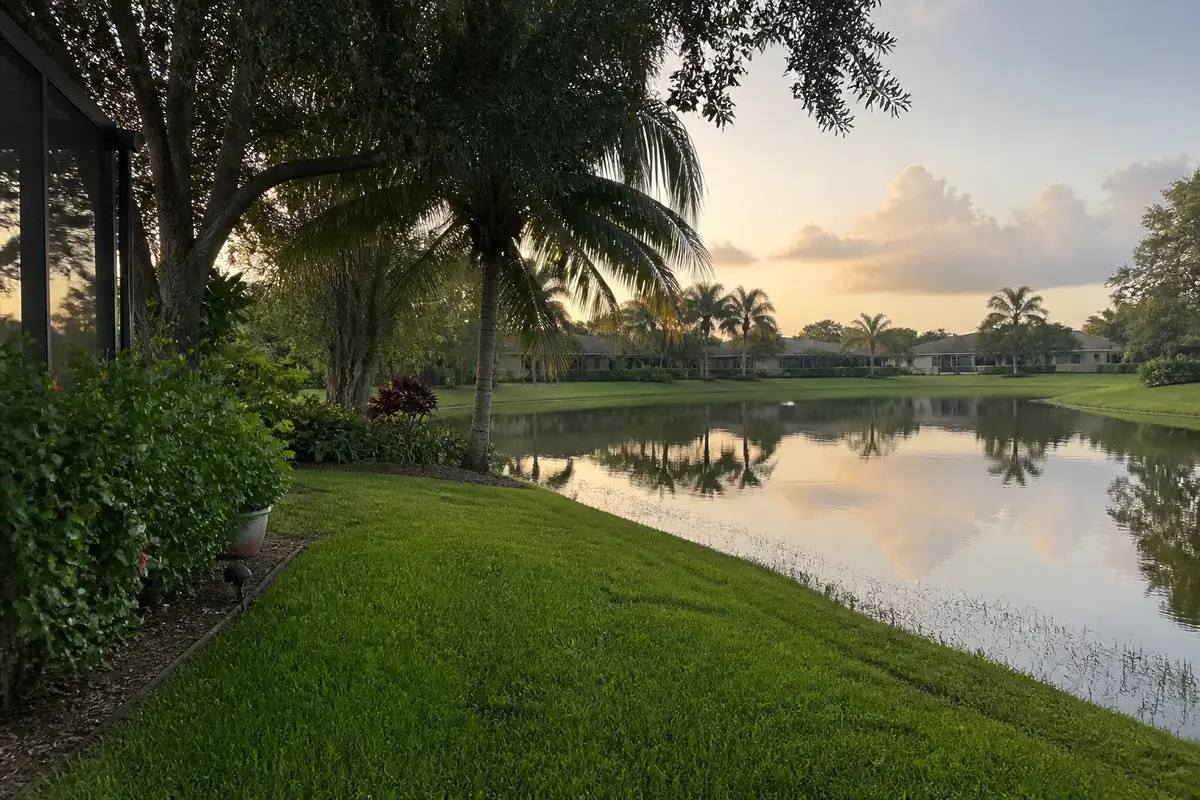
The Orlando metro sits in a landscape defined by water. Lake Conway, Lake Tohopekaliga near Kissimmee, the Winter Park Chain of Lakes, the retention ponds scattered through Lake Nona’s master-planned communities, and hundreds of smaller bodies of water throughout Oviedo and unincorporated Orange County all provide enormous amounts of standing or slow-moving water.
Mosquitoes need as little as a half-inch of standing water to complete their larval cycle. A single retention pond left untreated can produce thousands of adult mosquitoes per acre per week during peak season. Communities built near the Kissimmee Chain of Lakes face some of the most persistent pressure in the region for exactly this reason.
Why do afternoon thunderstorms make mosquito problems worse in Orlando?
Orlando averages more than 80 thunderstorm days per year, according to the Florida Department of Health. These storms are both predictable and intense, often dropping more than an inch of rain in under 30 minutes. That rapid accumulation fills gutters, tarps, plant saucers, and any depression in a yard before it can drain. Within 72 hours, mosquito eggs laid in those spots begin hatching.
“We see a direct correlation between our storm patterns and the service calls we get,” says a McCall Orlando branch manager. “Within three or four days of a heavy rain event, the phones start ringing.”
Which mosquito species should Orlando homeowners be most concerned about?
Several species are medically significant in Central Florida:
- Aedes aegypti is the primary vector for dengue, Zika, and chikungunya. It breeds in small containers close to homes and feeds during the day.
- Aedes albopictus (the Asian tiger mosquito) is similarly aggressive, bites during daylight hours, and spreads rapidly through suburban neighborhoods.
- Culex quinquefasciatus is the main vector for West Nile virus in Florida and breeds in nutrient-rich standing water like storm drains and neglected pools.
Understanding which species you’re dealing with matters, because prevention tactics and treatment timing differ between container breeders like Aedes and large-water breeders like Culex.
How to Keep Mosquitoes Out of Your Orlando Backyard
Professional treatments work best when homeowners are also reducing breeding and resting habitat. Here is what makes the biggest difference.
Eliminate standing water throughout your property
This is the single highest-impact step any Orlando homeowner can take. Walk your yard after every rain and look for water accumulating in:
- Gutters and downspout extensions
- Tarps, pool covers, and patio furniture covers
- Plant saucers and potted plant trays
- Bird baths (change water every 72 hours)
- Children’s toys, buckets, and unused pots
- Low spots in the lawn that hold water after storms
- Air conditioning drip lines
For water features you want to keep, consider adding mosquito dunks (Bacillus thuringiensis israelensis, or Bti) to suppress larvae without harming pets, fish, or pollinators.
Manage vegetation and lawn conditions
Adult mosquitoes rest in dense, shaded vegetation during the heat of the day. Trimming back overgrown shrubs, keeping grass cut short, and thinning dense groundcovers reduces the number of places mosquitoes can shelter near your home. This is especially relevant for properties bordering wooded buffers or lake edges, which are common in communities around Oviedo and Lake Nona.
Maintain pools, ponds, and water features properly
Stagnant pool water is a significant breeding source in Orlando. Run pool pumps on a regular schedule to keep water circulating, maintain proper chlorine levels, and inspect pool covers regularly. Ornamental ponds benefit from aeration systems or mosquito-eating fish like Gambusia affinis, which are available through some Florida county mosquito control programs.
Natural and Repellent Options for Orlando Homeowners
Not every situation calls for a full professional treatment program. For some homeowners, natural and repellent-based options are a useful part of the strategy.
What natural mosquito control methods actually work in Central Florida?
Several approaches have solid evidence behind them:
- Bti larvicides: Applied to standing water, Bti products kill mosquito larvae without harming beneficial insects. They are available in dunk, granule, and liquid forms.
- Mosquito-repellent plants: Plants like citronella, lemon balm, and basil produce compounds mosquitoes find unpleasant. They won’t eliminate an infestation but can serve as a supplemental measure around seating areas.
- Outdoor fans: Mosquitoes are weak fliers. A well-positioned fan over a patio can reduce landings significantly, because the airflow disrupts their ability to detect carbon dioxide and body heat.
- Essential oil repellents: Oil of lemon eucalyptus (OLE) is the only plant-based repellent recommended by the Centers for Disease Control and Prevention as an effective alternative to DEET. It provides protection for up to two hours.
For a detailed breakdown of natural approaches, our guide on effective methods of natural mosquito repellent covers each option with application guidance.
When are personal repellents most important to use?
During peak mosquito hours in Orlando, which are dusk and dawn for most Culex species and throughout the day for Aedes species, personal repellents applied to skin and clothing offer the most reliable individual protection. The EPA-registered active ingredients with the strongest evidence are DEET, picaridin, IR3535, and OLE. Apply repellents according to label directions and reapply after sweating or swimming.
Professional Mosquito Control in Orlando
Backyard prevention reduces breeding habitat, but it rarely eliminates mosquito pressure on its own, particularly for properties near large water bodies or in neighborhoods with high overall mosquito populations. That’s where professional mosquito control services make a measurable difference.
What does professional mosquito treatment involve for Orlando properties?
A licensed mosquito control technician will typically:
- Conduct a property inspection to identify breeding sites, resting areas, and conducive conditions
- Apply EPA-registered barrier treatments to foliage and shaded areas where adult mosquitoes rest
- Treat any standing water with larvicides where elimination isn’t possible
- Recommend structural and habitat modifications to reduce ongoing pressure
- Schedule follow-up treatments on a cadence matched to your property’s risk level
Barrier treatments target adult mosquitoes resting on vegetation and typically provide 21 to 30 days of residual protection under normal conditions. After heavy rain, reapplication intervals may need to be shortened.
How often should Orlando homeowners schedule professional mosquito treatments?
During peak season, June through September, most Orlando properties benefit from treatments on a three-to-four-week schedule. Properties adjacent to retention ponds, lakes, or wooded buffers may require more frequent visits. During the shoulder season (March through May and October through November), treatment frequency can often be reduced depending on activity levels.
“Consistency is the key word,” says a McCall Orlando service technician. “Homeowners who treat once and skip a month because it seemed like things were quiet often end up starting over. The biology doesn’t stop just because you had a few good weeks.”
Seasonal mosquito control programs that bundle recurring treatments at a set price often deliver better value than one-off applications, and they ensure your yard stays protected throughout the full Orlando mosquito season.
Areas We Serve Around Orlando
McCall Pest & Wildlife provides Orlando pest control and mosquito control services across Metro Orlando and surrounding communities, including:
- Kissimmee and Osceola County, where proximity to the Kissimmee Chain of Lakes creates some of the region’s most persistent mosquito pressure
- Winter Park, including neighborhoods bordering the Winter Park Chain of Lakes
- Lake Nona, where newer developments feature extensive retention pond systems throughout the community
- Oviedo and Seminole County, with its mix of suburban neighborhoods and wooded natural areas
- Orange County unincorporated communities throughout greater Orlando
Elsewhere in the region, our metro guides for Jacksonville, Tampa, and Ocala offer similar local guidance.
Frequently Asked Questions About Orlando Mosquito Control
When is mosquito season in Orlando?
Mosquito season in Orlando runs from approximately March through November, with peak activity from June through September. Central Florida’s warm temperatures, high rainfall, and abundant standing water allow mosquito populations to thrive for nine to ten months of the year. During December through February, activity drops significantly but rarely stops completely during mild winters.
Why are mosquitoes so bad in Orlando?
Orlando mosquitoes are especially problematic because Central Florida combines three conditions that favor explosive population growth: subtropical heat, near-daily summer thunderstorms, and an abundance of standing water in the form of lakes, retention ponds, and drainage systems. Communities near the Kissimmee Chain of Lakes, Winter Park’s lakes, and Lake Nona’s retention ponds typically experience higher-than-average pressure. Multiple medically significant species also breed in the region, including Aedes aegypti, Aedes albopictus, and Culex quinquefasciatus.
How do I get rid of mosquitoes in my Orlando backyard?
Start by eliminating standing water from gutters, plant saucers, tarps, and low-lying lawn areas after every rain. Apply Bti larvicide to water features you can’t empty. Keep grass and shrubs trimmed to reduce resting habitat. For reliable season-long protection, combine these property-management steps with professional barrier treatments on a three-to-four-week schedule during peak season. No single tactic eliminates mosquitoes in Central Florida, but a layered approach reduces populations significantly.
Is professional mosquito control worth it in Orlando?
For most Orlando homeowners, especially those near retention ponds, lakes, or wooded areas, professional mosquito control is worth the investment. DIY prevention reduces breeding habitat but cannot match the residual control provided by EPA-registered barrier treatments applied by a licensed technician. Professional service is particularly valuable during June through September, when mosquito pressure is at its highest and populations can rebound quickly after rain events.
Are there mosquito control options that are safe for children and pets in Orlando?
Yes. Bti-based larvicides are highly targeted to mosquito and gnat larvae and pose no meaningful risk to children, pets, fish, or pollinators when used as directed. Many professional mosquito control products are also formulated to minimize impact on non-target organisms. Ask your service provider to review the active ingredients and safety data for any products applied to your property. The University of Florida Institute of Food and Agricultural Sciences (UF/IFAS) provides regularly updated guidance on low-impact mosquito control strategies appropriate for residential use in Florida, available on their extension site.
Does Orlando have a municipal mosquito control program I can rely on?
Orange County Mosquito Control and Osceola County both operate public mosquito abatement programs that target high-risk public areas and conduct aerial spraying during severe pressure events. However, these programs focus on public spaces and roadways rather than individual residential yards. Homeowners who want consistent protection for their own property need to implement backyard prevention and, for the best results, supplement with professional residential mosquito control services.
Protect Your Yard Before Mosquito Season Gets Ahead of You
Orlando mosquito control is not a one-time fix. The biology of the problem demands a consistent approach: remove standing water, treat resting habitat, and stay on a treatment schedule that keeps pace with the season. Properties near the Kissimmee Chain of Lakes, Winter Park’s lakes, or Lake Nona’s retention ponds face more pressure than the average yard, and require more diligence in return.
- See McCall’s mosquito control program and learn what a season-long plan looks like for your yard.
- Explore McCall pest control in Orlando.
- Contact McCall for a free Orlando mosquito quote and schedule an inspection tailored to your property.