
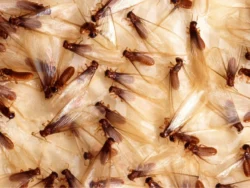
Finding a swarm of insects near your windows or fluttering through your living room is alarming under any circumstances. When those insects are termites with wings, the stakes are considerably higher.
Winged termites aren’t just lost bugs wandering into your home by accident. They are a deliberate signal — produced by a mature colony that has grown large enough to begin expanding its territory. If you’re seeing them inside your house, a colony has likely been silently feeding on the structural wood of your home for several years.
This complete guide explains exactly what termites with wings are, how they fit into the termite life cycle, how to tell them apart from flying ants, what their presence means for your property, and the immediate steps you should take to protect your home.
Understanding Termite Life Cycles
To understand why you’re seeing flying termites, it helps to know how a termite colony operates. These insects live in highly organized social structures divided into distinct groups called castes, each performing a specific role:
- Worker caste: The largest group by far. Workers are blind, wingless, and pale. They forage for food, maintain the nest, and cause all of the actual wood damage inside your home. They work continuously, 24 hours a day.
- Soldier caste: Soldiers protect the colony from predators, particularly ants. They are wingless, with large dark heads and powerful jaws. If you disturb a termite nest, soldiers are the ones that emerge first.
- Reproductive caste (swarmers): The only group that ever develops wings. The colony produces these winged reproductives — called swarmers or alates — specifically to leave the nest, mate, and start entirely new colonies. A nest typically doesn’t produce swarmers until it has reached full maturity, which usually takes three to five years.
This is why seeing termites with wings is such a meaningful event. Their appearance means a nearby colony is mature, well-established, and actively trying to expand.
What “Termites With Wings” Actually Are
Pest control professionals call winged termites “swarmers” or “alates.” They are the future kings and queens of new termite colonies, and they represent the colony’s best strategy for reproduction and territorial expansion.
Unlike the soft, pale workers hidden deep inside your walls, swarmers have darker, harder bodies adapted for brief exposure to the outdoors. Their wings serve one single purpose: to carry them away from their birth colony. Termite swarmers are not strong flyers — they typically catch a breeze, flutter a short distance, and land.
Once a swarmer finds a mate, both insects shed their wings immediately. The new pair searches for a suitable location — typically damp soil or soft wood — to dig in, establish a royal chamber, and begin building a brand-new colony. The discarded wings you find piled on windowsills or near door frames are the evidence of this process.
When & Why Termites With Wings Swarm
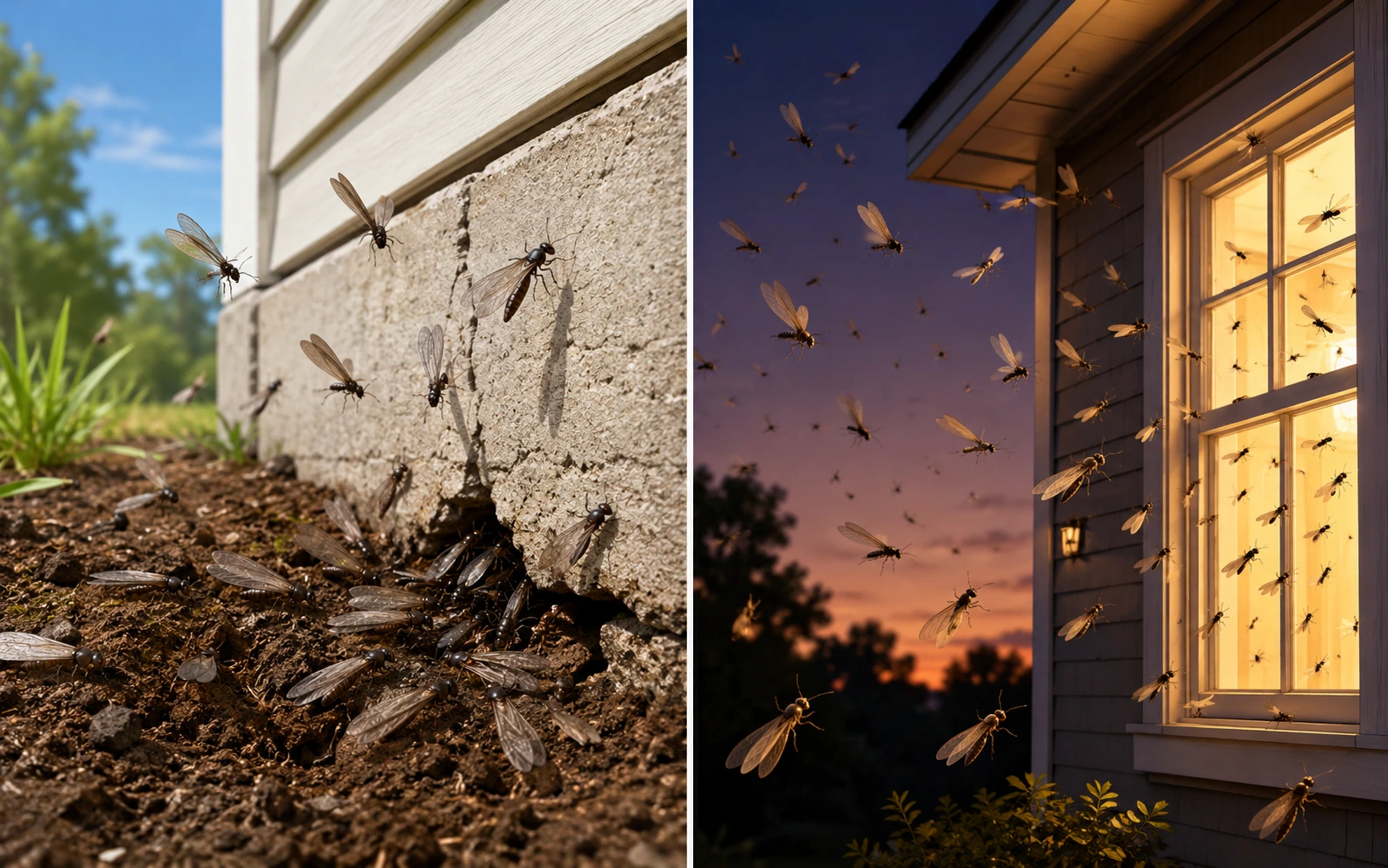
Termite swarms don’t happen randomly. Swarmers wait for a very specific set of environmental conditions before leaving the nest — conditions that Florida provides in abundance.
The classic trigger is a warm, sunny day following heavy rainfall. The moisture softens the soil and makes it easy for new pairs to dig royal chambers. Florida’s intense humidity, heavy spring rains, and year-round warmth mean that our state experiences some of the most active termite swarming in the entire country.
Different species swarm at different times:
- Subterranean termites — the most destructive species in Florida — typically swarm during warm daylight hours, often in the late morning or early afternoon following spring and early summer rains.
- Drywood termites often swarm in the late afternoon or early evening, flying directly toward lit windows, porch lights, and other light sources.
- Formosan termites (a subterranean subspecies particularly problematic in South Florida) tend to swarm in the evening hours, often in massive clouds that can number in the thousands.
How to Identify Termites With Wings
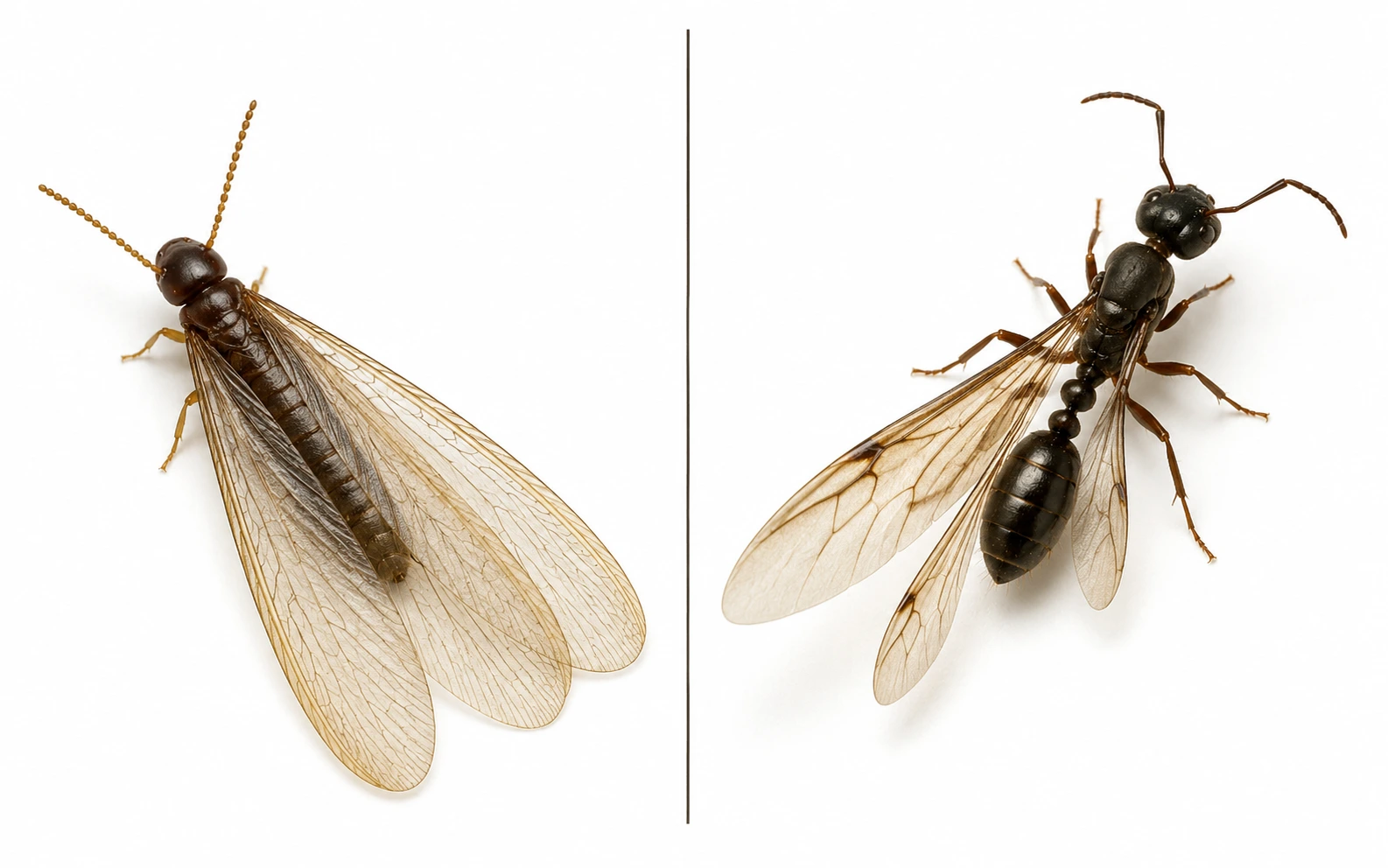
Misidentifying flying ants as termite swarmers — or vice versa — is one of the most common homeowner mistakes when dealing with a potential infestation. The species look similar at a glance, but the differences are clear once you know what to look for.
| Feature | Termite Swarmer | Flying Ant |
|---|---|---|
| Antennae | Straight, beaded | Elbowed, bent at 90° |
| Body shape | Thick, straight — no visible waist | Severely pinched waist between thorax & abdomen |
| Wings | Four wings, all equal in length, flat along body | Four wings — front pair longer than rear pair |
| Wing shed | Wings break off easily, left behind in piles | Wings typically remain attached to body |
| Color | Dark brown to black, sometimes pale | Black, brown, or reddish depending on species |
The most reliable field clue is wing length. Termites with wings have four wings that are all the same size, lying flat along their back when at rest. A flying ant’s front wings are clearly longer than its hind wings. If you find piles of equal-length wings near a door frame or on a windowsill, that’s a termite.
What Winged Termites Mean for Your Home
Location matters enormously when interpreting a termite swarm. The situation facing a homeowner who sees swarmers outside is very different from one who finds them inside.
Swarmers Outside
A cloud of swarmers in your yard means a mature colony lives somewhere nearby — in a dead tree stump, old fence post, neighbors’ yard, or wood debris in the soil. The colony is not necessarily in your home yet, but these swarmers are actively searching for a new location to establish a nest. Your home’s wood framing and landscape are now targets. This is the time to schedule an inspection and consider preventive treatment before they find a way in.
Swarmers Inside
Finding termites with wings inside your home — emerging from baseboards, door frames, drywall, or ceiling areas — is a serious red flag. It means a mature colony has already been living and feeding inside your home’s structure for multiple years. The swarmers are trying to fly out to establish new colonies but are trapped. This situation requires immediate professional inspection and treatment.
Found Termites With Wings in Your Home?
Don’t wait. Swarmers inside your home mean a mature colony is already feeding on your structure. McCall’s termite specialists identify the exact species, locate the colony, and design a targeted treatment plan. Call 888-409-0938.
Signs Termites May Be Colonizing Your Property
Termite swarms last only 30 to 40 minutes. If you miss the actual event, evidence is almost always left behind. Look for these clear indicators that termites are actively working on your property:
- Discarded wing piles: Swarmers shed their wings immediately after landing. Equal-length, translucent wings scattered on windowsills, doorways, or caught in spider webs near the foundation are a classic sign. Even a small pile of a dozen or so wings should be taken seriously.
- Mud tubes: Subterranean termites build pencil-sized tunnels from soil and saliva along your exterior foundation, plumbing pipes, or inside crawlspaces. These tubes protect the workers from drying out as they travel between the soil and your home’s wood. Breaking a mud tube open and seeing live termites confirms an active infestation.
- Hollow-sounding wood: Tap baseboards, door frames, and window sills with the handle of a screwdriver. Solid wood makes a sharp sound; wood that termites have hollowed out sounds dull and papery.
- Clicking sounds in walls: Soldier termites bang their heads against tunnel walls to alert the colony to danger. In a large infestation, this creates an audible faint clicking that you can sometimes hear by pressing your ear against an interior wall.
- Buckling floors or sagging ceilings: Severe, long-term termite damage compromises structural support members, causing hardwood floors to buckle upward and ceilings or door frames to visibly sag or warp.
Termite Life Cycle Stages
Understanding the full life cycle helps you see how a single pair of swarmers becomes a colony capable of causing tens of thousands of dollars in structural damage.
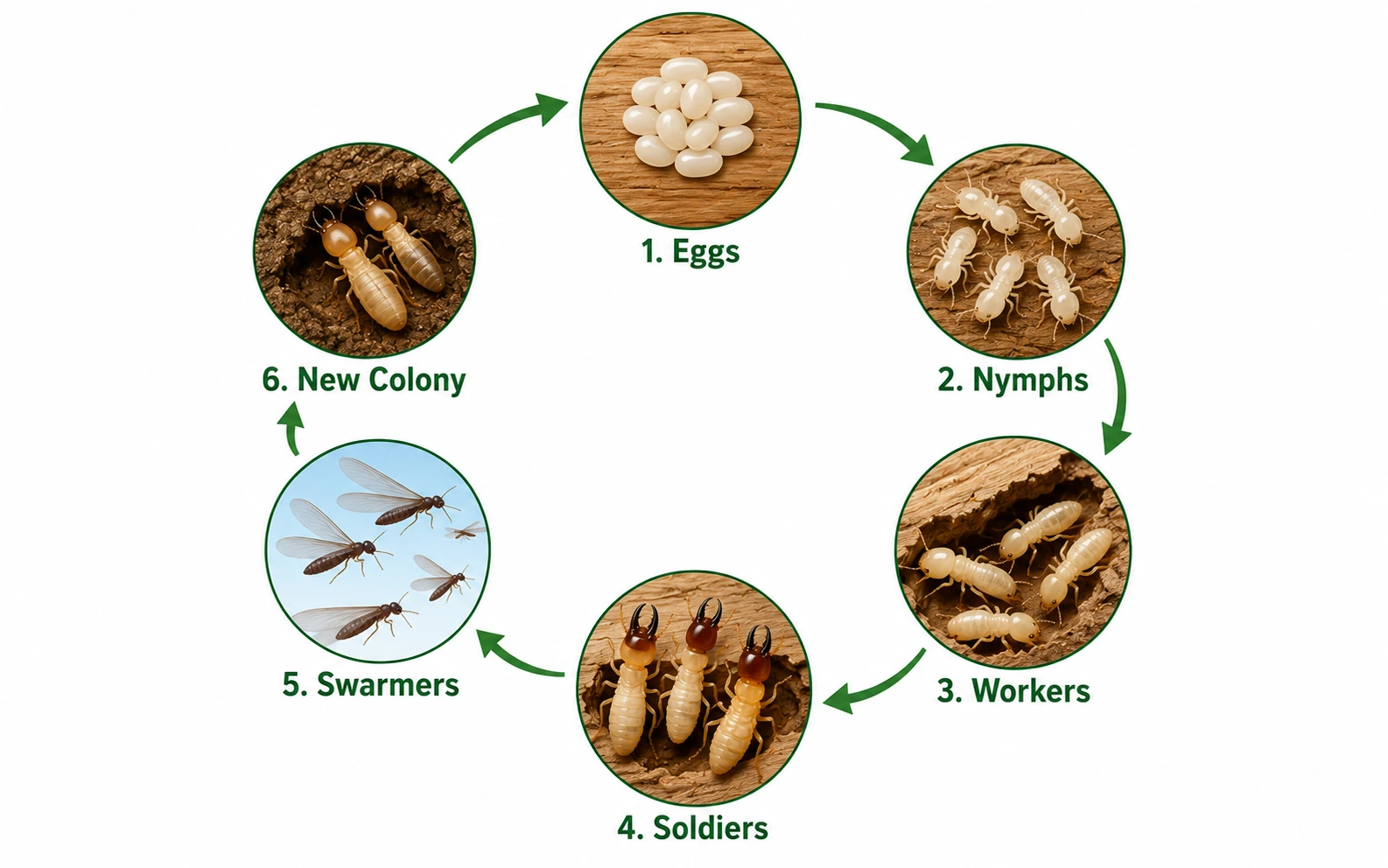
- Eggs: The queen lays thousands of tiny, white, oval eggs deep inside the protected nest. A mature queen can produce thousands of eggs per day.
- Nymphs: Eggs hatch into pale nymphs — immature termites that look like tiny workers. The colony monitors its current population needs and chemical signals guide each nymph’s development.
- Workers: The majority of nymphs develop into workers — the colony’s labor force. Workers forage, build, and feed the other castes. They cause all of the wood damage.
- Soldiers: Some nymphs develop into soldiers with large, darkened heads and strong mandibles. Soldiers cannot feed themselves and must be fed by workers.
- Swarmers (Alates): Once the colony reaches maturity — typically three to five years — some nymphs develop wing pads and become winged reproductives. These are the termites with wings you see during a swarm event.
- New Colony: A mated pair of swarmers sheds their wings, digs a small royal chamber, and begins laying eggs. The new king and queen may live for decades, building a colony that eventually produces its own swarmers.
How to Respond If You See Termites With Wings
If you find a swarm inside your home, stay calm — but act quickly. Here’s what to do and what to avoid:
Do not spray generic insecticide on the swarmers. This is the most common mistake. Killing the flying bugs does nothing to the hundreds of thousands of workers still inside your walls. In fact, certain sprays can cause the colony to retreat deeper into the structure or scatter into multiple satellite areas, making treatment more difficult and expensive.
Instead:
- Use a vacuum to collect the flying swarmers and discarded wings.
- Place a few of the dead insects or wings in a small zip-lock bag and seal it. A pest professional can use these samples to confirm the species and recommend the correct treatment.
- Take note of exactly where the swarmers emerged — specific room, wall, door frame, or floor area. This information helps a technician locate the colony entry point during inspection.
- Call a licensed termite professional immediately for a thorough inspection.
Professional Termite Inspection & Treatment
DIY termite control simply doesn’t work. Termites colonize deep underground or inside structural wood where retail products cannot reach. A professional termite inspection is the only reliable way to determine whether you have an active infestation, identify the species, and understand the extent of any damage.
At McCall Pest & Wildlife, our trained termite specialists know exactly where these pests hide, how each Florida species behaves, and which treatment approach will eliminate the colony at its source. We offer expert termite services across Florida, including Jacksonville, Gainesville, Tampa, Tallahassee, and Ocala. Our treatment options include:
- Liquid soil treatments that create a continuous chemical barrier around your home’s foundation, eliminating subterranean termites as they travel to and from the colony
- Termite baiting systems that workers carry back to the colony, delivering a slow-acting product that eliminates the entire population including the queen
- Drywood termite treatments for species that nest entirely within wood, using targeted spot treatments or whole-structure fumigation for severe infestations
Protect Your Home From Termite Damage
McCall’s termite specialists serve communities throughout Florida with targeted inspections and proven treatment plans. Don’t let termites compromise your home’s value and structural integrity. Call 888-409-0938 or request a free quote online.
Frequently Asked Questions About Termites With Wings
Why do termites grow wings?
Termites grow wings for one specific purpose: to leave their overcrowded birth colony and fly to a new location to start a new colony. Only the reproductive caste grows wings, and both males and females shed them immediately after finding a mate. The wings are disposable — they exist only for that single dispersal flight.
Do winged termites bite humans?
No. Termite swarmers do not bite humans or pets. Their only biological focus during the swarm is finding a mate and locating a new nest site. While unsettling to find in your home, they pose no direct physical danger to people or animals.
Are winged termites dangerous?
Not to your health — but extremely dangerous to your property. The presence of swarmers confirms that a mature, established colony is nearby and actively feeding. Termite colonies cause an estimated $5 billion in structural damage annually across the U.S., most of it not covered by standard homeowner’s insurance.
When are termites with wings active in Florida?
In Florida, termite swarm season typically runs from early spring through summer. Subterranean termites — the most destructive species — commonly swarm between January and April. Drywood and Formosan termites tend to swarm from late spring through the summer months. Florida’s warm climate means swarms can occasionally occur outside these windows after significant rain events.
What should I do with discarded termite wings I found?
Save a few in a plastic bag. A licensed termite inspector can use the wings to identify the species (wing shape and venation differ between subterranean, drywood, and Formosan termites), which directly determines the best treatment approach. Don’t discard them before someone has a chance to look.
Don’t Ignore Termites With Wings
Whether you’ve spotted swarmers outside or inside your home, McCall’s termite experts are ready to assess the threat and take action. Protect your biggest investment — call 888-409-0938 today.