
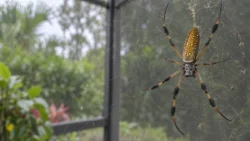
The Short Answer: Most Florida House Spiders Are Harmless, Two Groups Are Not
Most spiders in Florida homes are harmless web builders and hunters that eat other pests. The exceptions are the widow spiders, meaning the southern black widow, the brown widow, and the red widow, and the recluse spiders. Both groups are far less common indoors than people assume, but their bites can warrant medical attention.
You found a spider, and you want two things fast: a name and a verdict. This guide gives you both. Below you will find a quick-ID table, plain answers about the two groups that actually matter, and profiles of the eight harmless species you are far more likely to meet. You will also learn why spiders show up indoors each fall and what actually keeps them out.
Quick Spider ID Table: Match What You Are Looking At
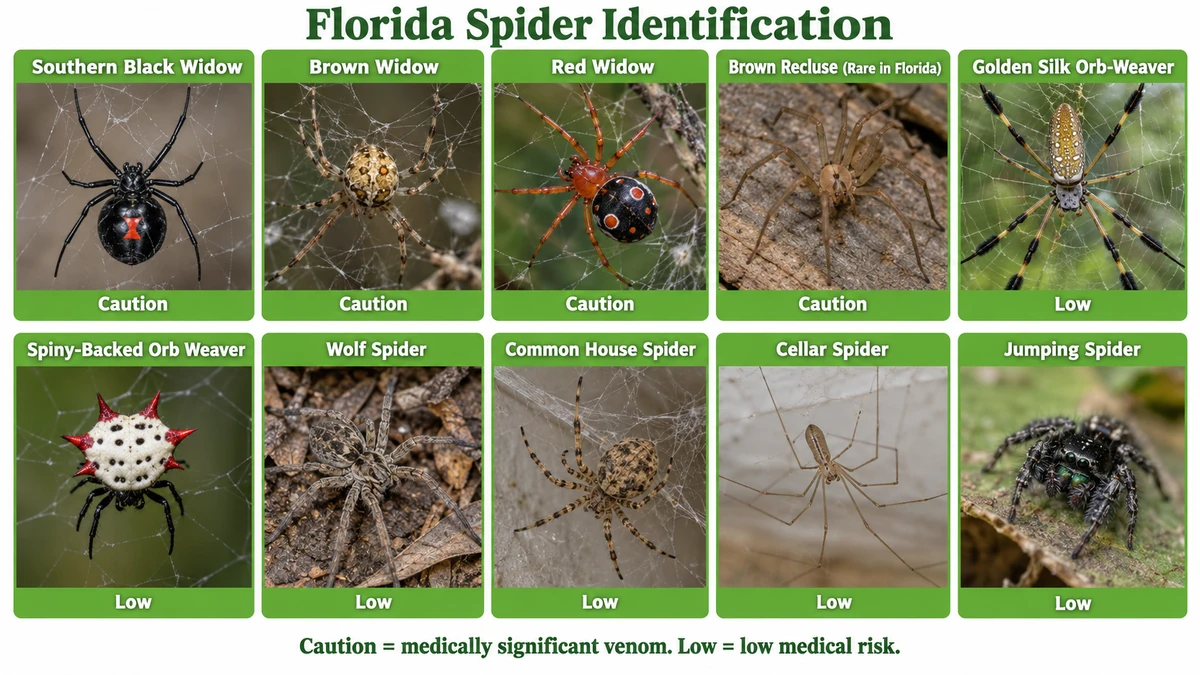
Use this table to narrow down what is in front of you. Match the size, marking, and location, then read the full profile below for details. The table runs to 12 rows because it breaks the two medically significant groups into their four individual species. The profiles further down follow the ten entries in the title: the two groups worth taking seriously, and the eight harmless species.
| Common Name | Size | Distinguishing Marking | Web / Hunting Style | Location in Home | Danger Level |
|---|---|---|---|---|---|
| Southern black widow | 0.5 in body | Red hourglass on underside | Messy, irregular web | Garages, meter boxes, patio furniture | High |
| Brown widow | 0.5 in body | Orange hourglass, spiky egg sacs | Tangled web | Screen corners, furniture undersides | Moderate to high |
| Red widow | 0.5 in body | Red legs, dark abdomen with spots | Sand-scrub web | Rare, sandy outdoor areas | High |
| Recluse | 0.25 to 0.5 in | Violin shape, six eyes | Loose retreat web | Undisturbed storage, rare in Florida | High |
| Golden silk orb weaver | Up to 3 in leg span | Yellow-banded legs, large web | Large, strong yellow web | Yards, porch eaves | None |
| Spiny-backed orb weaver | 0.3 in wide | White with red spikes | Small orb web | Driveways, shrubs, entryways | None |
| Common house spider | 0.25 in | Brown, mottled | Cobweb in corners | Ceiling corners, closets | None |
| Cellar spider | 0.3 in body | Very long thin legs | Loose tangled web | Ceilings, basements, corners | None |
| Wolf spider | Up to 1.5 in | Brown, hairy, fast | Ground hunter, no web | Under doors, floors | Very low |
| Jumping spider | 0.25 in | Fuzzy, large front eyes | Active hunter, no web | Windowsills, walls | None |
| Huntsman spider | Up to 5 in leg span | Flat, tan, fast | Ambush hunter, no web | Behind pictures, garages | Very low |
| Green lynx spider | 0.6 in | Bright green, spiny legs | Foliage hunter | Shrubs, entryways | None |
The 2 Spiders in Florida You Should Actually Take Seriously
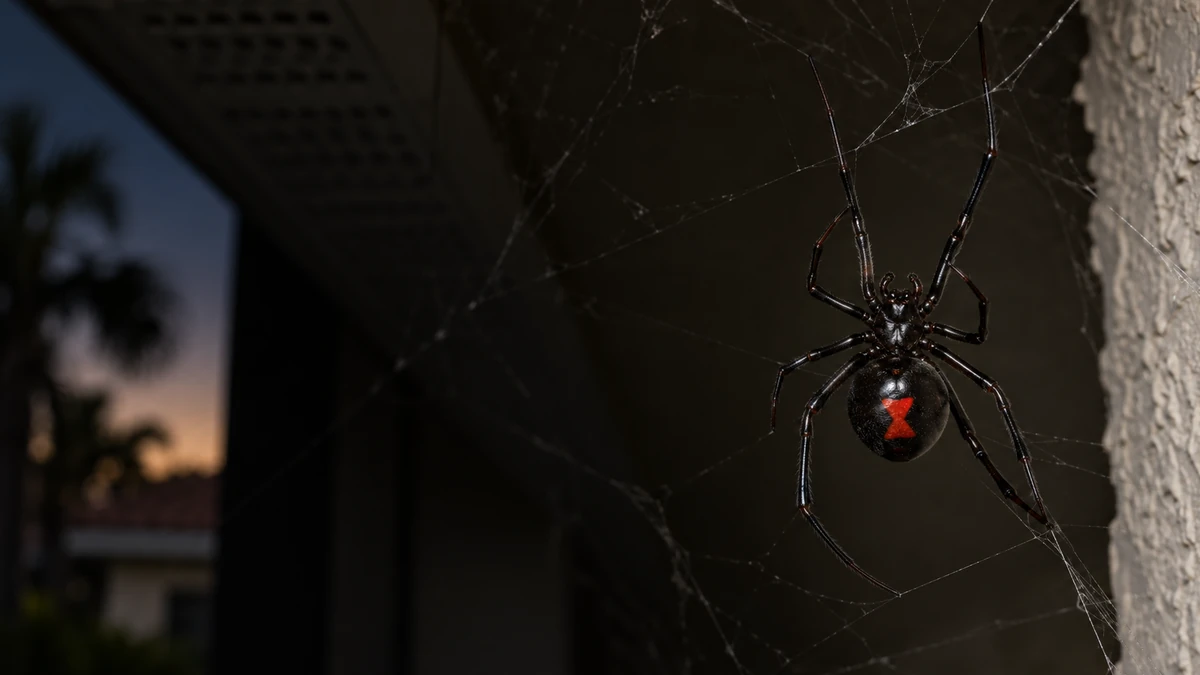
Florida has two spider groups that carry medical significance: widows and recluses. Everything else on this page is harmless. Knowing these two by sight lets you respond calmly and correctly.
Widow Spiders: Southern Black, Brown, and Red
Widow spiders are the most important group to recognize. All three Florida species share a round, glossy abdomen and a telltale hourglass marking on the underside.
The southern black widow is shiny black with a bright red hourglass. The brown widow is tan to brown with an orange hourglass and produces distinctive spiky, tan egg sacs. The red widow is the rarest, with reddish legs and a dark abdomen dotted with red or orange spots.
You will find widows in dark, sheltered spots. Check garages, meter boxes, the undersides of patio furniture, and the corners of screened enclosures. They are not aggressive and bite only when pressed against skin.
A widow bite can cause muscle pain, cramping, sweating, and nausea. Clean the area, apply a cold compress, and seek medical care, especially for children or older adults. For authoritative guidance on venomous species, see the University of Florida IFAS publication on Florida’s venomous spiders.
“On an inspection, the first places I check for widows are the meter box, the garage door track, and under any patio furniture. That is where they hide nine times out of ten,”
Kylan Swain, A.C.E., Quality Assurance Technical Field Trainer, McCall Pest & Wildlife
Recluse Spiders in Florida
Recluse spiders cause more worry than their actual presence justifies. Brown recluse spiders are not established across Florida, and confirmed indoor encounters are uncommon.
What people usually misidentify as a recluse is often a harmless wolf spider or huntsman. A true recluse has a violin-shaped marking behind its head and six eyes arranged in three pairs, rather than the usual eight.
If you suspect a recluse, avoid handling it and capture it in a container if you can do so safely. A bite may develop slowly and can cause a wound that is slow to heal, so medical attention is wise if symptoms worsen.
The 8 Harmless Spiders You Are Far More Likely to Find
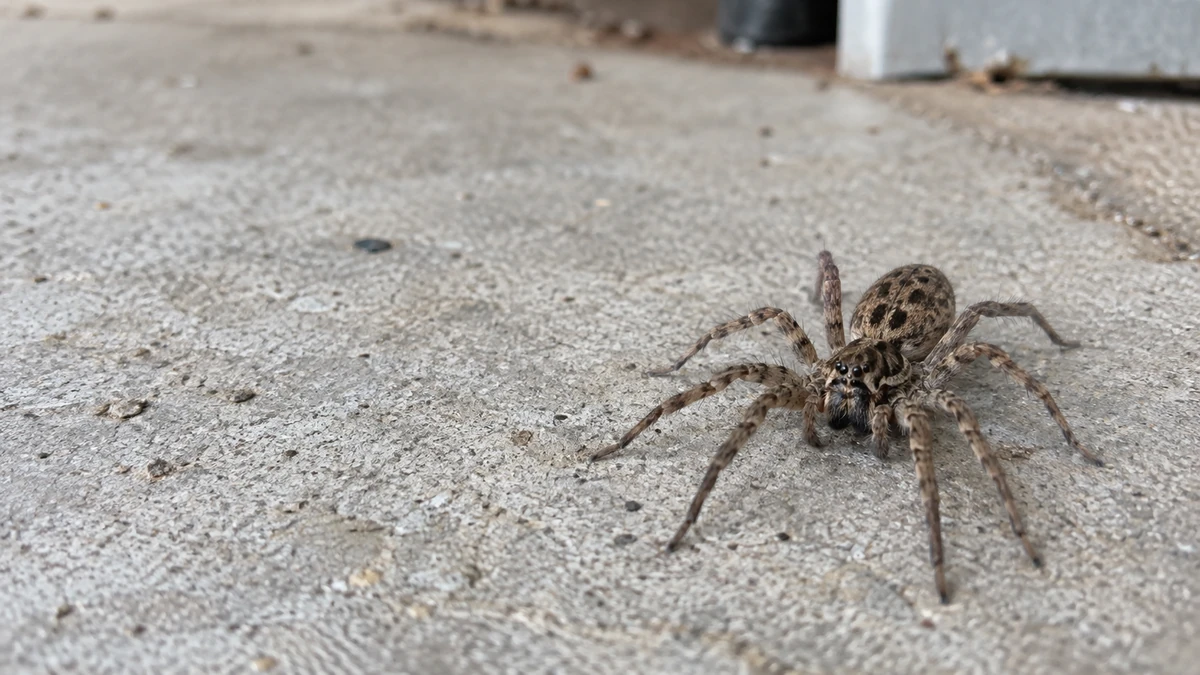
Now for the good news. These eight species make up the vast majority of what you will actually see, and they help control other insects around your home.
Golden Silk Orb Weaver (Banana Spider)
This is the large yard spider that makes people gasp. Females can reach a three-inch leg span and build huge golden webs between trees and eaves. They are not dangerous and rarely come indoors. Leave the web alone and it will thin out as the season changes.
Spiny-Backed Orb Weaver
You have probably walked into this one across a driveway. It is small, white, and armed with six red spikes around its shell. It builds tidy orb webs near entryways and shrubs. It poses no threat and eats plenty of small flying pests.
Common House Spider
This is the classic cobweb builder in your ceiling corners. It is small, brown, and mottled, and its messy webs collect the most dust. It bites only under duress and is not a health concern. Regular web removal keeps its numbers down.
Long-Bodied Cellar Spider (Daddy Long Legs)
You know this one by its very long, thin legs and loose, tangled web. There is a popular myth that it is the most venomous spider alive but simply cannot bite through skin. That is false on both counts. It is harmless and helps eat other spiders and insects.
Wolf Spider
Fast, large, and ground-hunting, the wolf spider often slips in under doors. It builds no web and chases prey across floors, which is why it startles people. It may bite if trapped against skin, but the effect is mild. It is a beneficial hunter that reduces other pests.
Jumping Spider
This small, fuzzy spider with large front-facing eyes patrols windowsills and walls. It hunts by day and often turns to watch you, which many people find oddly charming. It does not build a web and is completely harmless.
Huntsman Spider
Flat, tan, and fast, the huntsman hides behind picture frames and in garages. Its size and speed make it alarming, but it prefers to flee rather than fight. It rarely bites and helps control roaches and other insects.
Green Lynx Spider
Bright green with spiny legs, this hunter lives on shrubs and around entryways. It ambushes insects among foliage rather than spinning a web. It is harmless to people and a natural ally in the garden.
Why Spiders in Florida Come Inside in Fall
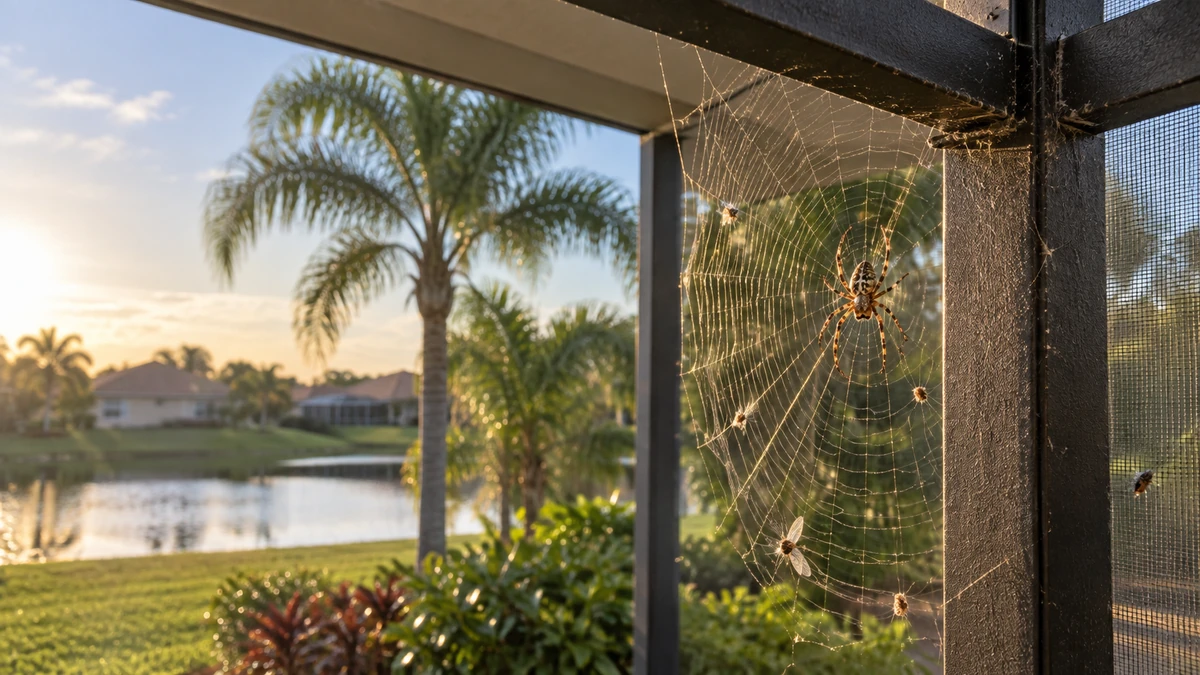
Spiders follow their food. An indoor spider surge almost always means you have an indoor insect problem first. The spiders are simply going where the meals are.
Fall triggers the shift. Cooling nights push insects to move, and exterior lighting pulls flying pests toward doorways and screens. The spiders follow right behind them.
Entry routes are everywhere: torn screens, garage door gaps, weep holes, unsealed soffits, and sliding door tracks. Boxes and potted plants carried in from outside bring hitchhikers, too.
Here is the reframe that matters. Killing spiders one at a time never works. Reducing the insect food supply does. That connection points to a pest problem, not just a spider problem, and it is why treating other pests that move indoors in fall matters as much as clearing webs.
Spider Activity by Region: Jacksonville, Orlando, Tampa, Gainesville, Ocala, and Tallahassee
Spider pressure looks different across the state. Here is what McCall Pest & Wildlife sees in each service area, and the common pests worth watching alongside spiders.
North Florida (Jacksonville, Gainesville, Tallahassee). Heavier oak and pine canopy means more orb weavers on porches and eaves. As nights cool, these metros see a defined fall push indoors. Alongside spiders, common pests here include roof rats, ants, and roaches. Sealing entry points and treating the exterior insect population handles most of them.
Central Florida (Orlando, Ocala). Screened pool enclosures and lanais are prime web real estate. Widow spiders turn up in garages and patio furniture, while orb weavers dominate the screen corners. Common pests include palmetto bugs, ants, and occasional widows. Knocking down webs and managing the insects that feed them is the core fix.
Gulf Coast (Tampa). Humidity and dense landscaping support year-round activity, with garages and lanais as concentration points. Roaches, ants, and orb weavers are the frequent callers. Routine exterior treatment plus screen and garage sealing keeps numbers in check.
The common thread statewide is simple. Florida’s mild winter slows spider activity but never stops it, so prevention works best as a year-round habit.
“When a customer says they have a spider problem, I am really looking for what the spiders are eating. Find the insect issue, fix that, and the webs stop coming back,”
Kylan Swain, A.C.E., Quality Assurance Technical Field Trainer, McCall Pest & Wildlife
How to Keep Spiders Out (What Works and What Does Not)
Prevention is a sequence, not a single spray. Work through these steps in order for the best result.
- Cut back exterior lighting or switch to yellow bulbs that attract fewer flying insects.
- Seal entry points around doors, windows, weep holes, soffits, and garage gaps.
- Knock down webs consistently so spiders do not settle back into the same corners.
- Declutter garages and storage to remove the dark hiding spots spiders prefer.
- Manage the insect population feeding them, since that is the real driver.
- Keep shrubs and mulch off the foundation line to remove the bridge indoors.
It is worth being clear about what does not work. Essential oil sprays, chestnuts, and ultrasonic devices do not reliably repel spiders. Save your money and focus on sealing and insect control.
When webs keep returning despite your efforts, it is a pest problem rather than a spider problem. McCall’s year-round pest control in Florida targets the insect food chain that draws spiders inside. If you suspect something larger is moving into your attic or walls, our wildlife removal services cover that too.
Frequently Asked Questions
What spiders are dangerous in Florida?
Only two groups are medically significant: widow spiders, which include the southern black widow, the brown widow, and the red widow, and recluse spiders. Widows carry a red or orange hourglass, while recluses show a violin marking and six eyes. Every other common Florida house spider is harmless and helps control other pests.
Are there brown recluse spiders in Florida?
Brown recluse spiders are not established across Florida, and confirmed indoor encounters are uncommon. Most spiders people fear are recluses turn out to be harmless wolf spiders or huntsman spiders. Look for the violin marking and six eyes before assuming the worst.
What is the big spider I keep seeing in my Florida yard?
It is almost certainly a golden silk orb weaver, often called a banana spider. Females build large golden webs and can have a three-inch leg span. They look intimidating but are harmless and rarely come indoors.
Why do I suddenly have so many spiders in my house?
An indoor spider surge means you have an indoor insect population feeding them. Fall cooling and exterior lighting draw insects toward your home, and spiders follow the food. Entry points like torn screens and garage gaps let both inside. Reduce the insects and seal the gaps to fix it.
Do house spiders in Florida bite?
Most harmless house spiders bite only when trapped against skin, and the effect is mild or unnoticed. Wolf spiders and huntsman spiders can bite if pressed but are not dangerous. Only widows and recluses warrant real concern.
What is the best way to get rid of spiders in a Florida home?
Combine web removal, entry-point sealing, reduced exterior lighting, and control of the insects feeding them. Skip essential oils and ultrasonic gadgets, which do not work. For lasting results, professional pest control addresses the food chain that keeps spiders coming back.
Seeing More Webs Than Usual This Fall?
More webs usually mean an insect problem, not just a spider problem. Clearing spiders one at a time will not solve it, but treating the whole food chain will.
McCall Pest & Wildlife treats homes across Jacksonville, Orlando, Tampa, Gainesville, Ocala, and Tallahassee. Get a free pest control estimate and let our team handle the pests behind the webs.
Prefer to talk to someone? Call 888-409-0938.
About the Author
Kylan Swain, A.C.E., is a Quality Assurance Technical Field Trainer for McCall Pest & Wildlife. As an Associate Certified Entomologist, he is passionate about helping teammates grow through hands-on training, technical guidance, and industry best practices. Kylan’s expertise supports consistent service excellence and science-based pest management solutions throughout the McCall service area.
Reviewed By
Cory Goeltzenleuchter, B.C.E., P.H.E., CP-FS, is the Director of Technical Services for McCall Pest & Wildlife. As a Board Certified Entomologist and Public Health Entomologist, Cory is one of the organization’s leading technical experts in pest management. He oversees technical training, service standards, and industry best practices while helping ensure customers receive extraordinary service through science-based solutions, ongoing education, and innovative approaches across the McCall service area.