
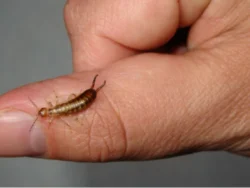
If you’ve spotted a small, dark insect with intimidating claws at the back end, you’ve likely encountered a pincher bug — the common name for an earwig. These insects are a regular sight for Florida homeowners, especially during the warmer months when they push indoors looking for cool, moist hiding spots.
The good news: pincher bugs are far less threatening than they look. But that doesn’t mean you want them crawling through your kitchen or bathroom. This guide covers everything you need to know — what they are, what attracts them, whether they’re actually dangerous, and how to get rid of them for good.
What Is a Pincher Bug, Exactly?
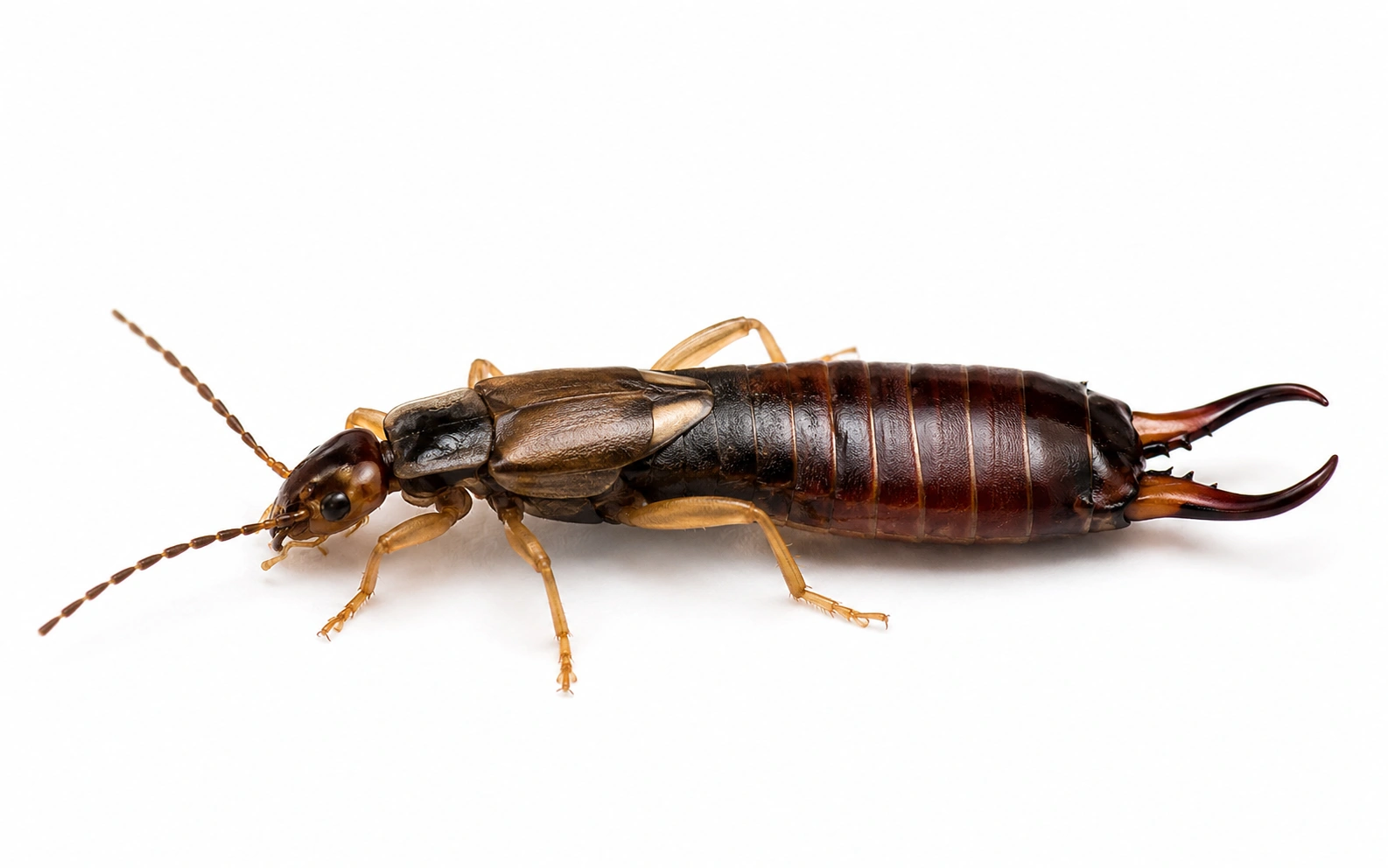
A pincher bug is the informal name most Floridians use for earwigs — insects belonging to the order Dermaptera. The nickname comes from the prominent cerci, a pair of forceps-like appendages at the tip of the abdomen that look like miniature claws or pincers.
Despite the ominous appearance, earwigs are not aggressive and rarely use their pincers on humans. Males have curved cerci; females’ are straighter. The pincers are used for defense, prey capture, and mating — not for attacking people.
In Florida, the most commonly encountered species is the Euborellia annulipes (ring-legged earwig) and Forficula auricularia (European earwig). Both are nocturnal, hiding under rocks, mulch, and leaf litter by day and becoming active after dark.
Pincher Bug Identification at a Glance
| Feature | Description |
|---|---|
| Size | ½ to 1 inch long |
| Color | Dark brown to reddish-brown |
| Body shape | Long, flattened, segmented |
| Legs | Six |
| Antennae | Thread-like, about half their body length |
| Distinctive feature | Curved pincers (cerci) at abdomen tip |
| Wings | Two pairs (rarely fly) |
Are Pincher Bugs Dangerous?
One of the most persistent myths about pincher bugs is that they crawl into human ears while people sleep — the origin of the name “earwig.” University of Florida Entomology & Nematology researchers confirm this is a folklore myth with no basis in fact. Earwigs have no interest in the human ear canal.
As for the pincers: yes, an earwig can pinch if you pick it up or startle it, but the pincers are small. In most cases, the pinch causes a brief, mild discomfort — similar to being squeezed between two fingernails. Earwigs are not venomous, do not sting, and are not known to transmit any diseases.
The real concern with pincher bugs is numbers. A small earwig here and there is a nuisance. A large population invading your home through foundation cracks, door gaps, and plumbing penetrations is a different matter — especially in Florida’s humidity, which creates ideal conditions for them to thrive year-round.
What Attracts Pincher Bugs to Florida Homes?
Florida’s warm, humid climate is earwig paradise. Understanding what draws them to your property is the first step toward keeping them out.
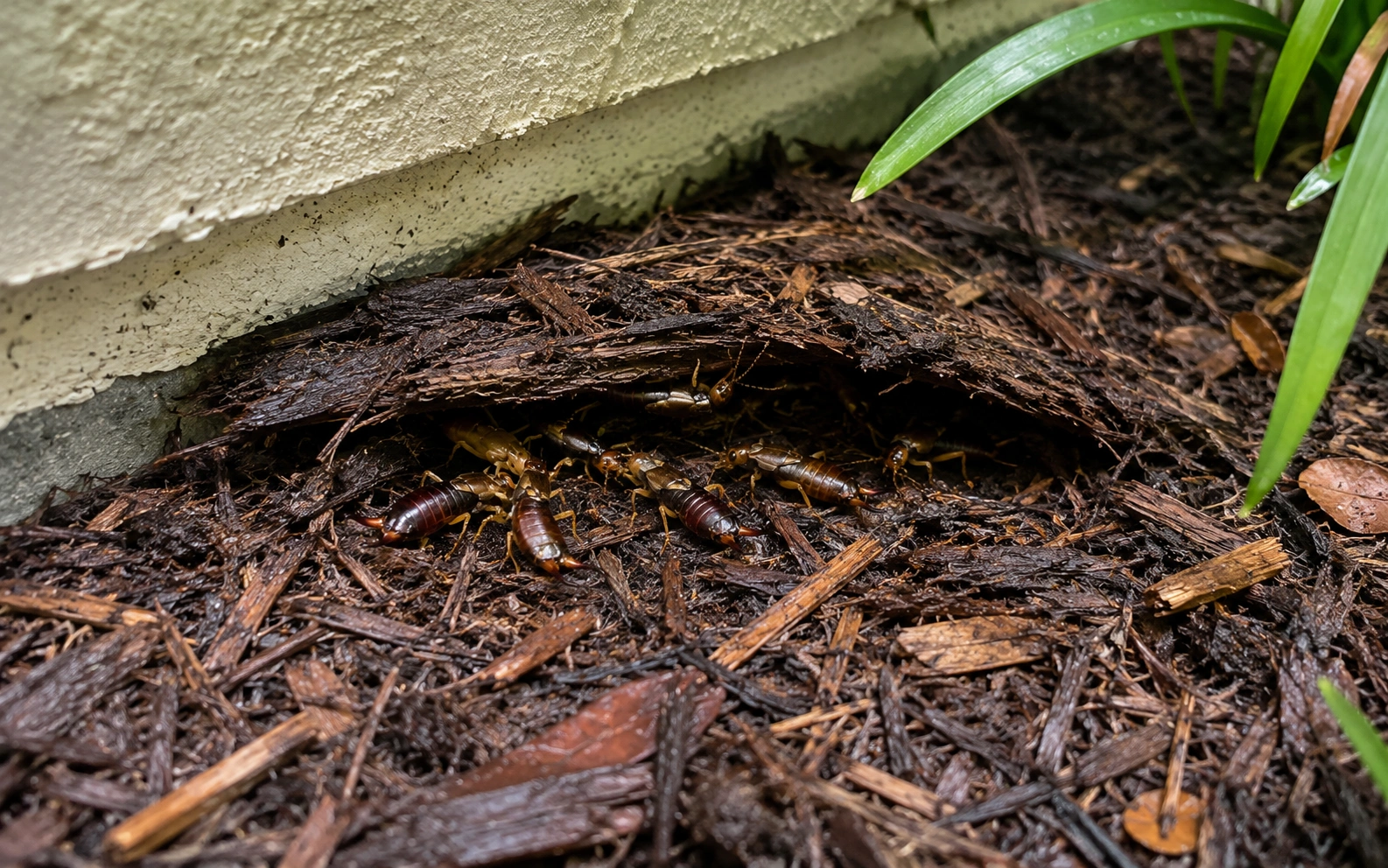
Moisture is the top draw. Earwigs need damp conditions to survive. Leaky spigots, clogged gutters, overwatered landscaping, and poor drainage around the foundation all create the moisture earwigs seek. They’ll congregate under flower pots, patio stones, and any organic material that stays wet.
Exterior lighting is another key factor. Earwigs are attracted to light sources at night, which is why they often end up near entryways, porches, and garage doors. Once they’re at your threshold, they only need a small gap to enter.
Mulch and organic debris placed directly against the home’s foundation give earwigs a humid, sheltered harborage zone just steps from your walls. It’s one of the most common reasons Florida homeowners deal with earwig infestations.
Once inside, earwigs gravitate toward kitchens, bathrooms, laundry rooms, and basements — anywhere humidity concentrates. They feed on decaying plant material, other small insects, and occasionally houseplants.
Earwigs in Your Florida Home?
McCall Pest & Wildlife offers same or next day service for earwig and general pest problems throughout Florida. Call us at 888-409-0938 or request a free inspection online.
How to Get Rid of Pincher Bugs
Effective earwig control requires tackling both the outdoor population and any entry points into your home. Here’s what works:
Reduce moisture around the foundation. Fix leaky outdoor faucets, clean clogged gutters, and grade soil so water drains away from the home rather than pooling against the slab. Moisture control is the single most impactful step you can take.
Pull mulch back from the foundation. Maintain at least a 12-inch gap between mulch beds and your exterior walls. This eliminates the prime harborage zone earwigs use to stage their entry into your home.
Seal entry points. Inspect door sweeps, window screens, and foundation penetrations (pipes, wires, HVAC lines). Replace worn weatherstripping and seal gaps with caulk. Earwigs only need a tiny crack to squeeze through.
Switch to yellow or sodium vapor outdoor lighting. These bulb types are less attractive to insects than standard white LED or incandescent bulbs, reducing the number of earwigs drawn to your entry points at night.
Eliminate indoor moisture sources. Fix dripping pipes under sinks, use exhaust fans in bathrooms, and consider a dehumidifier in persistently damp areas. Earwigs can’t survive long in dry conditions.
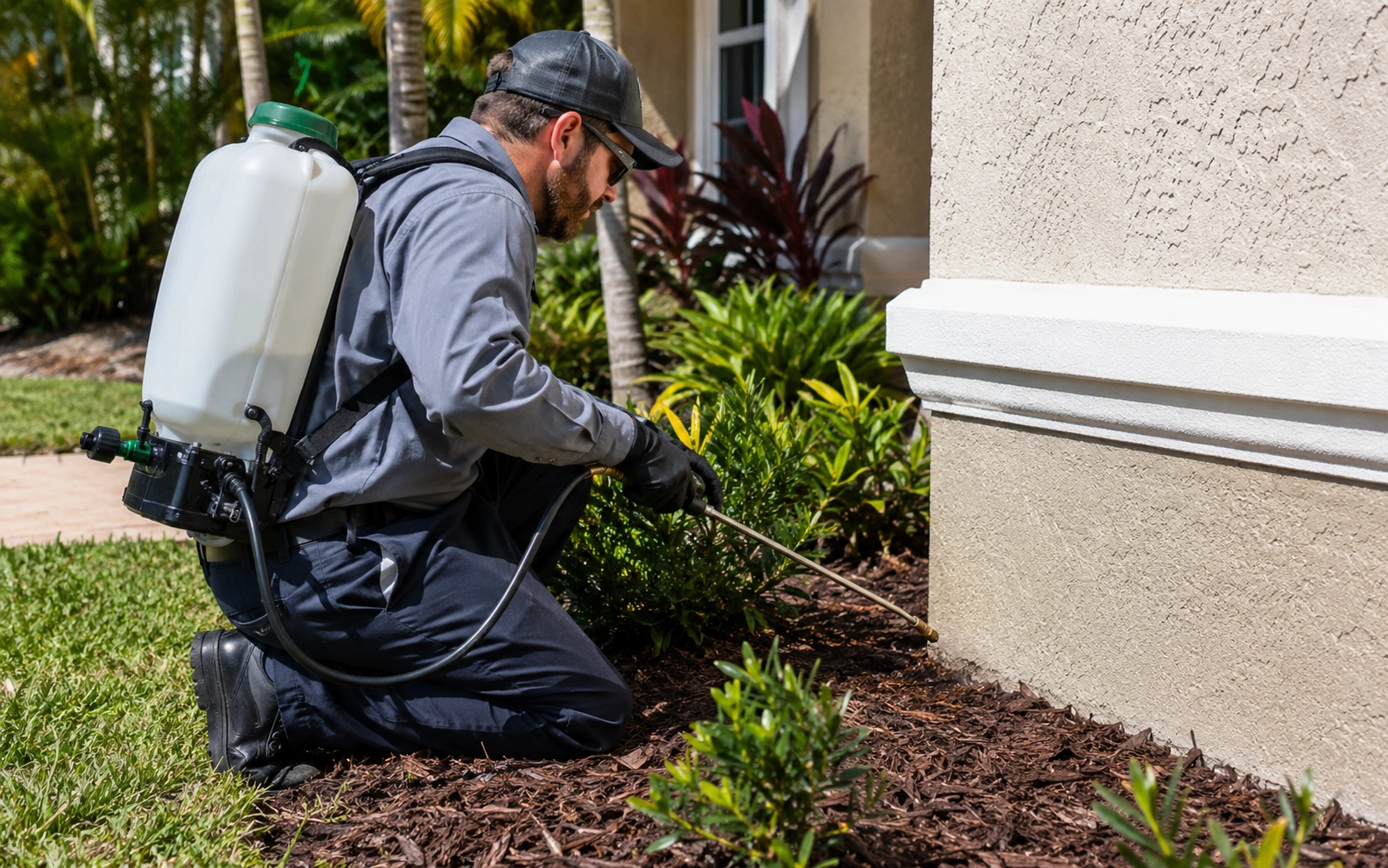
For widespread infestations or recurring problems, professional pest control is the most reliable solution. Licensed technicians can apply targeted perimeter treatments, identify hidden harborage areas, and set up a recurring service plan to prevent re-entry.
Frequently Asked Questions About Pincher Bugs
What is a pincher bug?
A pincher bug is the common name for an earwig — a small, dark insect with a flattened body and a pair of curved forceps (pincers) at the tip of its abdomen. Earwigs are nocturnal scavengers found throughout Florida, especially in moist areas like mulch beds, under rocks, and inside homes during hot, dry weather.
Can a pincher bug hurt you?
Pincher bugs can pinch skin if picked up or cornered, but their pincers rarely break skin and the pinch is typically minor. They do not sting and are not venomous. Most people experience nothing more than a brief squeeze. They are not considered dangerous to humans or pets.
Why do I have pincher bugs in my house?
Earwigs enter Florida homes primarily in search of moisture and shelter. They are attracted to damp conditions and typically enter through gaps around doors, windows, and foundations. Outdoor lighting also draws them in at night. Mulch, leaf litter, and overwatered landscaping near your foundation increase the likelihood of an earwig problem.
How do I get rid of pincher bugs?
Getting rid of pincher bugs involves reducing moisture sources, sealing entry points, and treating the perimeter of your home. Pull mulch back from the foundation, fix leaky pipes, and use weatherstripping on doors. For persistent or large-scale infestations, professional pest control from a licensed company like McCall Pest & Wildlife is the most effective solution.
Don’t Let Pincher Bugs Take Over Your Home
McCall’s Florida-licensed technicians know where earwigs hide and how to stop them. Same or next day service available. Call 888-409-0938 to schedule your inspection today.