
Stepping outside to enjoy a warm Florida evening shouldn’t mean becoming a meal for biting insects. Yet for millions of Sunshine State residents, mosquitoes are simply a fact of life — and mosquito season in Florida lasts far longer than most people expect.
Understanding when mosquito season starts, when it peaks, and why it barely ends in Florida gives you a real edge. This guide covers the climate factors that drive mosquito activity across different regions of the state, practical steps to protect your home and family, and when it makes sense to call in professional help.
What Is Mosquito Season?
Mosquito season refers to the period of the year when temperature and moisture conditions allow mosquitoes to breed rapidly. As cold-blooded insects, mosquitoes cannot function when temperatures drop below 50°F. Once conditions stay consistently above that threshold, dormant eggs hatch, adults emerge, and the breeding cycle begins in earnest.
The season typically runs until the first major cold snap that forces active adults to die off or enter dormancy. In most U.S. states, that means a clear start and end. In Florida, the math looks very different.
Mosquito Season in Florida — Climate & Conditions
Florida’s combination of intense heat, extreme humidity, and frequent afternoon thunderstorms creates near-perfect breeding conditions. Mosquitoes need standing water to lay their eggs, and Florida’s summer rain patterns deliver it in abundance. Because the state rarely stays cold enough to halt activity entirely, mosquito season in Florida runs far longer than the national average.
Regional differences matter significantly:
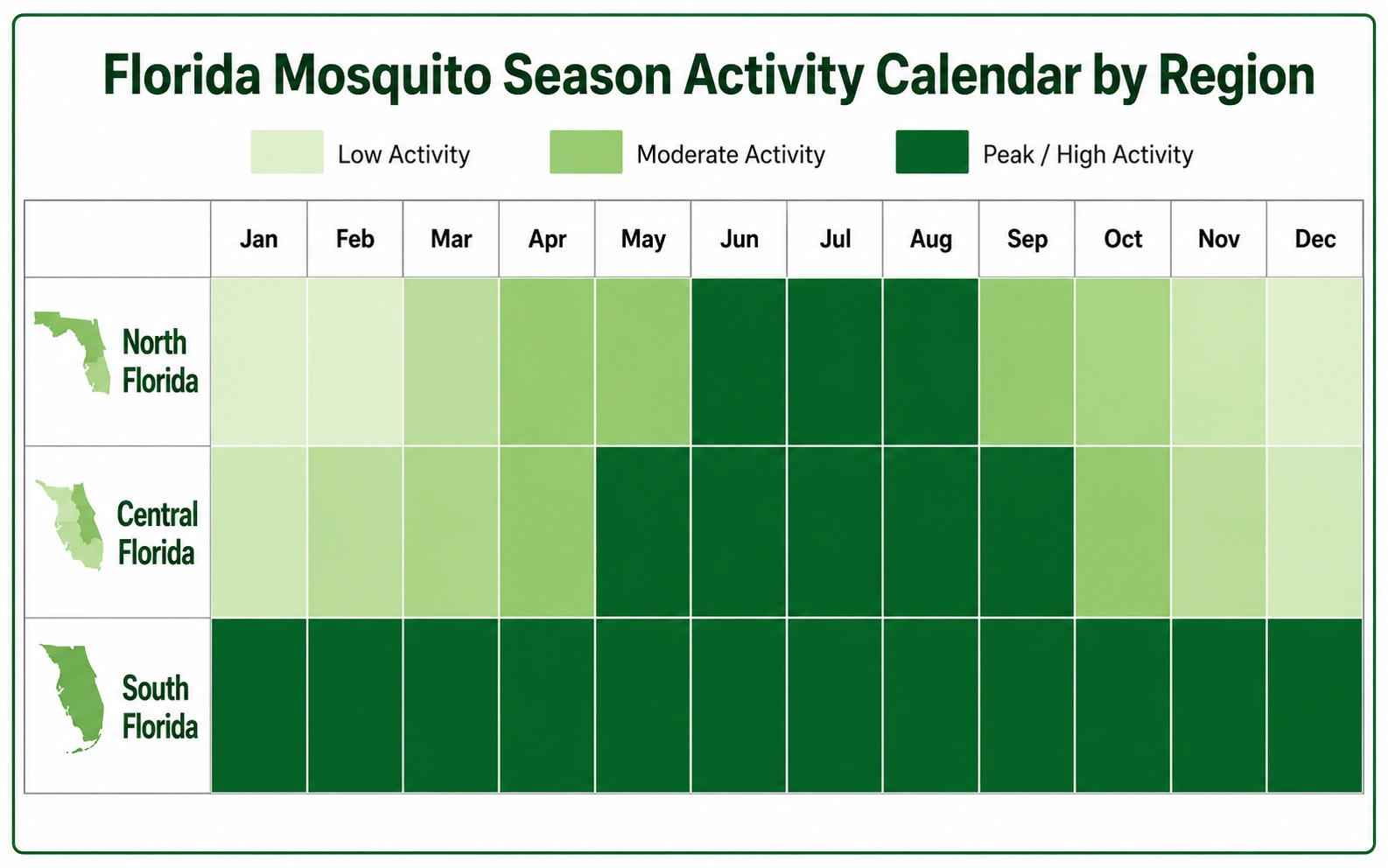
- North Florida (Jacksonville, Tallahassee, Gainesville): Activity dips noticeably during December through February. Cold fronts occasionally push temperatures low enough to interrupt the breeding cycle for a few weeks at a time.
- Central Florida (Orlando, Tampa, Ocala): Mosquitoes stay active for most of the year, with only brief pauses during rare cold snaps. The region’s many lakes, ponds, and retention areas create persistent breeding habitat.
- South Florida (Miami, Fort Lauderdale, Naples): The tropical climate means mosquito season never truly ends. Temperatures rarely fall below the 50°F threshold, and the wet season brings massive population surges.
When Does Mosquito Season Start in Florida?
While most of the country waits until late spring for mosquito activity to ramp up, Florida’s timeline shifts earlier. Mosquito season typically starts in February or early March as overnight temperatures consistently warm above 50°F.
Several factors trigger this early activity:
- Spring rainfall creates the standing water female mosquitoes need to deposit eggs.
- Within just a few days of a heavy rain, new larvae hatch and begin developing into adults.
- Florida’s mild winters mean many eggs and larvae survive the coolest months and hatch rapidly once temperatures climb.
Peak Mosquito Months in Florida
Spring activity is just the warm-up. The absolute worst of mosquito season runs from June through September, coinciding with summer heat and hurricane season rainfall. Heavy rain events flood drainage ditches, fill containers, and refresh natural breeding sites across the state — producing massive population spikes within 7–10 days.
Daily patterns also play a significant role. Mosquitoes are most active at dawn and dusk when wind speeds drop, temperatures cool slightly, and the harsh Florida sun dips below the horizon. If you’re planning outdoor time during peak months, late morning through mid-afternoon tends to have lower activity than the bookend hours.
Does Mosquito Season Ever End in Florida?
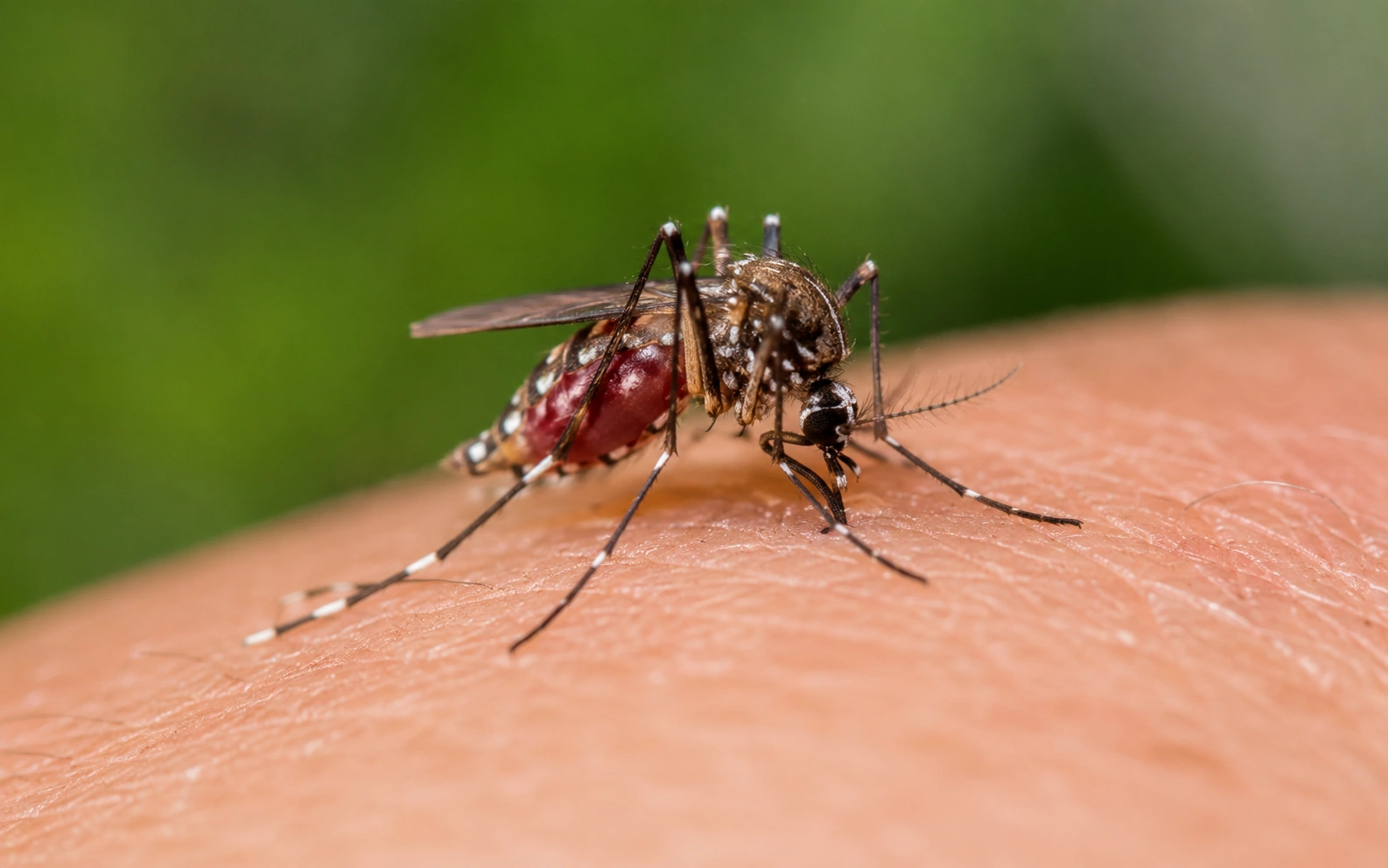
The honest answer is: not entirely. While most of the United States experiences a clear end to mosquito activity by late November, year-round activity is the norm in South Florida. Temperatures simply never drop low enough to eliminate populations.
Parts of North and Central Florida do get a mild “off-season.” A January cold snap can temporarily knock out active adults, giving residents a few weeks of relief. But mosquito eggs can survive in dry soil for months — the moment rain returns, those eggs hatch immediately, and populations rebound quickly.
Weather anomalies also shift the picture. Severe droughts temporarily reduce activity because breeding sites dry up. Conversely, any major flood event — tropical storms included — can trigger population explosions that linger for weeks.
Mosquitoes Ruining Your Yard?
McCall’s mosquito control specialists treat your yard with targeted barrier sprays that eliminate resting adults and disrupt breeding sites. Same or next day service available.
How to Protect Your Home & Family During Mosquito Season
You don’t have to stay indoors when mosquitoes are active. A combination of yard management and personal protection significantly reduces your exposure.
Eliminate Standing Water
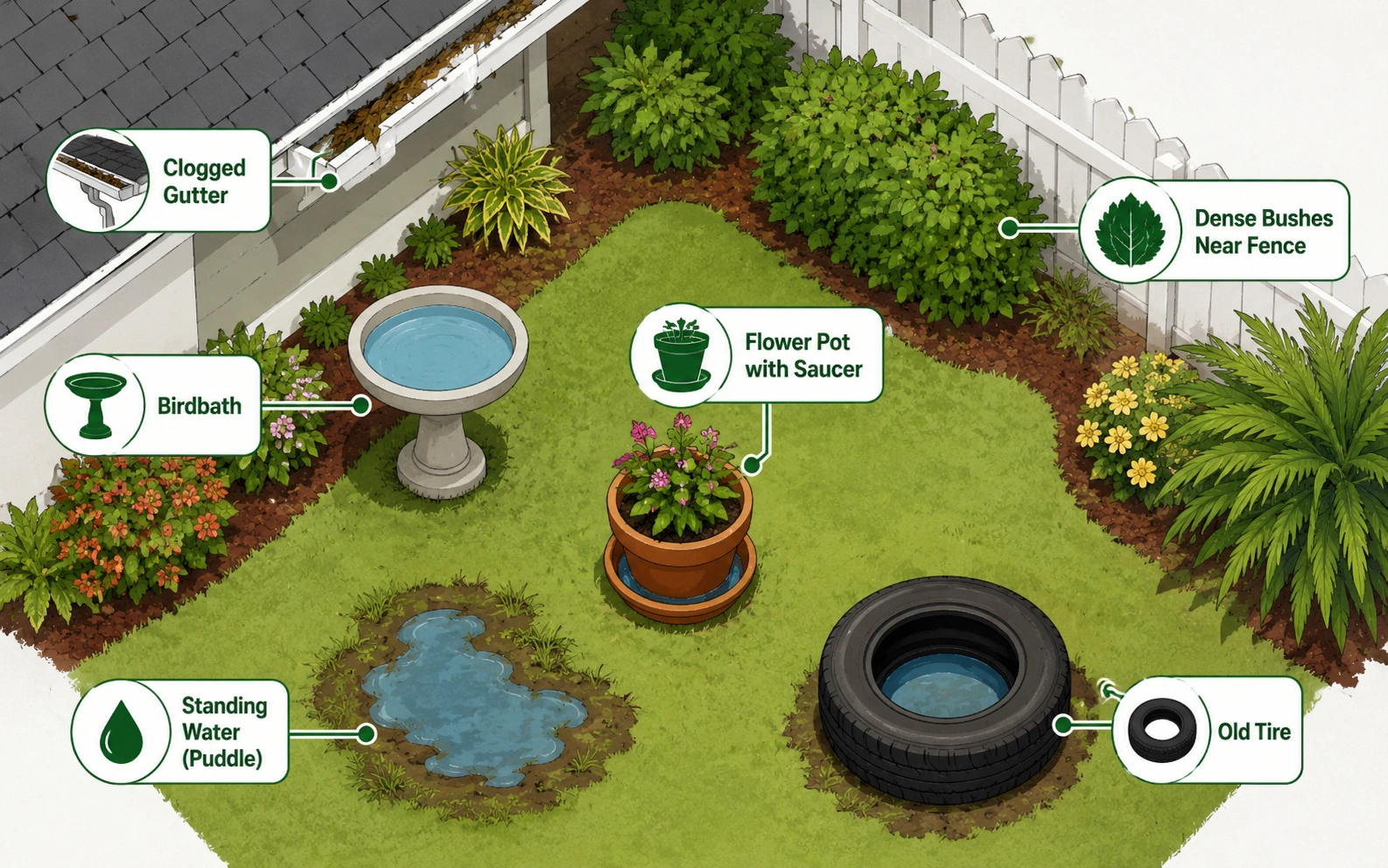
This is the single most impactful step. Female mosquitoes need standing water to lay eggs, and even a bottle cap holds enough to breed hundreds. Walk your property after every rain and empty or dump:
- Birdbaths, flower pot saucers, and decorative containers
- Clogged gutters holding rainwater
- Tarps, pool covers, or equipment collecting puddles
- Children’s toys, buckets, and wheelbarrows left outdoors
Yard Maintenance
Keep grass mowed short and trim dense shrubs where adult mosquitoes hide during the heat of the day. Mosquitoes are weak flyers and tend to rest in cool, shaded, humid vegetation close to the ground. Reducing that habitat reduces your local population.
Personal Protection
When spending time outdoors, use EPA-approved repellents containing DEET, Picaridin, or oil of lemon eucalyptus. Wear light-colored, loose-fitting clothing — mosquitoes are strongly attracted to dark colors and tight fabrics that highlight body heat. Installing large outdoor fans on patios is also surprisingly effective; mosquitoes cannot fly well against even a gentle breeze.
Professional Mosquito Control Options
DIY methods help reduce exposure, but they rarely break the breeding cycle in a significant infestation. Store-bought yard sprays wash away with the first afternoon rainstorm, and consumer foggers only kill adults that are currently flying — they do nothing to the eggs and larvae developing in nearby water sources.
Professional control matters because it targets the entire cycle. At McCall Pest & Wildlife, our mosquito technicians know exactly where these pests hide and breed across Florida’s unique landscape. We provide:
- Targeted barrier sprays that eliminate resting adults in your foliage and along property borders
- Breeding site treatments that interrupt larval development in standing water that can’t be removed
- Ongoing yard service plans — monthly protection through the long Florida season
- One-time event treatments before backyard gatherings, parties, or outdoor events
We serve communities throughout Florida with reliable, same or next day service. Whether the mosquitoes are ruining your evenings or you’re dealing with a serious yard infestation, our team delivers treatments that actually last.
Ready to Take Back Your Yard?
Call 888-409-0938 or request a free quote online. Our Florida mosquito control specialists are ready to help — same or next day service available.
Mosquito Facts: Expert Insights
The Mosquito Life Cycle
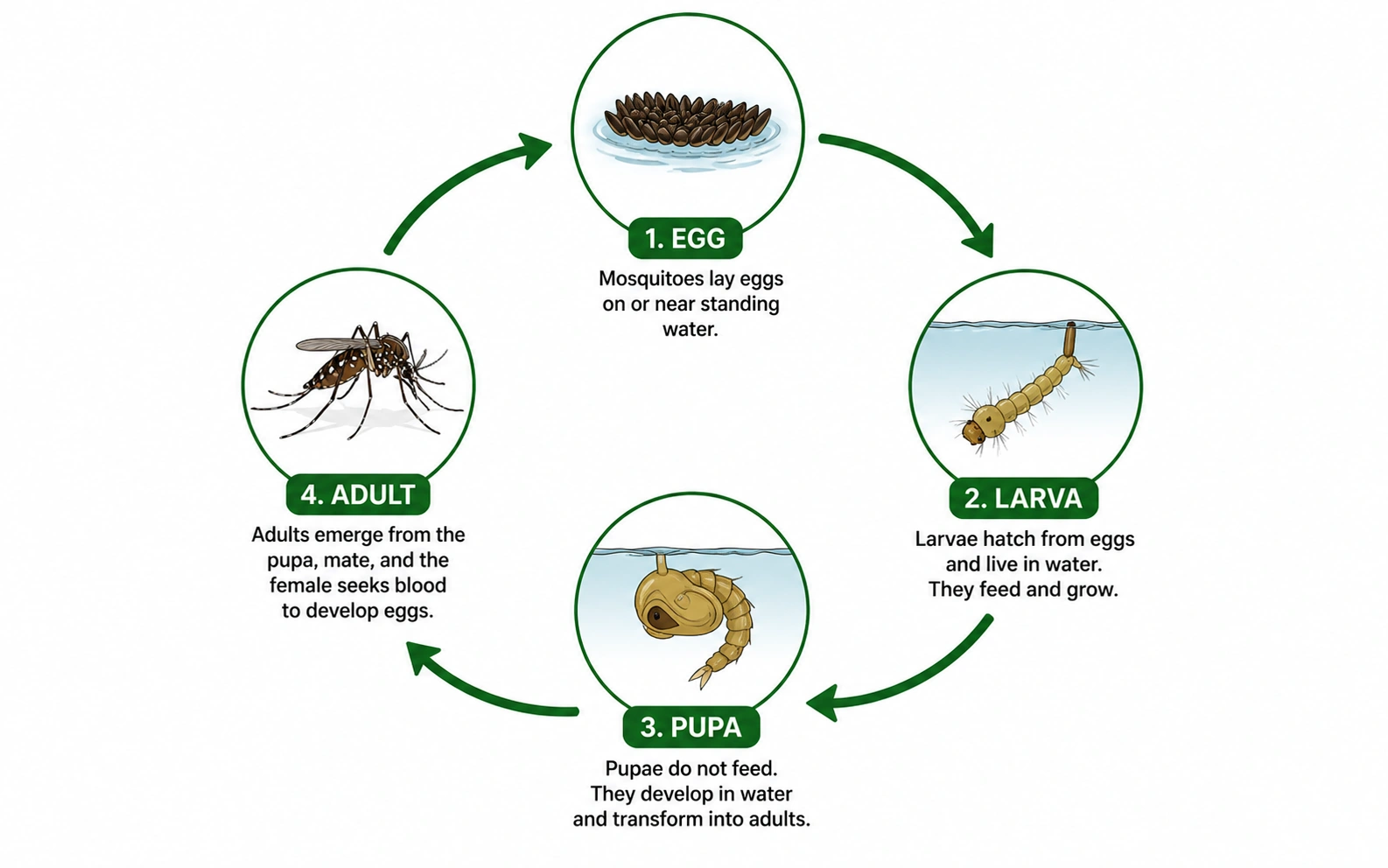
The complete life cycle consists of four stages: egg, larva, pupa, and adult. The first three stages require standing water — there is no way to shortcut this. Remove the water and you stop the cycle before adults ever emerge. Under warm Florida conditions, the entire cycle from egg to biting adult can complete in as little as 7 to 10 days.
Common Florida Mosquito Species
Florida hosts several species, each with distinct behaviors:
- Aedes mosquitoes are aggressive daytime biters that prefer breeding in artificial containers — flower pots, birdbaths, and discarded tires. This genus includes the species responsible for transmitting Zika and dengue fever.
- Culex mosquitoes are the most common Florida species and prefer to bite at night. They breed in dirty, stagnant water like neglected ponds and street drains, and are the primary vector for West Nile virus.
- Anopheles mosquitoes breed in cleaner water sources like lakes and marshes. They are associated with malaria transmission, though local transmission in the U.S. is extremely rare.
Disease Risks
While widespread outbreaks in Florida remain relatively uncommon, mosquitoes can transmit West Nile virus, Eastern Equine Encephalitis (EEE), and the Zika virus. The CDC’s mosquito resource center maintains current outbreak information by state. Minimizing bites — especially during peak season — remains one of the most practical steps for protecting your family’s health.
Frequently Asked Questions About Mosquito Season in Florida
Do mosquitoes hibernate?
Yes, in a way. When temperatures drop, some species enter a state of dormancy called diapause. They hide in hollow logs or animal burrows and slow their metabolism until the weather warms up again. In South Florida, temperatures rarely trigger true dormancy.
Can mosquito season be shorter?
A season can feel shorter if Florida experiences a prolonged drought or an unusually cold winter. However, the state’s subtropical climate almost always extends the season well beyond what most U.S. residents expect. A drought reduces active adult populations, but eggs waiting in dry soil hatch the moment rain returns.
What attracts mosquitoes most?
Mosquitoes locate hosts primarily by tracking the carbon dioxide you exhale. They’re also highly attracted to body heat, lactic acid in sweat, and dark-colored clothing, which absorbs and radiates heat more intensely.
Are mosquitoes worse after rain?
Yes. Heavy rainfall creates puddles, floods drainage areas, and fills empty containers — providing the standing water female mosquitoes need to lay eggs. Expect a noticeable surge in adult activity 7 to 10 days after any significant rainstorm.
What months are mosquitoes most active in Florida?
The peak months are June through September, when summer heat and hurricane season rain combine to produce the largest population surges. Activity drops off in North and Central Florida during December and January but rarely disappears entirely in South Florida.
Don’t Let Mosquitoes Ruin Another Season
McCall Pest & Wildlife has been protecting Florida families from mosquitoes for decades. Our targeted yard treatments are safe, effective, and built for Florida’s demanding climate. Call 888-409-0938 to speak with a local mosquito control specialist.