
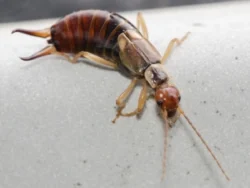
The first time most people get a close look at an earwig, the reaction is immediate. Those pincers at the back end of the insect are striking — and for most homeowners, the next thought is some version of: what exactly is this thing, and should I be worried?
Earwigs are one of the more misunderstood insects Florida homeowners encounter. They have an outsized reputation built on a centuries-old myth, they look more threatening than they are, and they turn up in spots that feel alarming — inside bathrooms, under kitchen sinks, in laundry rooms. This guide answers every common question about what earwigs actually are: what they look like, how they behave, why Florida homes attract them, and what it takes to keep them out.
What Does an Earwig Look Like?
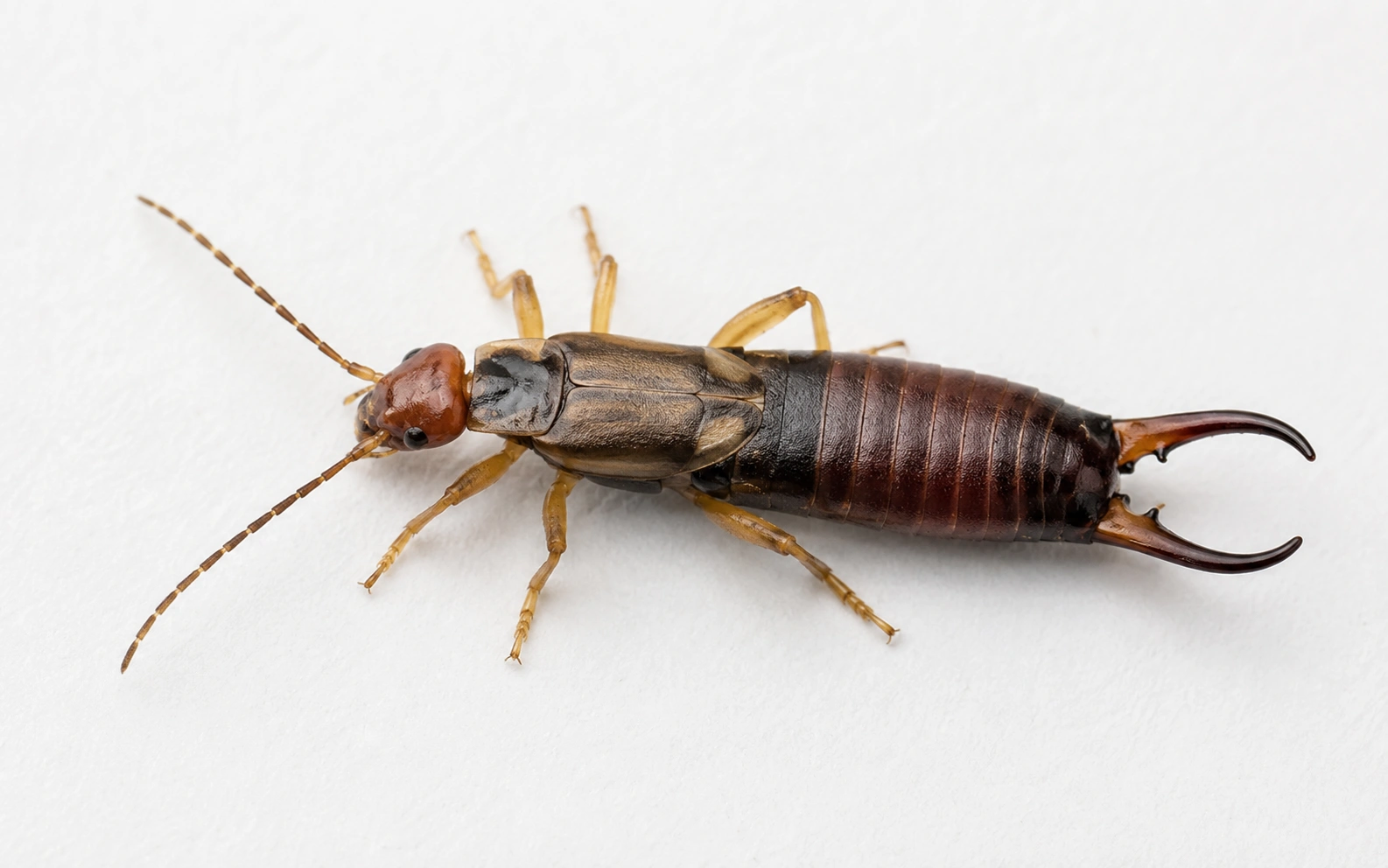
Earwigs are immediately recognizable by one feature: the pair of forceps-like appendages — called cerci — at the tip of their abdomen. These curved, pincer-shaped structures are the defining visual characteristic of the earwig and separate them from every other common insect found in Florida homes.
Here’s a complete physical description:
| Feature | Description |
|---|---|
| Size | ¼ to 1 inch long depending on species; most common house earwigs are ½–¾ inch |
| Color | Reddish-brown to dark brown; some species nearly black; legs are often lighter tan or yellowish |
| Body shape | Elongated, flattened — well suited to squeezing into tight crevices and cracks |
| Pincers (cerci) | Curved on males; nearly straight on females — used for defense and prey capture, not for biting humans |
| Antennae | Long, segmented; typically about half the body length |
| Wings | Most species have wings folded under short tegmina (wing covers), but earwigs rarely fly |
| Legs | Six legs; earwigs move quickly with a distinctive scuttling motion when disturbed |
The species most commonly found inside Florida homes is the European earwig (Forficula auricularia), which is also the most widespread earwig species in North America. The ring-legged earwig (Euborellia annulipes) is another Florida species, recognizable by the banded coloring on its legs.
The Ear Myth — Where It Came From and Why It’s Wrong
Earwigs got their name from an old European folk belief that they deliberately crawled into the ears of sleeping people to burrow into the brain. This idea spread widely enough to become part of the insect’s name in multiple languages. It has also been thoroughly documented as false.
Earwigs are attracted to dark, moist, warm spaces — which describes the environment under a sink cabinet or inside a wall void far better than it describes a sleeping human’s ear canal. They have no mechanism for burrowing, no reason to seek a human ear over dozens of other available hiding spots, and no documented behavior consistent with the myth. An earwig ending up in a sleeping person’s ear would be an accident of circumstance, not intent — and the same is true of any insect.
The name stuck. The behavior never existed.
What Do Earwigs Eat?
Earwigs are omnivores — they eat both plant material and other small insects, which is what makes them a nuisance in some situations and genuinely useful in others.
Their plant-based diet includes: soft leaves, seedlings, flower petals, mold, algae, and decaying organic material. Their insect-based diet includes: aphids, mites, insect eggs, and other soft-bodied small insects. In gardens with manageable earwig populations, the pest insect predation can be a net benefit. In gardens or homes with large populations, the plant damage they cause outweighs the benefit.
Indoors, earwigs feed primarily on mold, mildew, and decaying organic matter — which is part of why they gravitate to damp areas. A bathroom with chronic moisture issues gives them both shelter and a food source.
Earwig Behavior: What They Do and When
Earwigs are nocturnal, emerging to feed and move after dark and retreating to dark, protected spaces before daylight. This behavioral pattern is why most earwig sightings happen at night — and why a daytime sighting is a stronger signal of a large population than a nighttime one.
They are also strongly thigmotactic, meaning they instinctively seek out tight physical contact on multiple sides of their body. This is why earwigs are found inside cracks, beneath objects pressed to the floor, and in the compressed spaces inside cardboard boxes — not out in the open on a kitchen counter. If you see an earwig in open space during the day, it’s been displaced.
Earwigs aggregate — they naturally group together in protected harborage sites. Finding one earwig in a spot is often a scout; finding a cluster means an established population has set up a harborage point nearby.
The Earwig Life Cycle
Understanding the earwig life cycle explains why infestations grow the way they do — and why finding eggs or nymphs is such a significant sign.
Earwigs undergo simple (incomplete) metamorphosis, progressing through three life stages: egg, nymph, and adult.
- Eggs: Female earwigs lay clusters of 20–80 pale yellow, oval eggs in a protected soil or debris chamber. Unusually for insects, the female guards the eggs actively — turning them to prevent mold and defending them from predators until hatching, which takes roughly 7 days.
- Nymphs: Newly hatched nymphs look like very small adults with proportionally smaller, straighter pincers. The mother continues to protect the nymphs through their first molts. Nymphs go through 4–6 instars (molting stages) over several weeks before reaching adulthood.
- Adults: Adults live roughly one year. Females may produce two clutches per year in Florida’s warm climate, which supports year-round reproduction and faster population growth than in cooler regions.
Florida’s climate — warm, humid, with no hard winter freeze — means earwig populations can breed year-round, which is why infestation pressure doesn’t have a clear seasonal peak and trough the way it does in northern states.
Where Earwigs Live in Florida
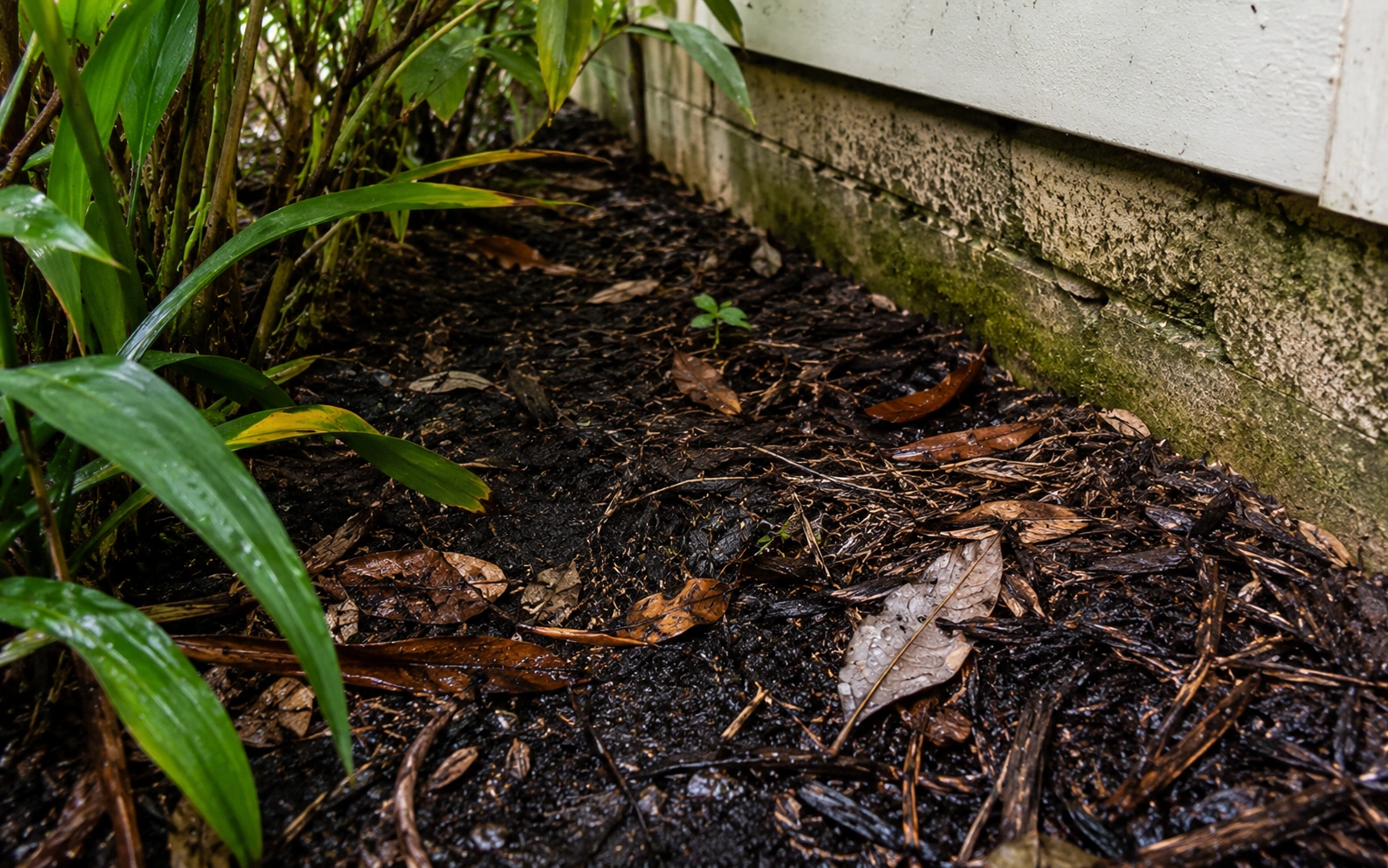
Earwigs are outdoor insects that become indoor pests. Their natural habitat is moist soil, leaf litter, garden mulch, under bark, beneath rocks and debris, and inside decaying wood — anywhere damp and protected from direct light.
In Florida, the combination of year-round warmth and humidity means outdoor earwig populations can thrive in every season. What pushes them indoors:
- Saturated soil from heavy rain: Florida’s rainy season (June–September) floods outdoor harborage sites, pushing earwigs toward drier elevated spaces — including the interior of homes.
- Extreme heat: Summer temperatures drive earwigs toward cool, moist interior spaces during peak heat periods.
- Attractive indoor moisture sources: Leaky pipes, poor bathroom ventilation, condensation, and damp utility spaces replicate outdoor conditions inside the home.
- Easy entry points: Gaps around plumbing penetrations, worn door weatherstripping, foundation cracks, and poorly sealed garage doors give earwigs access to interior spaces from outdoor populations.
Are Earwigs Dangerous?
Earwigs are not medically significant pests. They do not carry or transmit disease, their secretion (a defensive chemical released when crushed or threatened) is not toxic to humans or pets, and they are not venomous. The pinch from an earwig’s forceps is surprising more than painful — it can break skin in rare circumstances but is not a medical concern.
Where earwigs do cause real problems:
- Plant damage: Large earwig populations can significantly damage seedlings, soft-leaved vegetables, flower petals, and garden plants — particularly in Florida’s year-round growing season.
- Nuisance infestations: Finding earwigs consistently inside the home is unpleasant and typically indicates an underlying moisture problem worth addressing.
- Psychological impact: The appearance of earwigs — especially the pincers — causes significant distress for many homeowners even when the actual pest risk is low.
How to Prevent Earwigs in Your Florida Home
Because earwigs are drawn to moisture and enter through structural gaps, prevention combines moisture management with exclusion. Here’s what actually works:
- Fix leaks promptly. Dripping pipes under sinks, slow condensation around toilets, and weeping irrigation lines all create earwig-attractive conditions indoors. Repair them as soon as they’re identified.
- Manage mulch and landscaping. Keep mulch, leaf litter, and dense vegetation at least 12–18 inches away from the foundation. Replace organic mulch in the foundation zone with gravel or rock to reduce moisture retention.
- Seal entry points. Caulk gaps around plumbing and conduit penetrations in the foundation and exterior walls. Replace worn door sweeps and weatherstripping. Install proper seals on garage doors.
- Reduce indoor humidity. Run bathroom exhaust fans during and after showers. Use a dehumidifier in chronically damp laundry rooms, garages, or utility spaces.
- Clear clutter near the foundation. Remove firewood piles, leaf bags, cardboard boxes, and unused equipment stored against exterior walls — all common earwig harborage spots.
- Maintain gutters. Clogged gutters overflow and saturate the soil directly against the foundation. Clean them at least twice a year and extend downspouts to discharge water away from the house.
When to Call a Pest Control Professional
DIY prevention handles most minor earwig situations in Florida. But if you’ve addressed the moisture sources and exclusion points and you’re still finding earwigs consistently — or if the signs point to an established breeding population inside the home — professional treatment is the more effective path.
At McCall, earwig inspections identify both the interior harborage points and the exterior population driving indoor activity. Treatment covers perimeter foundation zones, mulch areas, and specific interior harborage sites when needed. Our service areas include Jacksonville, Gainesville, Ocala, Orlando, Tallahassee, Tampa, and surrounding Florida communities.
For a complete breakdown of what a growing earwig problem looks like, see our guide on the 8 signs of an earwig infestation.
Frequently Asked Questions About Earwigs
Do earwigs bite?
Earwigs don’t bite in the traditional sense — they pinch using the forceps (cerci) at the tip of their abdomen. A pinch can be surprising and occasionally breaks skin but is not medically significant. Earwigs are not venomous and their pinch does not cause any lasting injury. They typically only pinch when handled or accidentally trapped against skin.
Are earwigs good or bad for my garden?
In small numbers, earwigs are actually beneficial in a garden — they prey on aphids, mites, and insect eggs. In large numbers, the calculus flips: they damage seedlings, flower petals, and soft-leaved vegetables. An earwig or two turning up in the garden isn’t a problem worth treating. Regular sightings of many earwigs combined with plant damage is.
Why am I finding earwigs in my bathroom?
Bathrooms provide exactly what earwigs seek: moisture and darkness. Under-sink cabinets, the space behind the toilet, and the gap beneath a bath mat all offer the dark, humid, sheltered conditions earwigs gravitate toward. They typically enter through foundation gaps, around plumbing penetrations, or under exterior door thresholds and migrate to wherever indoor moisture concentrates.
Do earwigs fly?
Technically, most earwigs have wings folded under short protective covers called tegmina. But earwigs rarely fly. In practice, nearly all earwig movement inside and outside the home happens on the ground. You are extremely unlikely to see an earwig fly — they use their legs to get around and their wings almost never open under normal circumstances.
How do I tell an earwig apart from other insects?
The pincers are the giveaway. No other common household pest has the forceps-like cerci at the tail end of the abdomen. Beyond the pincers: earwigs are reddish-brown, elongated (roughly ¼–1 inch), have long segmented antennae, six legs, and a distinctive scuttling movement when disturbed. The pincers curve strongly on males and are nearly straight on females.
Finding earwigs in your Florida home and not sure what you’re dealing with?